Phillips curve | Inflation - measuring the cost of living | Macroeconomics | Khan Academy
TL;DR
The correlation between unemployment and inflation is not always straightforward and can be influenced by various factors.
Transcript
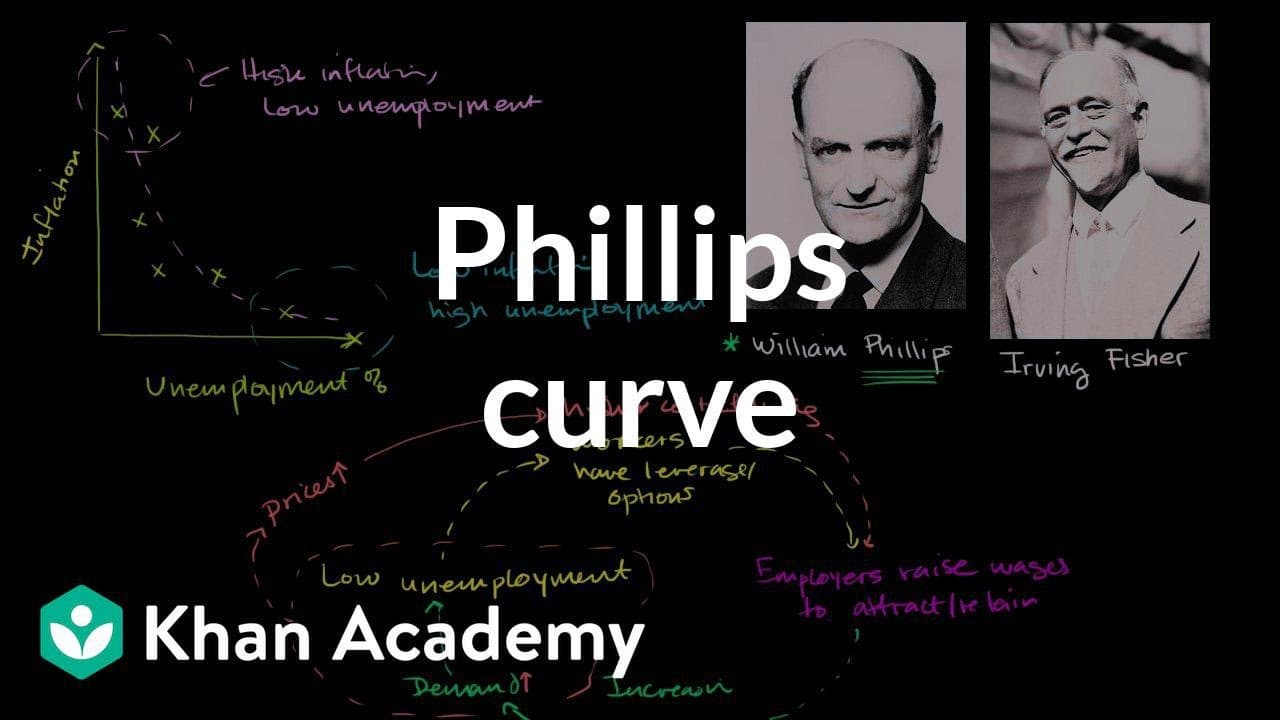
In the late 1950s, William Phillips noticed a correlation between unemployment and inflation and I have a picture of this gentleman right over here, Irving Fisher because he actually noticed that relationship a few decades before but the relationship has taken on Phillips's name really because his publication kind of captured people's imagination a... Read More
Key Insights
- ❓ The relationship between unemployment and inflation is known as Phillips' curve.
- ✋ Low unemployment can lead to increased workers' leverage, higher wages, and higher demand for goods and services.
- 🫢 Supply shocks, such as increased oil prices, can disrupt the relationship between unemployment and inflation.
- ✋ The 1970s experienced stagflation, where high inflation and high unemployment coexisted.
- 😘 Technological improvements in the late 90s helped maintain low inflation and unemployment despite increased demand and wages.
- 🧑🏭 The relationship between unemployment and inflation is not a simple, universal law, but rather influenced by complex economic factors.
- 🧑🏭 In economics, there are often multiple factors and exceptions to any observed correlation.
Install to Summarize YouTube Videos and Get Transcripts
Explore YouTube Video Summarizer or Get YouTube Transcript Extractor
Questions & Answers
Q: What did William Phillips observe in the late 1950s?
William Phillips observed a correlation between unemployment and inflation, suggesting that high inflation corresponds with low unemployment and vice versa.
Q: Why is the relationship between unemployment and inflation not always clear?
It is not clear which variable causes the other, and there could be a circular relationship between the two. The relationship is also influenced by various factors and can have exceptions.
Q: How does low unemployment affect workers' wages and buying power?
Low unemployment gives workers more leverage, leading employers to raise wages to attract and retain employees. Increased wages then increase workers' buying power.
Q: What was stagflation in the 1970s and why did it occur?
Stagflation refers to a situation of high inflation and high unemployment. It occurred due to a supply shock, particularly the increased cost of producing oil, which drove prices up without improving productivity.
Summary & Key Takeaways
-
In the late 1950s, William Phillips noticed a correlation between unemployment and inflation, leading to the relationship being named after him.
-
The relationship suggests that high inflation is often associated with low unemployment and vice versa.
-
Factors influencing this relationship include labor market dynamics, demand for goods and services, and supply shocks.
Read in Other Languages (beta)
Share This Summary 📚
Summarize YouTube Videos and Get Video Transcripts with 1-Click
Try YouTube Summary with ChatGPT & Claude or YouTube Transcript Generator
Explore More Summaries from Khan Academy 📚



Summarize YouTube Videos and Get Video Transcripts with 1-Click
Try YouTube Summary with ChatGPT & Claude or YouTube Transcript Generator