Article VII of the Constitution | National Constitution Center | Khan Academy
TL;DR
The ratification of the U.S. Constitution was a difficult process that required the support of nine out of thirteen states, facing opposition from Anti-Federalists and concerns about centralized power.
Transcript
- [Kim] Hi, this is Kim from Khan Academy, and today I'm learning more about Article VII of the U.S. Constitution, which is the provision that specified the conditions for the Constitution to become law. It reads, The Ratification of the Conventions of nine States, shall be sufficient for the Establishment of this Constitution between the States so... Read More
Key Insights
- 📏 The unanimous consent rule in the Articles of Confederation posed a significant problem to the ratification process, as states like Rhode Island were resistant to any changes.
- 🚫 The Framers chose nine states for the ratification requirement to prevent outliers from blocking the adoption of the Constitution.
- 😚 The close votes in several states and the absence of a Bill of Rights were major obstacles to ratification.
- ✊ The debates between Federalists and Anti-Federalists highlighted concerns about centralized power and the need for a balance between federal and state authority.
- 🖐️ The Federalist Papers, written by Alexander Hamilton and James Madison, played a crucial role in advocating for the ratification of the Constitution.
- 🆘 The compromise of promising a Bill of Rights helped secure the necessary approvals for ratification.
- ❓ The process of ratifying the Constitution involved both democratic elements, such as state conventions, and supermajority requirements to ensure broader support.
- 🇺🇸 The ratification process demonstrated the challenges of adapting to a changing society and the ongoing debate over the role of government in the United States.
Install to Summarize YouTube Videos and Get Transcripts
Explore YouTube Video Summarizer or Get YouTube Transcript Extractor
Questions & Answers
Q: What were the main concerns of the Anti-Federalists?
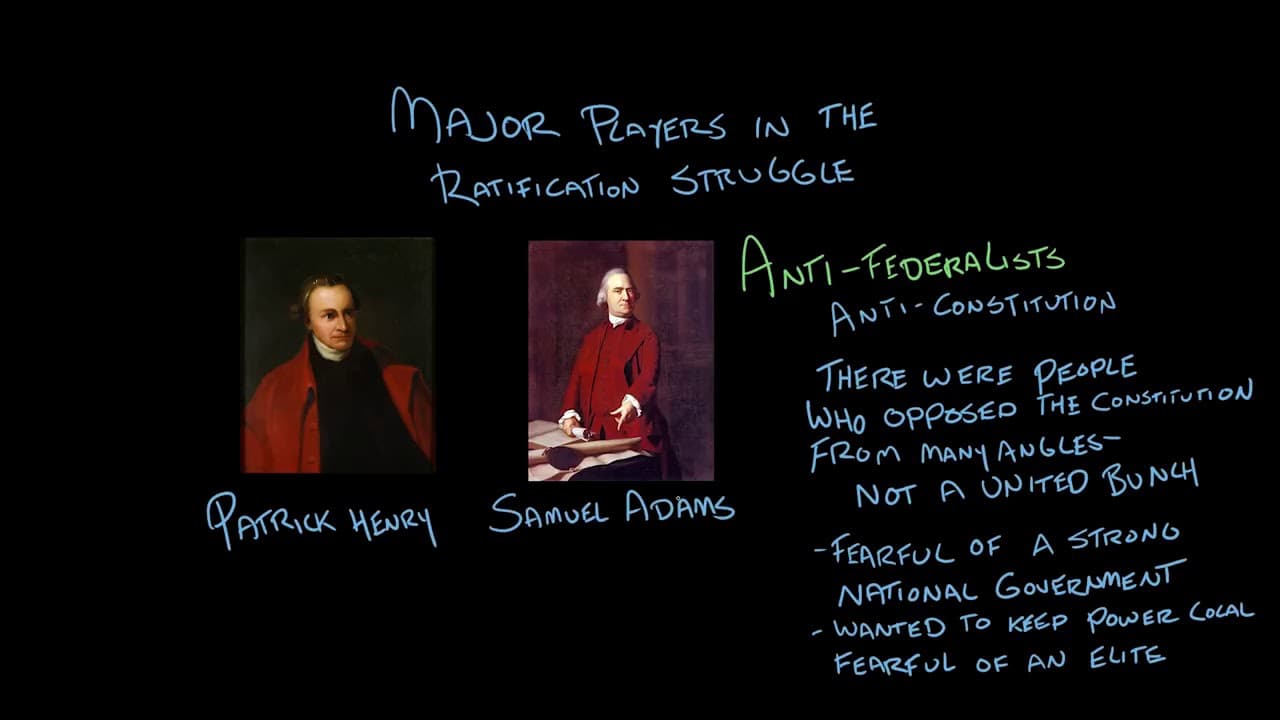
The Anti-Federalists were concerned about the concentration of power in a strong national government, believing that it would infringe on state sovereignty and give rise to an elite ruling class. They also criticized the lack of a Bill of Rights.
Q: How close were opponents of the Constitution to preventing its ratification?
The ratification process was a close fight, with several states producing very close votes. Rhode Island initially rejected the Constitution through a vote, and North Carolina delayed its approval due to the absence of a Bill of Rights.
Q: Who were the major figures involved in the ratification process?
The Federalists, including Alexander Hamilton and James Madison, advocated for the ratification of the Constitution. The Anti-Federalists, such as Patrick Henry and Samuel Adams, opposed it.
Q: What were the main arguments for adopting the new Constitution?
Supporters of the Constitution argued that the Articles of Confederation were ineffective and needed to be replaced to prevent the disintegration of the union. They also identified specific powers that the Federal Government lacked, including taxation powers and treaty enforcement.
Summary & Key Takeaways
-
The Framers of the U.S. Constitution faced the challenge of gaining the support of nine states for the Constitution to become law, replacing the Articles of Confederation.
-
They recognized the need to bypass the unanimous consent rule and chose nine states as the requirement for ratification to prevent outliers like Rhode Island from blocking adoption.
-
The ratification process involved two stages: drafting the Constitution and then gaining approval from the states. Many states were concerned about a strong federal government and the absence of a Bill of Rights.
Read in Other Languages (beta)
Share This Summary 📚
Summarize YouTube Videos and Get Video Transcripts with 1-Click
Try YouTube Summary with ChatGPT & Claude or YouTube Transcript Generator
Explore More Summaries from Khan Academy 📚



Summarize YouTube Videos and Get Video Transcripts with 1-Click
Try YouTube Summary with ChatGPT & Claude or YouTube Transcript Generator