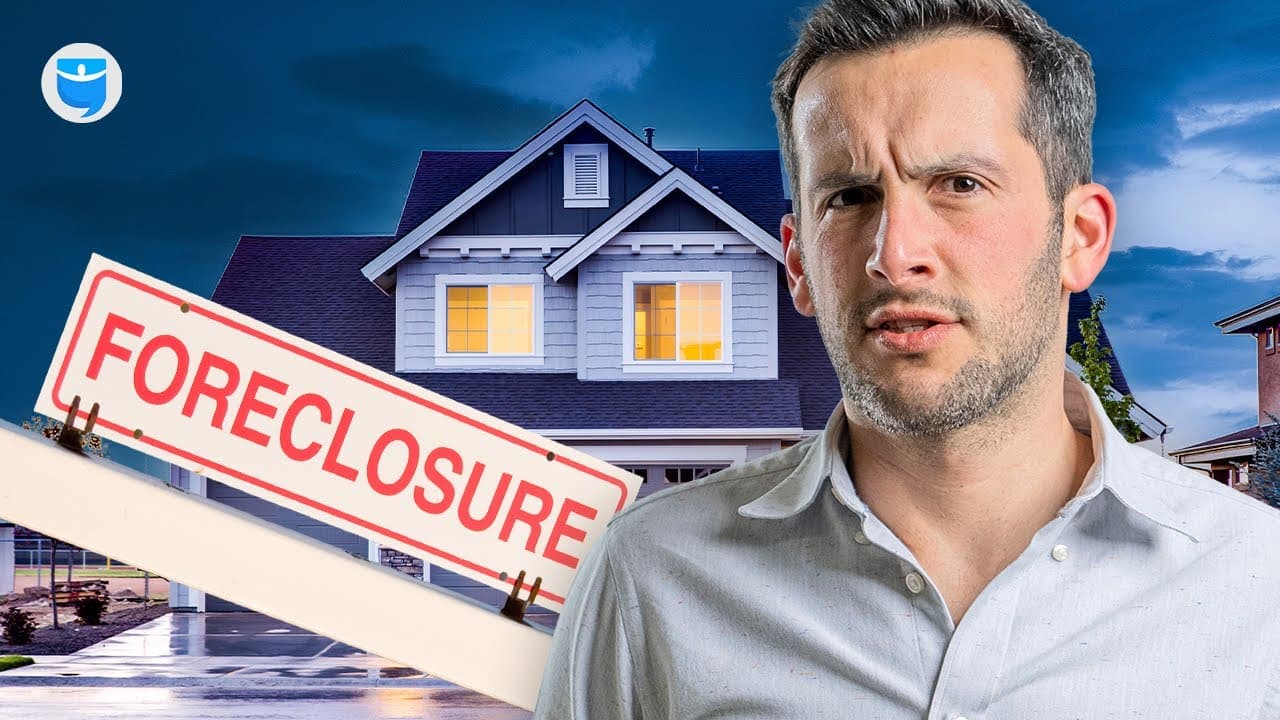
Home Foreclosures Jump 29%...But Not For the Reason You Think
TL;DR
Foreclosures are rising but remain low compared to historical levels.
Transcript
a recent report from Adam data shows that foreclosure activity in the first quarter of 2023 Rose six percent from just the previous quarter and is up 22 percent from q1 of 2022. these are of course pretty conserving sounding numbers so today I'm going to dive into the latest foreclosure data to determine if there is a foreclosure crisis brewing in ... Read More
Key Insights
- Foreclosure activity in Q1 2023 rose by 6% from the previous quarter and 22% from Q1 2022, indicating a rising trend.
- Despite the increase, current foreclosure numbers remain significantly lower than pre-pandemic levels and the peak during the Great Recession.
- The pandemic and government interventions, such as foreclosure moratoriums and forbearance programs, kept foreclosure rates artificially low from 2020 to 2022.
- Foreclosure starts and repossessions have increased, but they are still below historical averages, suggesting a return to normal levels rather than a crisis.
- Unemployment and rising consumer debt could lead to a slight increase in foreclosures, but a crisis similar to 2008 is unlikely.
- Regional differences in foreclosure rates exist, with Illinois having the highest rate and South Dakota the lowest.
- Some states are experiencing rapid increases in foreclosure rates, while others are seeing declines, highlighting regional disparities.
- The average homeowner has substantial equity, reducing the likelihood of widespread foreclosures even if economic conditions worsen.
Install to Summarize YouTube Videos and Get Transcripts
Explore YouTube Video Summarizer or Get YouTube Transcript Extractor
Questions & Answers
Q: Why are foreclosure rates rising in 2023?
Foreclosure rates are rising in 2023 due to the end of pandemic-related government interventions like foreclosure moratoriums and forbearance programs. These measures kept foreclosure rates artificially low from 2020 to 2022. As they have ended, foreclosure activity is returning to more normal levels, reflecting the economic adjustments post-pandemic.
Q: How do current foreclosure rates compare to historical levels?
Current foreclosure rates, while rising, are still significantly lower than historical levels, particularly those seen during the Great Recession. For example, Q1 2023 saw about 95,712 foreclosure filings, compared to over 900,000 during the peak of the housing crisis in 2009-2010. This indicates that the current situation is not indicative of a foreclosure crisis.
Q: What impact did the pandemic have on foreclosure rates?
The pandemic led to government interventions such as foreclosure moratoriums and forbearance programs, which kept foreclosure rates artificially low from 2020 to 2022. These measures provided temporary relief to homeowners, preventing a surge in foreclosures during the economic uncertainty caused by the pandemic.
Q: Are there regional differences in foreclosure rates?
Yes, there are significant regional differences in foreclosure rates. Illinois has the highest rate, with one in 762 properties experiencing a foreclosure filing, while South Dakota has the lowest. Some states with low rates, like Idaho and Wyoming, are experiencing rapid increases, indicating regional disparities in foreclosure trends.
Q: What factors could lead to an increase in foreclosures?
Factors that could lead to an increase in foreclosures include rising unemployment, increasing consumer debt, and inflation affecting spending power. These economic pressures could result in more homeowners defaulting on their mortgages, although the strong equity position of most homeowners should mitigate the risk of a widespread foreclosure crisis.
Q: How does homeowner equity impact foreclosure risk?
Homeowner equity plays a critical role in mitigating foreclosure risk. The average homeowner currently has about $170,000 in equity, meaning they are unlikely to sell at a loss even if they face financial difficulties. This strong equity position reduces the likelihood of a widespread foreclosure crisis, as homeowners can sell their properties profitably.
Q: What is the outlook for foreclosure rates in the near future?
The outlook for foreclosure rates suggests a moderate increase due to economic factors like rising unemployment and consumer debt. However, a crisis similar to 2008 is unlikely, as the current situation reflects a return to normal levels post-pandemic. Foreclosure rates are expected to stabilize around pre-pandemic levels from 2017 to 2019.
Q: Why is there no immediate foreclosure crisis despite rising rates?
There is no immediate foreclosure crisis despite rising rates because current levels are still below historical averages, and most homeowners have substantial equity. The recent increases reflect a normalization post-pandemic rather than a systemic issue. Economic conditions are being monitored, but the strong position of homeowners provides a buffer against a crisis.
Summary & Key Takeaways
-
Foreclosure activity has increased in Q1 2023, but remains low compared to historical levels, especially during the Great Recession. Government interventions during the pandemic kept rates artificially low, and current increases reflect a return to normal levels.
-
Regional disparities in foreclosure rates are evident, with states like Illinois experiencing the highest rates and South Dakota the lowest. Some states are seeing rapid increases, while others have declining rates, highlighting the importance of regional analysis.
-
The economic outlook suggests potential increases in foreclosures due to rising unemployment and consumer debt. However, the average homeowner's strong equity position should prevent a crisis similar to 2008, as most will not need to sell at a loss.
Read in Other Languages (beta)
Share This Summary 📚
Summarize YouTube Videos and Get Video Transcripts with 1-Click
Try YouTube Summary with ChatGPT & Claude or YouTube Transcript Generator
Explore More Summaries from BiggerPockets 📚



Summarize YouTube Videos and Get Video Transcripts with 1-Click
Try YouTube Summary with ChatGPT & Claude or YouTube Transcript Generator