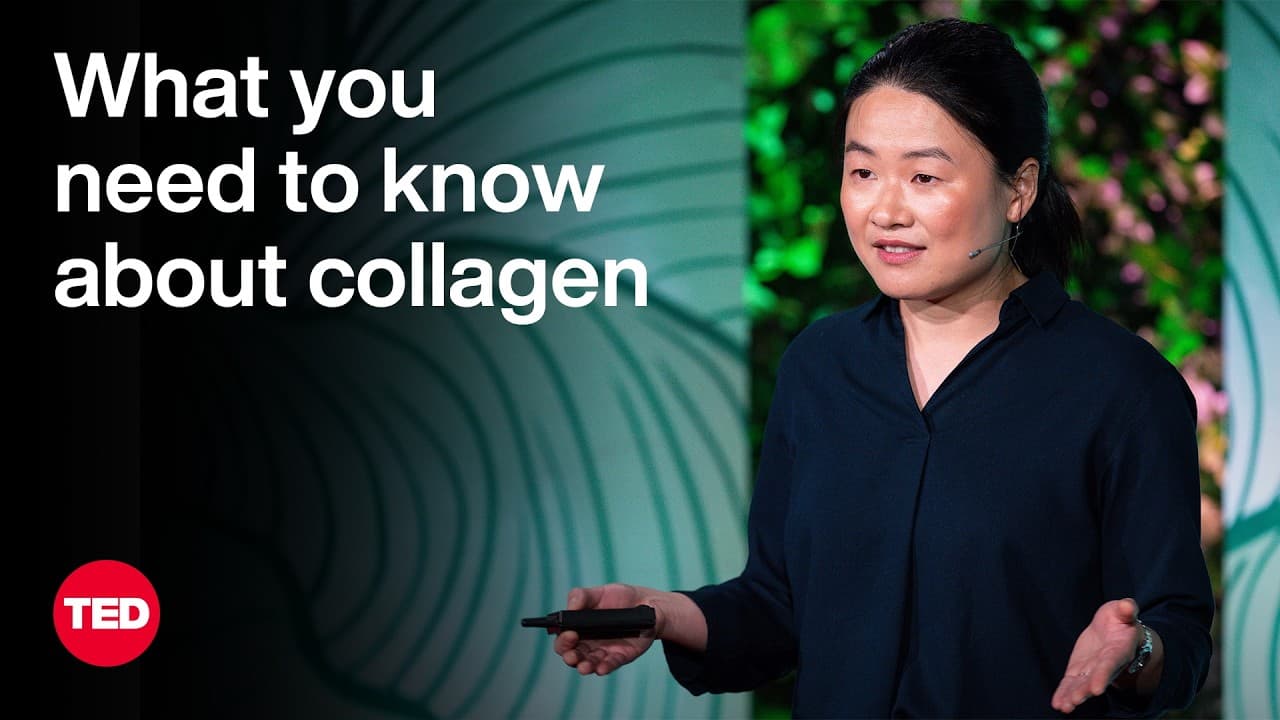
Collagen’s Dirty Secret — and Its Clean Future | Fei Luo | TED
TL;DR
A company is developing animal-free collagen to meet dietary demands sustainably.
Transcript
last month 40 people in Los Angeles tasted a rich and Hearty bone broth it was a special broth one that involved no Slaughter of any animals the secret ingredient was collagen brw like beer using a special East and entire animal free do you consume collagen in your daily life well collagen is the most abundant protein in our body body any animal's ... Read More
Key Insights
- 😋 Collagen is a crucial protein found in food and the body, significantly affecting texture and nutritional value.
- 🤨 Traditional collagen production methods rely on animal slaughter, raising ethical and environmental concerns.
- 😋 The food industry extracts and processes collagen from animal sources for broader applications, including health supplements and food products.
- 🛄 Liveen's innovative approach of using genetically modified yeast could revolutionize collagen production, aiming for sustainability and ethical consumerism.
- 😋 The fermentation process not only provides a natural source of collagen but also offers a path towards cleaner labels in food production.
- 🥶 Consumer interest in health and sustainability has spurred innovations like animal-free collagen, addressing modern dietary preferences without sacrificing ethics.
- 💗 The growing market for alternative proteins reflects a shift in consumer behavior and a demand for transparency in ingredient sourcing.
Install to Summarize YouTube Videos and Get Transcripts
Explore YouTube Video Summarizer or Get YouTube Transcript Extractor
Questions & Answers
Q: What is collagen, and why is it essential in our diet?
Collagen is the most abundant protein in our bodies, accounting for about 30% of total protein content. It serves as a structural framework for tissues, impacting skin elasticity, bone strength, and overall nutrition in food. Without sufficient collagen, we may miss out on important health benefits, including improved joint health and skin appearance.
Q: How is animal-derived collagen typically produced, and what are its applications?
Traditionally, animal-derived collagen is extracted from carcasses through boiling in strong acids, transforming it into gelatin—a key component in products like jello and gummies. This gelatin is further processed into collagen hydrolyzates used in health supplements, food industries, and beauty products aimed at improving skin and bone health.
Q: What prompted the founder of Liveen to pursue animal-free collagen production?
The founder, a chemical engineer, was motivated by a desire for healthier, cleaner food options after noticing the lack of suitable plant-based proteins for her family. With a personal focus on nutrition and the belief in the potential of microbes, she embarked on developing a method to create collagen without relying on animal farming.
Q: What technology does Liveen use to produce collagen without animals?
Liveen utilizes genetically modified yeast to produce collagen. By feeding this yeast sugar in large bioreactors, they can ferment and extract collagen-rich substances similar to those derived from animals, thus providing a sustainable and ethical alternative for the production of collagen-based foods.
Q: How does the tasting event for the animal-free broth contribute to consumer awareness?
The tasting event served 40 participants in Los Angeles, showcasing the rich flavor and texture of the animal-free broth. This initiative helps raise awareness about sustainable food alternatives and may encourage consumers to consider and accept novel sources of nutrition that do not involve animal slaughter.
Q: What challenges does Liveen face in the production of animal-free collagen?
Liveen faces several hurdles, including scaling production, ensuring affordability, and overcoming consumer skepticism. Collaborating with academic institutions for research and validation is crucial in establishing the effectiveness and health benefits of their fermentation methods while working to gain public trust in animal-free products.
Q: What might the future of the food industry look like with animal-free collagen?
In 5 to 10 years, the food industry may be transformed with products like slaughter-free steaks and snacks enriched with collagen peptides. The vision includes a market where consumers can enjoy delicious, nutritious food without ethical concerns, highlighting advances in sustainable ingredients that align with health and environmental goals.
Summary & Key Takeaways
-
A recent tasting event in Los Angeles showcased a unique animal-free collagen broth, highlighting the potential for new food sources without relying on animal slaughter.
-
Collagen, a critical protein in both humans and animals, significantly influences the texture and nutritional quality of various foods, but current production methods rely on animal carcasses.
-
A startup called Liveen is pioneering the fermentation of collagen through genetically modified yeast, aiming to create sustainable alternatives for both health and flavor in foods, with an eye toward ethical consumption.
Read in Other Languages (beta)
Share This Summary 📚
Summarize YouTube Videos and Get Video Transcripts with 1-Click
Try YouTube Summary with ChatGPT & Claude or YouTube Transcript Generator
Explore More Summaries from TED 📚


Summarize YouTube Videos and Get Video Transcripts with 1-Click
Try YouTube Summary with ChatGPT & Claude or YouTube Transcript Generator