That Time People Put Frogs in Unrefrigerated Milk to Keep it From Spoiling
TL;DR
Researchers have discovered that the secretions from certain frogs' skins have antibacterial and antifungal properties, leading to the potential development of new antibiotics.
Transcript
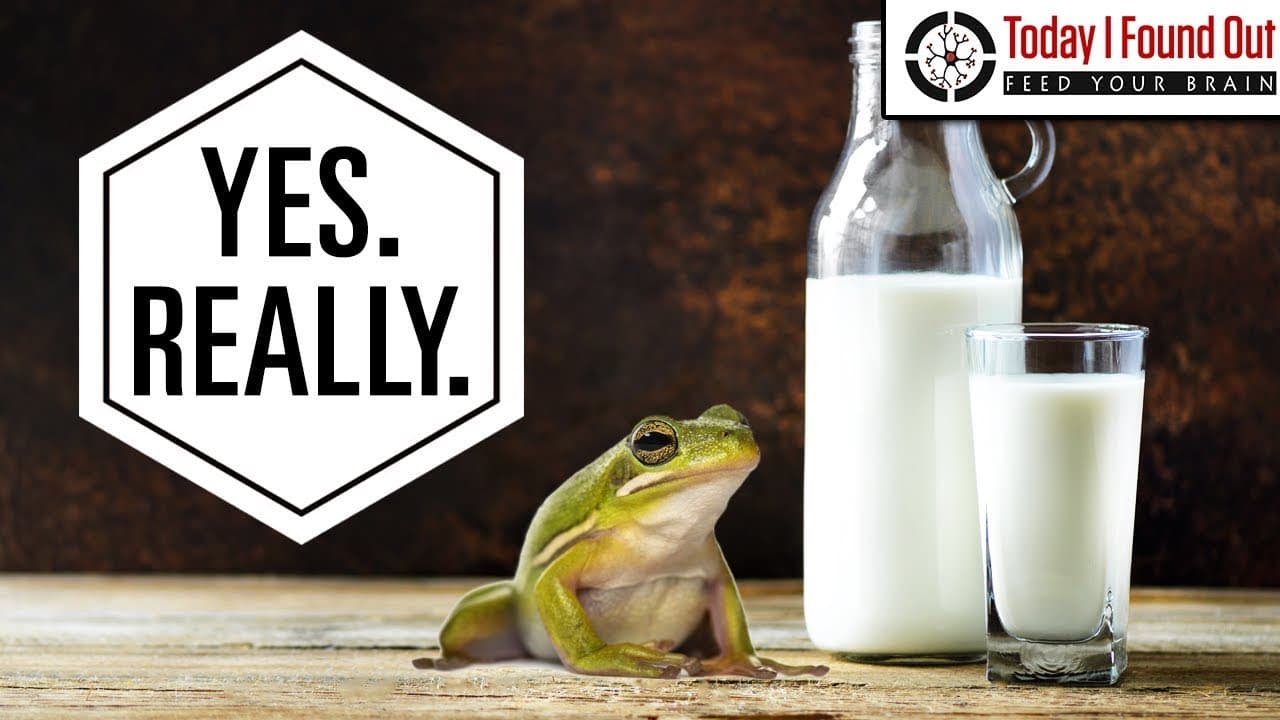
For centuries, before refrigeration, an old Russian practice was to drop a frog into a bucket of milk to keep the milk from spoiling. In modern times, many believed that this was nothing more than an old wives’ tale. But researchers at Moscow State University, led by organic chemist Dr. Albert Lebedev, have shown that there could be some benefit to... Read More
Key Insights
- 🐸 The old Russian practice of putting a frog in milk to prevent spoilage served as the inspiration for researching frog skin secretions as potential antibiotics.
- 🐸 Certain frog species, such as the mink frog and Russian brown frogs, have been found to produce antimicrobial peptides in their skin secretions.
- 🐸 Frog skin secretions contain a variety of peptides with different properties that could potentially combat drug-resistant bacterial infections.
- 🥺 Extracting and studying the individual peptides from frog skin secretions may lead to the development of new antibiotics.
- 🤝 Scientists have discovered that no two frogs have the same cocktail of peptides, indicating their unique ability to deal with specific microbial threats.
- 🧑🔬 Some scientists caution that natural substances, including frog skin peptides, may not always be effective or safe when applied to humans.
- 👨🔬 The potential of frog skin secretions as antibiotics is still being explored, with ongoing research and testing.
Install to Summarize YouTube Videos and Get Transcripts
Explore YouTube Video Summarizer or Get YouTube Transcript Extractor
Questions & Answers
Q: How did the old Russian practice of putting a frog in milk to delay spoiling inspire research on antibiotics?
The practice of putting a frog in milk led scientists to explore the antimicrobial properties of frog skin secretions, which eventually led to the discovery of potential antibiotics.
Q: What are antimicrobial peptides, and how do they work?
Antimicrobial peptides are chains of amino acids found in the skin secretions of certain frogs. They work by targeting and killing bacteria and fungi, making them a potential source for developing antibiotics.
Q: How did researchers at Moscow State University extract frog skin secretions?
Researchers used electrodes to extract secretions from Russian brown frogs, a species considered a delicacy and known to have antimicrobial peptides in their skin.
Q: Are there any concerns or skepticism regarding the potential of frog skin secretions as antibiotics?
Some scientists express skepticism about the efficacy and safety of naturally occurring substances as antibiotics for humans. However, ongoing research is exploring the potential of frog skin secretions as a new source of antibiotics.
Summary & Key Takeaways
-
For centuries, rural Russian villages used to put a frog in milk to prevent it from spoiling.
-
In 2010, scientists discovered that some frog species have antimicrobial peptides in their skin secretions.
-
Moscow State University researchers found that Russian brown frogs have a cocktail of 76 peptides with different properties that could potentially fight bacterial infections.
Read in Other Languages (beta)
Share This Summary 📚
Summarize YouTube Videos and Get Video Transcripts with 1-Click
Try YouTube Summary with ChatGPT & Claude or YouTube Transcript Generator
Explore More Summaries from Today I Found Out 📚






Summarize YouTube Videos and Get Video Transcripts with 1-Click
Try YouTube Summary with ChatGPT & Claude or YouTube Transcript Generator