Products
Features
YouTube Video Summarizer
Summarize YouTube videos
Web & PDF Highlighter
Highlight web pages & PDFs
Chat with PDF
Ask any PDF questions with AI
Ask AI Clone
Chat with your highlights & memories
Audio Transcriber
Transcribe audio files to text
Glasp Reader
Read and highlight articles
Kindle Highlight Export
Export your Kindle highlights
Idea Hatch
Hatch ideas from your highlights
Integrations
Obsidian Plugin
Notion Integration
Pocket Integration
Instapaper Integration
Medium Integration
Readwise Integration
Snipd Integration
Hypothesis Integration
Apps & Extensions
Chrome Extension
Safari Extension
Edge Add-ons
Firefox Add-ons
iOS App
Android App
Discover
Discover
Ideas
Discover new ideas and insights
Articles
Curated articles and insights
Books
Book recommendations by great minds
Posts
Essays and notes from readers
Quotes
Inspiring quotes collection
Videos
Curated videos and summaries
Explore Glasp
Glasp Newsletter
Weekly insights and updates
Glasp Talk
Interview series with great minds
Glasp Blog
Latest news and articles
Glasp Use Cases
Learn how others use Glasp
Build & Support
Glasp API
Access Glasp's API for developers
MCP Connector
Connect Glasp to Claude & ChatGPT
Community
Glasp Reddit Community
Students
Student discount and benefits
FAQs
Frequently Asked Questions
AboutPricing
DashboardLog inSign up

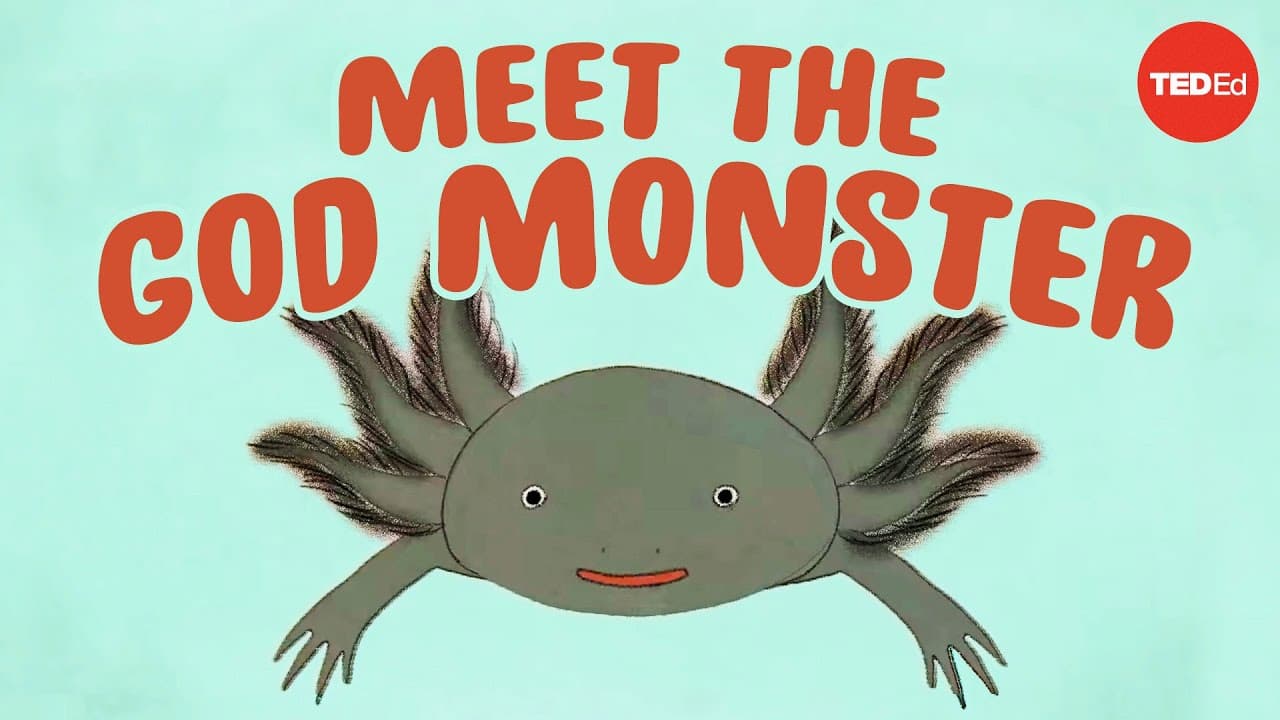
Axolotls: The salamanders that snack on each other (but don't die) - Luis Zambrano
3.9M views
•
June 22, 2021
by
TED-Ed
YouTube video player
Axolotls: The salamanders that snack on each other (but don't die) - Luis Zambrano

TL;DR

Axolotls defy typical amphibian metamorphosis, mastering regeneration and holding potential for medical advancements.

Transcript

In 1864, French zoologist August Duméril was baffled while investigating the axolotl. Unlike many other amphibians, which transform into terrestrial adults, axolotls retain their juvenile characteristics and never leave the water. In an attempt to induce metamorphosis, Duméril spent months removing their gills. But in most instances, the axolotls ... Read More

Key Insights

  • 🥶 Neoteny in axolotls evolved due to their stable, predator-free habitat, eliminating the need for metamorphosis.
  • ❓ Their tremendous regenerative abilities involve cell proliferation, differentiation, and growth-promoting proteins.
  • 🎮 Axolotls exhibit exceptional cancer resistance due to stringent control of cellular proliferation.
  • ❄️ The declining wild axolotl population is threatened by human activities like lake drainage and pollution.

Install to Summarize YouTube Videos and Get Transcripts

Explore YouTube Video Summarizer or Get YouTube Transcript Extractor

Questions & Answers

Q: Why do axolotls exhibit neoteny, retaining juvenile traits?

Axolotls reside in stable habitats without significant aquatic predators, eliminating the need for metamorphosis, allowing them to retain juvenile traits, known as neoteny.

Q: How do axolotls regenerate body parts so effectively?

Axolotls possess remarkable regenerative abilities due to the proliferation and differentiation of cells stimulated by growth-promoting proteins, enabling them to regrow limbs flawlessly.

Q: What sets axolotls apart in terms of cancer resistance?

Axolotls exhibit exceptional cancer resistance through tight control of cellular proliferation, preventing uncontrolled growth and tumor formation, making them valuable subjects for cancer research.

Q: Why has the wild population of axolotls declined significantly?

Human activities such as draining lakes and pollution have led to the decline of the wild axolotl population, with efforts underway to regenerate their habitat in Lake Xochimilco.

Summary & Key Takeaways

  • Axolotls, unique amphibians native to Mexico City, retain juvenile characteristics and exceptional regenerative abilities.

  • Their forever-young condition, called neoteny, is believed to have evolved due to their stable habitat.

  • Scientists hope to unravel the secrets of axolotls' regeneration for potential medical applications.


Read in Other Languages (beta)

English

Share This Summary 📚

Summarize YouTube Videos and Get Video Transcripts with 1-Click

Download browser extensions on:

Try YouTube Summary with ChatGPT & Claude or YouTube Transcript Generator

Explore More Summaries from TED-Ed 📚

How Can Art Transform Perceptions of Disability? thumbnail
How Can Art Transform Perceptions of Disability?
TED-Ed
What are those floaty things in your eye? - Michael Mauser thumbnail
What are those floaty things in your eye? - Michael Mauser
TED-Ed
How we conquered the deadly smallpox virus - Simona Zompi thumbnail
How we conquered the deadly smallpox virus - Simona Zompi
TED-Ed
The Infinite Hotel Paradox - Jeff Dekofsky thumbnail
The Infinite Hotel Paradox - Jeff Dekofsky
TED-Ed
What is schizophrenia? - Anees Bahji thumbnail
What is schizophrenia? - Anees Bahji
TED-Ed
A glimpse of teenage life in ancient Rome - Ray Laurence thumbnail
A glimpse of teenage life in ancient Rome - Ray Laurence
TED-Ed

Summarize YouTube Videos and Get Video Transcripts with 1-Click

Download browser extensions on:

Try YouTube Summary with ChatGPT & Claude or YouTube Transcript Generator

Apps & Extensions

  • Chrome Extension
  • Safari Extension
  • Edge Add-ons
  • Firefox Add-ons
  • iOS App
  • Android App

Key Features

  • YouTube Video Summarizer
  • Web & PDF Summarizer
  • Web & PDF Highlighter
  • Chat with PDF
  • Ask AI Clone
  • Audio Transcriber
  • Glasp Reader
  • Kindle Highlight Export
  • Idea Hatch

Integrations

  • Obsidian Plugin
  • Notion Integration
  • Pocket Integration
  • Instapaper Integration
  • Medium Integration
  • Readwise Integration
  • Snipd Integration
  • Hypothesis Integration

More Features

  • APIs
  • MCP Connector
  • Blog & Post
  • Embed Links
  • Image Highlight
  • Personality Test
  • Quote Shots

Company

  • About us
  • Blog
  • Community
  • FAQs
  • Job Board
  • Newsletter
  • Pricing
Terms

•

Privacy

•

Guidelines

© 2026 Glasp Inc. All rights reserved.