How Can You Accelerate Your Learning Process?
TL;DR
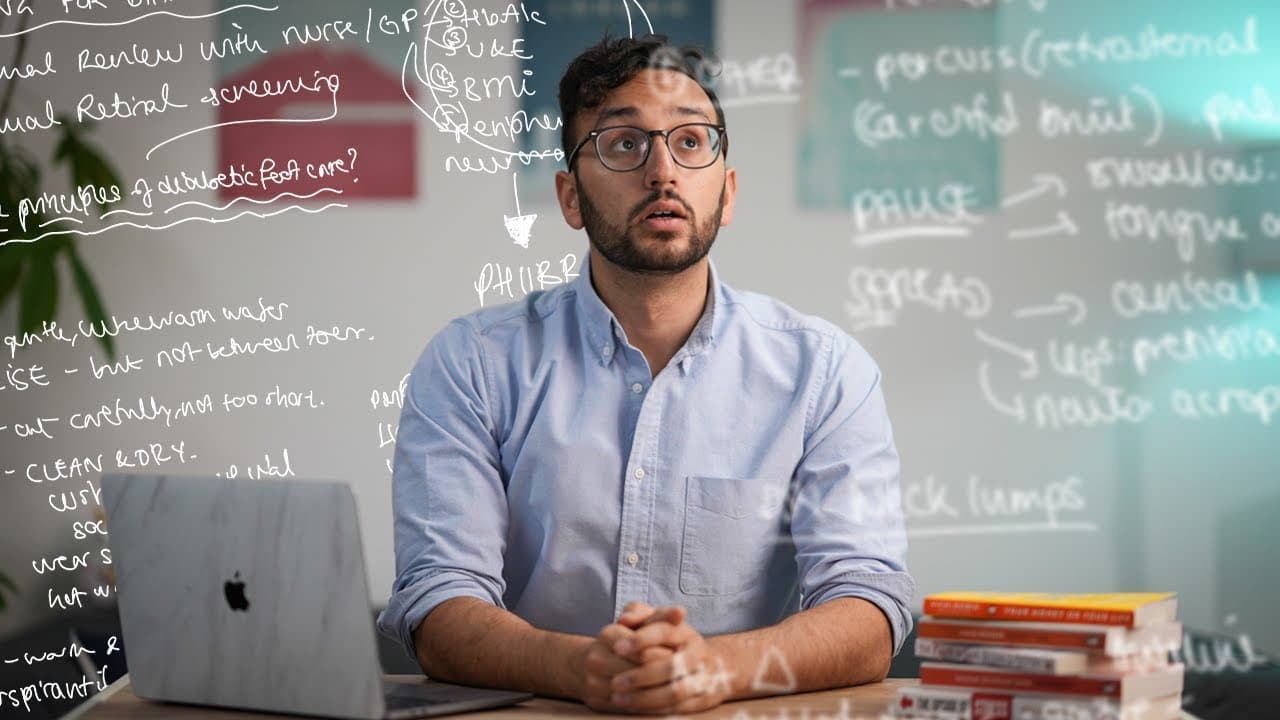
Use evidence-based techniques to learn faster and more effectively. Key strategies include sharpening your learning methods, optimising focus, immersing yourself in the subject, and actively testing your knowledge. Emphasising your weaknesses, seeking feedback, and utilising spaced repetition can significantly enhance your skill acquisition.
Transcript
- Hey friends, welcome back to the channel. Today We're talking about learning. Now, learning has been probably one of my main superpowers since I was very young. And learning how to learn is one of those meta skills that no one ever really teaches us, but that can have an enormous impact on our life in basically everything that we do. For example,... Read More
Key Insights
- ❓ Preparation and understanding the principles of learning enhance the learning process.
- ❓ Focus optimization techniques and minimizing distractions can improve learning outcomes.
- 🥺 Immersion in the learning environment leads to better skill acquisition and fluency.
- 😥 Targeting weak points and using drills and practice helps improve overall performance.
- ☢️ Active recall, testing, and feedback are effective strategies for solidifying knowledge.
- 🥺 Overlearning and understanding the "why" behind the subject or skill lead to deeper understanding and better learning outcomes.
- 🍉 Spaced repetition helps combat the forgetting curve and enhances long-term retention.
Install to Summarize YouTube Videos and Get Transcripts
Explore YouTube Video Summarizer or Get YouTube Transcript Extractor
Questions & Answers
Q: How can preparation improve learning outcomes?
Preparation, or "sharpening the axe," involves studying the principles and techniques of learning before diving into the subject. By doing so, you can accelerate your learning process and improve efficiency.
Q: How can we optimize our focus when learning?
To optimize focus, you can use techniques like the five-minute rule, which encourages starting a task with the commitment to continue for at least five minutes. Removing distractions, such as keeping the phone away, can also help maintain focus on the learning process.
Q: How does immersion contribute to learning?
Immersion creates an environment where learning becomes more natural and effective. A practical example would be learning a language by surrounding yourself with native speakers or real-life situations that require language use.
Q: How can identifying weak links improve learning?
Identifying your weak points and focusing on improving them through targeted drills and practice can help accelerate the learning process. By dedicating time to addressing your weaknesses, you can bring them up to par with your strengths.
Q: What is the role of testing in learning?
Testing, or active recall, is a valuable learning strategy. It helps reinforce knowledge by actively retrieving information from memory. Testing yourself regularly, using methods like self-quizzing or spaced repetition, can enhance learning outcomes.
Q: How does feedback contribute to learning?
Feedback is essential for learning and improvement. While positive feedback is important for motivation, constructive feedback helps identify areas for growth and improvement. Seeking feedback from coaches or mentors can accelerate the learning process.
Q: Why is overlearning important?
Overlearning goes beyond basic proficiency by striving to understand the underlying principles and mechanisms of a subject or skill. It involves continuously asking "why" and deepening your understanding, making learning more efficient and transferable.
Q: What is the significance of spacing in learning?
Spaced repetition, or spacing, allows for the reinforcement of knowledge over time to combat the forgetting curve. By strategically reviewing and revisiting learned material at intervals, information is better retained in long-term memory.
Summary & Key Takeaways
-
Sharpening the axe through preparation is essential for effective learning, whether it's studying for an exam or learning a new skill.
-
Using focus-optimization techniques, such as the five-minute rule and minimizing distractions, can enhance learning outcomes.
-
Immersion in the learning environment and real-life practice are crucial factors for accelerated learning.
Read in Other Languages (beta)
Share This Summary 📚
Summarize YouTube Videos and Get Video Transcripts with 1-Click
Try YouTube Summary with ChatGPT & Claude or YouTube Transcript Generator
Explore More Summaries from Ali Abdaal 📚





Summarize YouTube Videos and Get Video Transcripts with 1-Click
Try YouTube Summary with ChatGPT & Claude or YouTube Transcript Generator