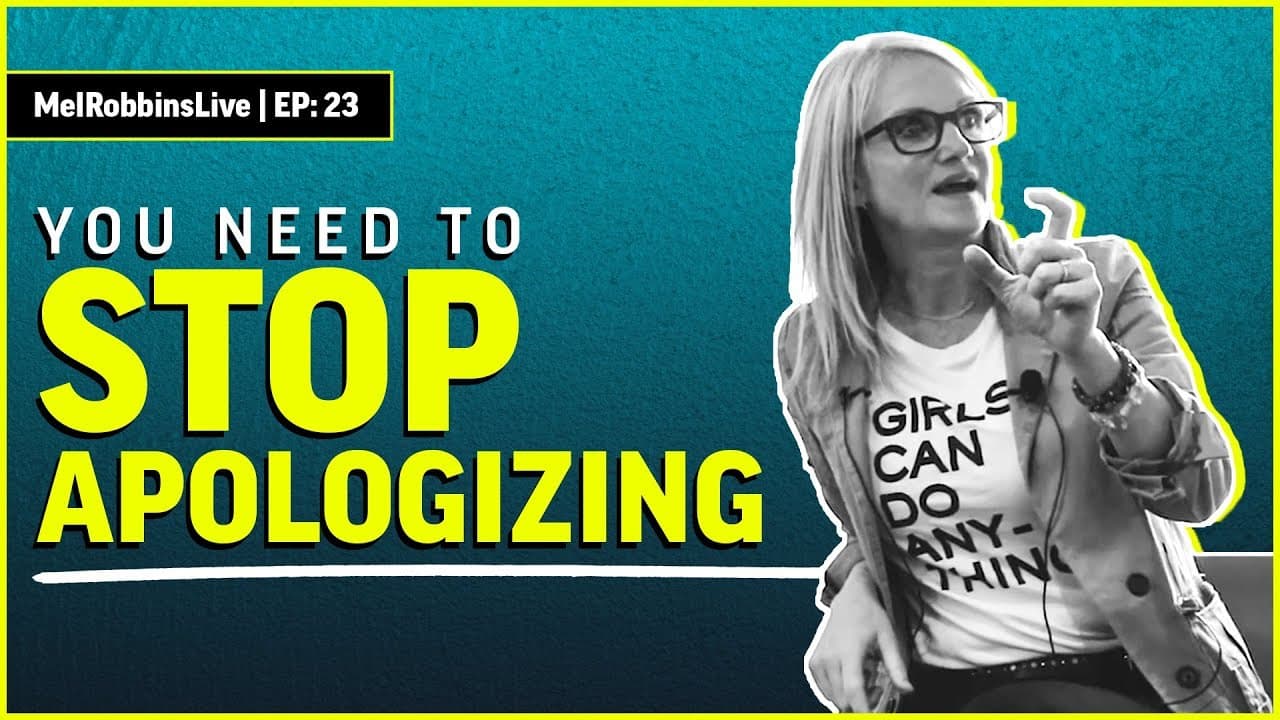
You need to stop apologizing | Mel Robbins
TL;DR
Switching from "I'm sorry" to "Thank you" shifts focus from self to others, leading to empowerment.
Transcript
and what I've come to realize is that when I say I'm sorry it's all about me and I'm making myself wrong and when I say thank you I'm actually acknowledging the other people around me this morning we had some time with with Mel earlier about apologizing yeah or about qualifying I'm sorry sorry I'm disagreeing or I'm sorry I'm late do you guys find ... Read More
Key Insights
- ❓ Language choice impacts perception and empowerment.
- ❓ Qualifying language weakens communication effectiveness.
- 📣 Managing triggers with a five-second gap improves negotiation skills.
- 🧚 Value your worth and negotiate for fair compensation in professional engagements.
- 🤳 Empowerment through intentional language shifts from self to others.
- 🏛️ Deliberate language usage builds confidence and assertiveness.
- 🥺 Recognizing triggers leads to better emotional management and decision-making.
Install to Summarize YouTube Videos and Get Transcripts
Explore YouTube Video Summarizer or Get YouTube Transcript Extractor
Questions & Answers
Q: How does switching from "I'm sorry" to "Thank you" empower individuals?
By replacing self-focused apologies with gratitude towards others, individuals shift focus and acknowledge those around them, fostering empowerment through positive interactions.
Q: How does qualifying language affect communication effectiveness?
Qualifying language such as "I think" or "actually" weakens communication by adding unnecessary doubt, reducing the impact and forcefulness of the message conveyed.
Q: How does managing triggers with a five-second gap enhance negotiation skills?
By interrupting emotional triggers with deliberate action and intentionality, individuals can manage negotiations effectively, leading to better outcomes and increased empowerment.
Q: How did the speaker's experience at a women's leadership conference change her approach to speaking engagements?
The speaker's realization at the conference that she was not getting paid for her speaking engagements led her to value her worth, negotiate for payment, and significantly increase her income.
Summary & Key Takeaways
-
Language impacts perception: "I'm sorry" focuses on self; "Thank you" acknowledges others.
-
Qualifying language weakens communication by adding unnecessary doubt.
-
Managing triggers with a five-second gap can lead to skilled negotiation and increased empowerment.
Read in Other Languages (beta)
Share This Summary 📚
Summarize YouTube Videos and Get Video Transcripts with 1-Click
Try YouTube Summary with ChatGPT & Claude or YouTube Transcript Generator
Explore More Summaries from Mel Robbins 📚




Summarize YouTube Videos and Get Video Transcripts with 1-Click
Try YouTube Summary with ChatGPT & Claude or YouTube Transcript Generator