Life Beyond Earth, Part 2: Kevin Hand | Nat Geo Live
TL;DR
Dr. Kevin Hand discusses the potential habitability of ocean worlds in our solar system and the search for life beyond Earth.
Transcript
( intro music ) ( muffled radio noises ) ( swooshing sound ) ( electronic hum ) ( audience applause ) Dr. Kevin Hand: Thank you. Thank you. The question of whether or not life exists beyond Earth is one of humanity's oldest, and I would argue, most profound, and yet unanswered, questions. And the search for life beyond Earth is, in part, the story ... Read More
Key Insights
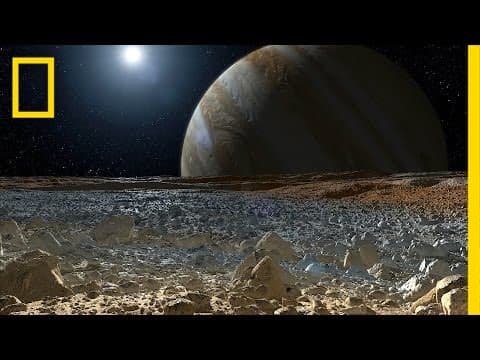
- 🌊 Ocean worlds like Europa and Enceladus offer potential habitable environments due to their subsurface liquid water reservoirs.
- 🤽 Tidal energy plays a significant role in maintaining liquid water on moons like Io, challenging traditional habitability theories.
- 👶 Dr. Kevin Hand's dream expedition to Europa involves sending a probe to explore its ocean, potentially uncovering new evidence of life beyond Earth.
- 👨🔬 Exploring ocean worlds in our solar system provides valuable insights into astrobiology and the search for extraterrestrial life.
Install to Summarize YouTube Videos and Get Transcripts
Explore YouTube Video Summarizer or Get YouTube Transcript Extractor
Questions & Answers
Q: What are some of the ocean worlds in our solar system that Dr. Kevin Hand discusses?
Dr. Hand highlights moons like Europa, Ganymede, Callisto, Titan, Enceladus, and Triton as potential ocean worlds with habitable conditions beneath their icy surfaces.
Q: How do these ocean worlds challenge the traditional concept of habitability?
These worlds challenge the traditional "Goldilocks" scenario by showing that tidal energy, rather than the proximity to a parent star, can maintain liquid water oceans and sustain potential life.
Q: Why are ocean worlds like Europa and Enceladus crucial in the search for life beyond Earth?
These worlds are compelling because they offer the necessary conditions for life as we understand it, with liquid water being a key ingredient for supporting life based on Earth's examples.
Q: What is Dr. Kevin Hand's dream expedition to Europa, and what insights does it promise?
Dr. Hand's dream involves sending a probe to Europa to explore its subsurface ocean, potentially revealing new insights into the origins of life and the possibility of alternative biochemistry beyond Earth.
Summary & Key Takeaways
-
Dr. Kevin Hand explores icy moons like Europa, Ganymede, and Enceladus as potential habitable ocean worlds in our solar system.
-
These moons challenge the traditional "Goldilocks" scenario for habitability and offer new insights into life beyond Earth.
-
An expedition dream to Europa involves sending a probe to explore its subsurface ocean, paving the way for future missions.
Read in Other Languages (beta)
Share This Summary 📚
Summarize YouTube Videos and Get Video Transcripts with 1-Click
Try YouTube Summary with ChatGPT & Claude or YouTube Transcript Generator
Explore More Summaries from National Geographic 📚




Summarize YouTube Videos and Get Video Transcripts with 1-Click
Try YouTube Summary with ChatGPT & Claude or YouTube Transcript Generator