How Do Germany and Japan Teach WWII? How Does Britain Teach the American Revolution? And Much More
TL;DR
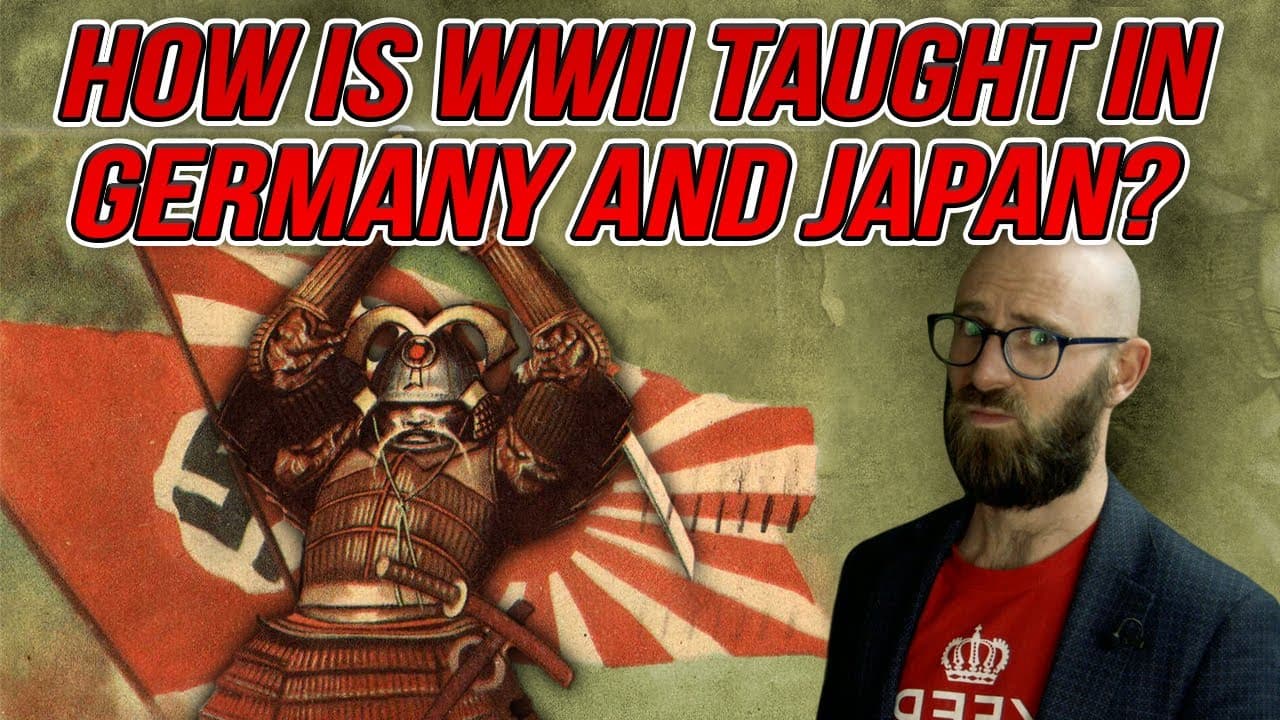
The content explores diverse perspectives on WWII and Alexander the Great's legacy across different cultures and educational systems.
Transcript
After World War II, the German state was utterly destroyed. It was split in four parts. And to top it all, coming face to face with the scale of the atrocities their government and armies committed through public events like the Nuremberg trials. This in combination with the process of denification, which can be seen as a large-scale rehabilitation... Read More
Key Insights
- 🫱 Germany's post-war educational reforms aim for accountability regarding the Nazi regime, including critical assessments of history to prevent future atrocities.
- 🧑🎓 Japan's reluctance to fully confront its wartime actions reflects a broader issue of national identity and historical narratives, impacting students' understanding of history.
- 🫵 Historical narratives are consistently shaped by cultural perspectives, significantly influencing how figures like Alexander the Great are viewed across different societies.
- 👯 The teaching of colonialism and the British Empire in the UK varies widely, often reflecting national pride while neglecting the experiences and suffering of colonized peoples.
- 🌍 Resistance to acknowledging dark chapters in a nation's history can create a skewed educational narrative that overrides nuanced understanding in favor of simplified, glorified accounts.
- 🤔 The importance of integrating multiple perspectives into education is emphasized as a means to foster critical thinking and a more comprehensive understanding of complex historical events.
- 🙈 Popular culture often romanticizes historical figures while ignoring the darker implications of their actions, demonstrating a need for an inclusive dialogue about historical legacies.
Install to Summarize YouTube Videos and Get Transcripts
Explore YouTube Video Summarizer or Get YouTube Transcript Extractor
Questions & Answers
Q: How does Germany address its wartime history in education?
Germany focuses on a comprehensive and honest assessment of its actions during WWII, including the atrocities committed by the Nazi regime. The education system emphasizes denazification and accountability, using history lessons to cultivate a sense of collective responsibility among students. The curriculum includes mandatory visits to Holocaust memorials and discussions on the ideologies that led to the war, aiming to prevent future atrocities and to foster a reflective society.
Q: What role does the Japanese educational system play in discussing wartime actions?
The Japanese educational curriculum often presents a sanitized version of WWII, where significant events like wartime atrocities are downplayed or barely mentioned. While some aspects of wartime history are taught, student awareness of issues like the Nanjing Massacre or the actions of Unit 731 is limited, leading to a lack of comprehensive understanding of Japan's role during the war. This omission stems from political pressures and a desire to maintain national pride.
Q: What are the implications of how Alexander the Great is portrayed in different cultures?
Alexander the Great is viewed as a heroic figure in Western narratives, often celebrated for his conquests and cultural diffusion. In contrast, in Persian cultures, he is often regarded as a barbarian invader responsible for destruction and loss of cultural identity. This divergence illustrates how history can be shaped by victors versus the perspectives of the conquered and serves as a reminder that narratives can heavily influence national identity and historical pride.
Q: How does collective memory influence education about colonialism in the UK?
In the UK, the history of the British Empire is often taught in a nationalistic framework that glorifies colonial achievements while downplaying or omitting the associated atrocities and injustices. As students learn about the Empire, there is an ongoing debate about the need for a more inclusive curriculum that addresses the negative impacts of colonialism, particularly in light of rising awareness around race and historical injustices. Teachers and historians argue for a more balanced approach to ensure that students learn both sides of this complex history.
Summary & Key Takeaways
-
The aftermath of WWII saw Germany and Japan teaching about their wartime actions in contrasting ways, with Germany emphasizing accountability and Japan often downplaying its role in war crimes.
-
Educational content on WWII in Germany focuses on the horrors of the Nazi regime, emphasizing collective responsibility, while Japanese curricula tend to simplify or omit darker historical events, resulting in less awareness of atrocities committed.
-
The legacy of Alexander the Great is diverse; while he is celebrated in Western narratives as a conqueror, in Persia he is often viewed as a barbarian invader, highlighting the complexities of historical interpretation.
Read in Other Languages (beta)
Share This Summary 📚
Summarize YouTube Videos and Get Video Transcripts with 1-Click
Try YouTube Summary with ChatGPT & Claude or YouTube Transcript Generator
Explore More Summaries from Today I Found Out 📚






Summarize YouTube Videos and Get Video Transcripts with 1-Click
Try YouTube Summary with ChatGPT & Claude or YouTube Transcript Generator