What Are the Differences Between Serial and Parallel Data Transmission?
TL;DR
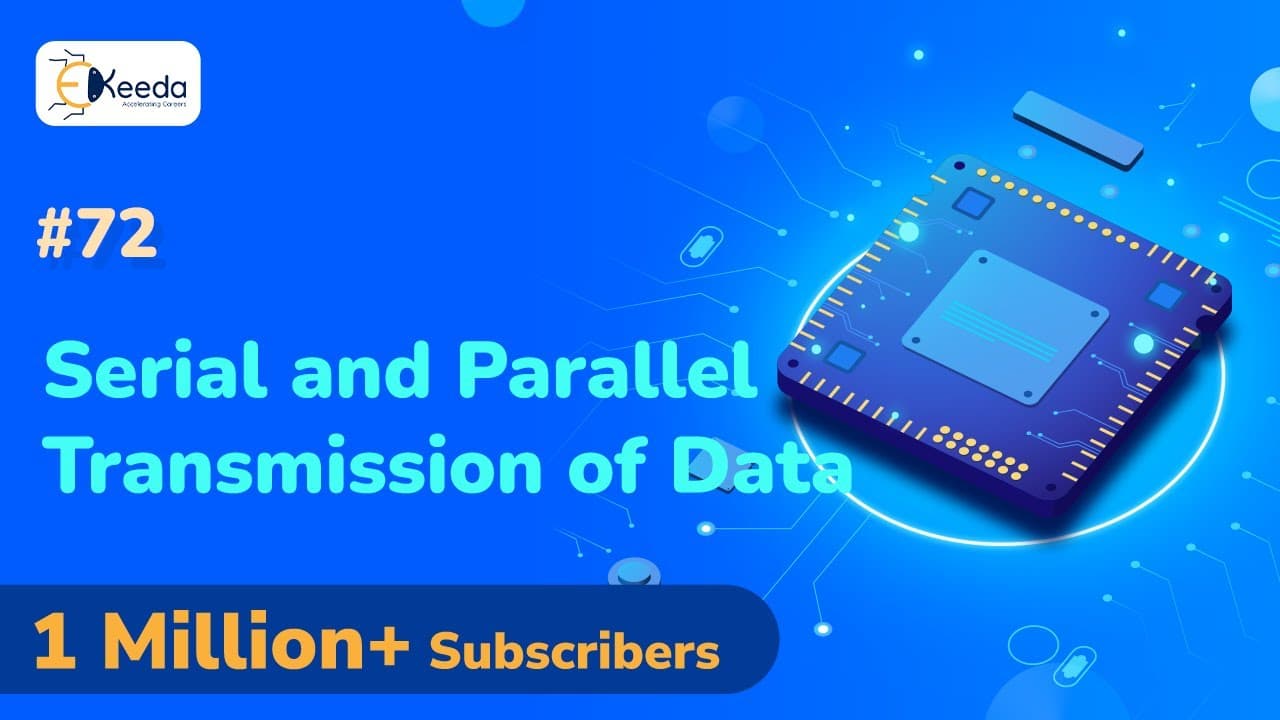
Serial data transmission sends one bit at a time, making it ideal for long distances due to lower cost and fewer wires. In contrast, parallel transmission sends all bits simultaneously, offering faster speeds over shorter distances, but requires more wiring, making it less practical for long-range communication.
Transcript
hello friends in this video we will study that what is known as serial and parallel transmission of data so let us start with our topic whenever two components they are communicating with each other communication means that they are either transmitting the data between each other or one item is receiving and sending the data so if we say that we ar... Read More
Key Insights
- ❓ Components communicate through serial or parallel data transmission.
- 🛰️ Serial transmission sends one bit at a time, making it cost-effective and space-efficient for long distances.
- 💨 Parallel transmission sends all bits simultaneously, offering faster data transfer over short distances.
- 😀 Serial transmission avoids crosstalk and clock skew issues faced by parallel transmission.
- 🪘 Modern technology favors serial transmission for long-distance data transfer.
- 🚠 Serial transmission costs less due to fewer interconnecting cables.
- ⏰ Clock skew problems are minimized in serial transmission as the clock signal is sent through a single wire.
Install to Summarize YouTube Videos and Get Transcripts
Explore YouTube Video Summarizer or Get YouTube Transcript Extractor
Questions & Answers
Q: What is the difference between serial and parallel data transmission?
Serial transmission sends one bit at a time, while parallel transmission sends all bits simultaneously. Serial is cost-effective, while parallel is faster but more expensive due to multiple wires.
Q: Why is serial data transmission preferred for long distances?
Serial data transmission is preferred for long distances because it requires fewer interconnecting cables, is less prone to crosstalk, and avoids clock skew issues that parallel transmission faces.
Q: What are the disadvantages of parallel data transmission?
Parallel data transmission requires more hardware, is susceptible to crosstalk issues, and faces clock skew problems due to varying arrival times of clock signals to different components.
Q: How does serial data transmission benefit modern technology?
Serial data transmission is preferred in modern technology for long-distance communication due to cost-effectiveness, space efficiency, absence of crosstalk issues, and better sync of clock signals to components.
Summary & Key Takeaways
-
Components communicate by sending or receiving data, termed as serial or parallel transmission.
-
Serial transmission sends one bit at a time, while parallel sends all bits at once.
-
Serial transmission is cost-effective for long distances, while parallel is faster over shorter distances.
Read in Other Languages (beta)
Share This Summary 📚
Summarize YouTube Videos and Get Video Transcripts with 1-Click
Try YouTube Summary with ChatGPT & Claude or YouTube Transcript Generator
Explore More Summaries from Ekeeda 📚




Summarize YouTube Videos and Get Video Transcripts with 1-Click
Try YouTube Summary with ChatGPT & Claude or YouTube Transcript Generator