What should museums do with their dead? (w/ Caitlin Doughty!)
TL;DR
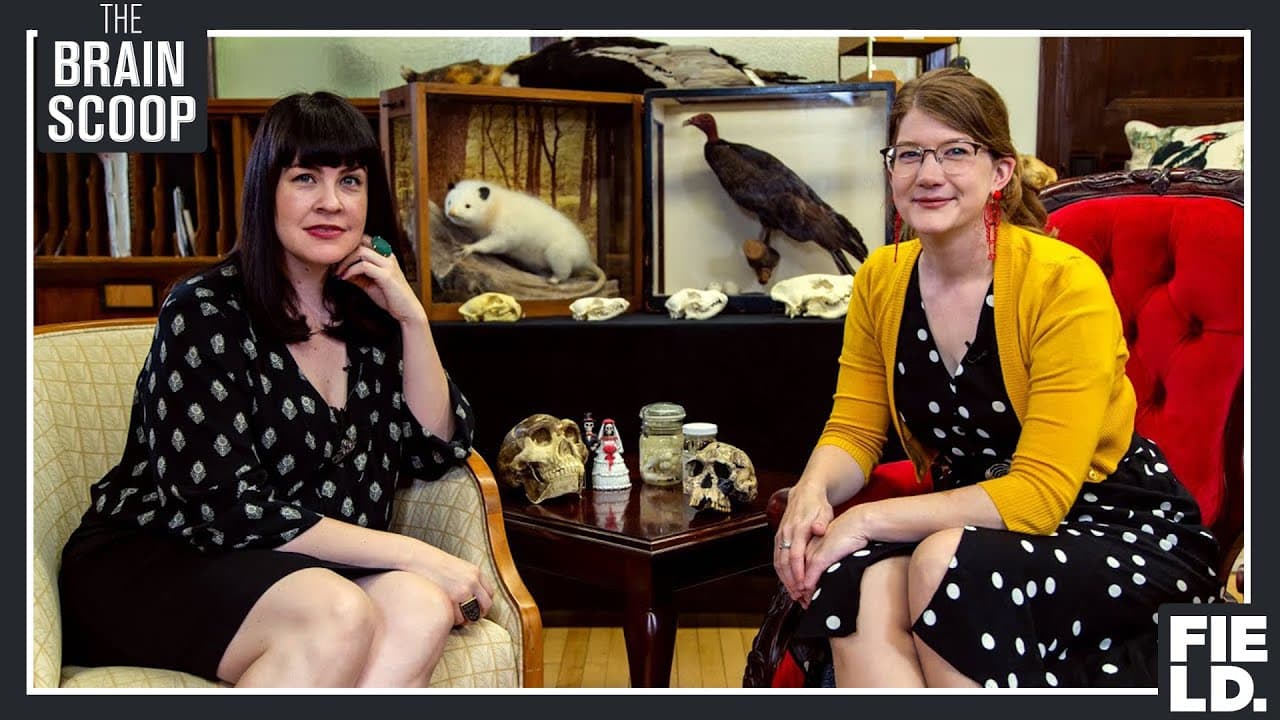
Emily and Kaitlyn discuss the sensitive topic of human remains in museums, emphasizing consent and ethical considerations.
Transcript
we have a super special guest on our program today it's Kaitlyn Dhoni me from ask a mortician I'm so glad to finally be here the old museum with the world-famous Emily graslie I'm famous in some weird circles but you're famous in my circles I go gosh they are so excited I think we just the concentric circles concentric circle that's us in the middl... Read More
Key Insights
- 🇨🇫 Consent is a central issue in discussions about human remains in museum collections.
- 🫡 Museum policies are evolving to prioritize respect, transparency, and sensitivity in managing human remains.
- 👔 The public's curiosity must be balanced with ethical considerations and the diverse perspectives of communities tied to the remains.
- ❓ Repatriation, cultural sensitivity, and ongoing dialogue are crucial aspects of responsible management of human remains in museums.
- 🫡 Displaying human remains must prioritize respect, education, and ethical considerations over entertainment.
- 🔠 The conversation about human remains in museums is complex, requiring input from diverse voices and ongoing engagement with ethical dilemmas.
- 🍵 Historical practices of handling human remains in museums are being reassessed and adjusted to align with modern ethical standards.
Install to Summarize YouTube Videos and Get Transcripts
Explore YouTube Video Summarizer or Get YouTube Transcript Extractor
Questions & Answers
Q: Why is the topic of human remains in museum collections a difficult conversation?
The conversation is challenging due to historical violations of consent, diverse origins of remains, and the ethical considerations required in handling human remains respectfully.
Q: How does consent play a crucial role in discussing human remains?
Consent is vital as many human remains in museum collections were not obtained with consent, leading to ethical dilemmas about how to handle and display them respectfully.
Q: What changes have museums made regarding the display of human remains?
Museums are adopting policies to ensure transparency, sensitivity to requests for visitation, research, and balancing the public's curiosity with the respect owed to individuals whose remains are in collections.
Q: Why is ongoing dialogue about human remains essential in museum settings?
Continual discussion is crucial to navigate the complexities of repatriation, ethical exhibition practices, and balancing scientific research with respecting the cultural and individual identities tied to human remains.
Summary & Key Takeaways
-
Emily and Kaitlyn discuss the challenging conversation around human remains in museum collections.
-
They highlight the importance of consent, respect, and the need for ongoing dialogue in handling human remains.
-
The conversation touches on the history, diversity, and complexity of managing human remains ethically.
Read in Other Languages (beta)
Share This Summary 📚
Summarize YouTube Videos and Get Video Transcripts with 1-Click
Try YouTube Summary with ChatGPT & Claude or YouTube Transcript Generator
Explore More Summaries from thebrainscoop 📚



Summarize YouTube Videos and Get Video Transcripts with 1-Click
Try YouTube Summary with ChatGPT & Claude or YouTube Transcript Generator