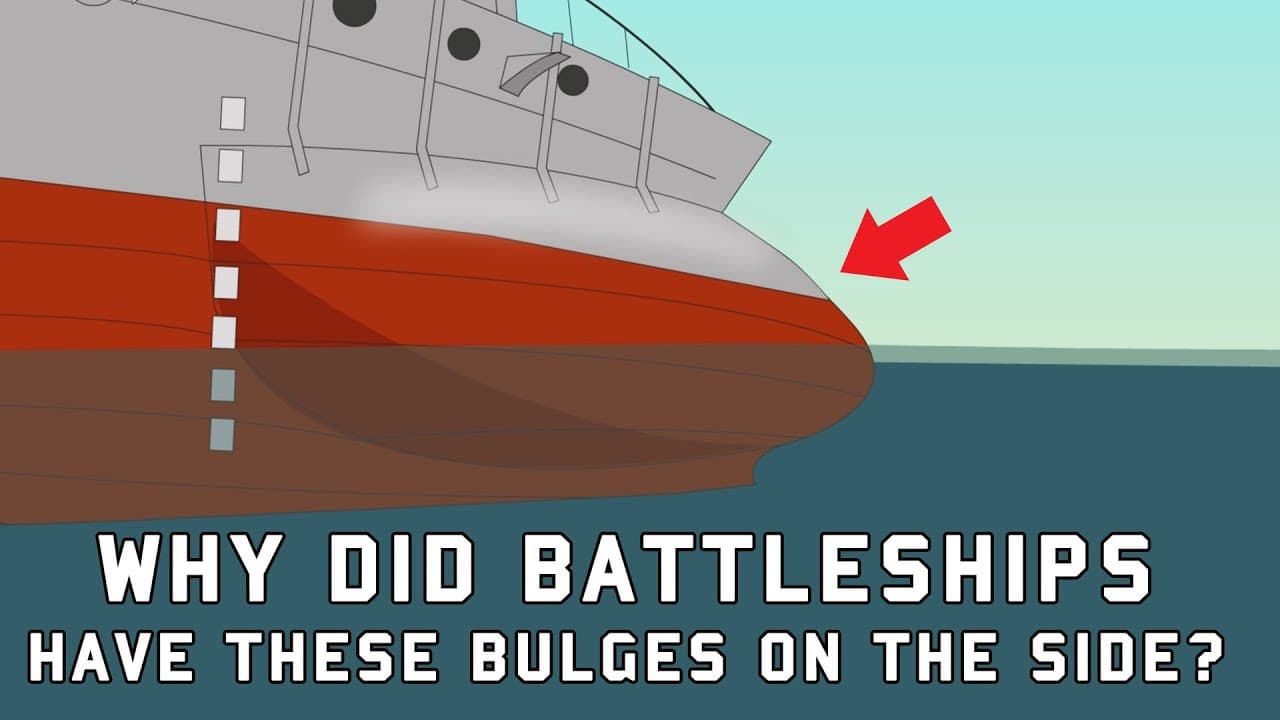
Why did Battleships have these Bulges on the Side?
TL;DR
Battleships in the early to mid-20th century had bulges on the side to protect against torpedoes, but their effectiveness diminished with the rise of submarines and aircraft carriers.
Transcript
this video was made possible by world of warships legends an epic naval strategy console game where you can battle for supremacy on the seas available to download for free from the playstation store and microsoft store recruit historical commanders to lead your armada to victory and you reenact world war 1 and world war ii naval battles using subma... Read More
Key Insights
- ❓ The development of bulges on battleships was a response to the threat posed by torpedoes in World War 1.
- 👍 Anti-torpedo bulges proved highly effective in protecting ships from torpedo strikes.
- 😮 The effectiveness of bulges diminished with the rise of submarines and aircraft carriers in World War 2.
Install to Summarize YouTube Videos and Get Transcripts
Explore YouTube Video Summarizer or Get YouTube Transcript Extractor
Questions & Answers
Q: Why did battleships have bulges on the side?
Battleships had bulges on the side to protect against torpedoes, as a torpedo hitting the hull below the waterline could sink the ship. The bulges were designed to cause the torpedo to detonate prematurely.
Q: How effective were the anti-torpedo bulges?
The anti-torpedo bulges proved highly effective in saving many ships from being sunk by torpedoes. Ships fitted with these bulges, such as the Revenge class battleships, were able to survive torpedo strikes with minimal damage.
Q: Did the bulges impact the speed of the ships?
Yes, the bulges made the ships slightly slower as the hull was less hydrodynamic. Ships with bulges were typically around two miles per hour slower than those without. However, the protection provided by the bulges outweighed the loss of speed.
Q: How did naval warfare change after World War 2?
With the rise of submarines, aircraft carriers, and anti-ship missiles, the emphasis shifted from armored protection to detecting and destroying torpedo-armed units. Rapid-firing cannons and electronic countermeasures became important in naval defense.
Summary & Key Takeaways
-
Battleships in World War 1 faced a threat from torpedoes launched by agile boats and submarines, leading to the development of bulges on the side of the hull.
-
The anti-torpedo bulges, filled with water and air, were effective in absorbing the force of the torpedo explosion and protecting the ship.
-
However, as submarines and aircraft carriers became dominant in naval warfare during World War 2, the focus shifted to detecting and destroying torpedo-armed units.
Read in Other Languages (beta)
Share This Summary 📚
Summarize YouTube Videos and Get Video Transcripts with 1-Click
Try YouTube Summary with ChatGPT & Claude or YouTube Transcript Generator
Explore More Summaries from Simple History 📚




Summarize YouTube Videos and Get Video Transcripts with 1-Click
Try YouTube Summary with ChatGPT & Claude or YouTube Transcript Generator