Spanish colonization | Period 1: 1491-1607 | AP US History | Khan Academy
TL;DR
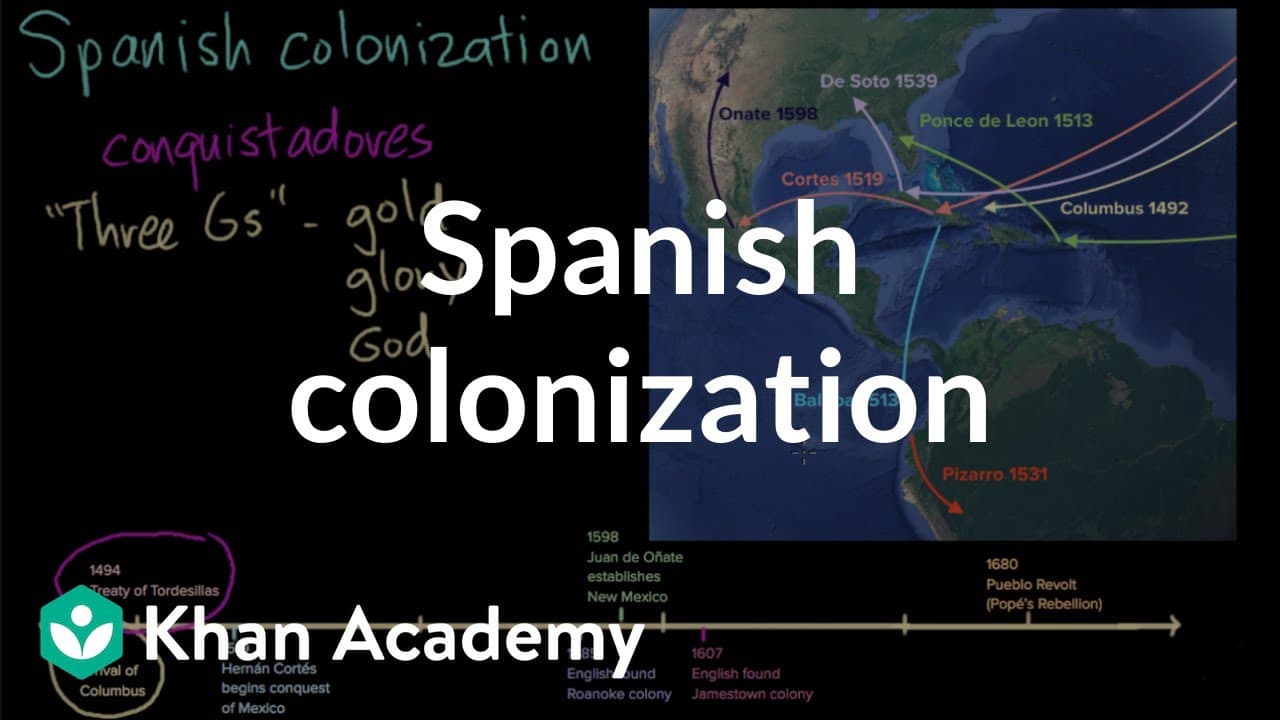
Spanish colonization of the New World led to the conquest of the Aztec Empire, a blend of Spanish and Native American culture, resistance to colonization, and the development of a racial caste system.
Transcript
- [Instructor] Imagine that one day you are standing in your backyard when all of a sudden you saw an alien ship land and the alien ship had incredible technology and you saw aliens walking out of the ship bearing strange animals, maybe scary looking weapons and speaking a very strange language. What would you do? Would you try to be kind to the al... Read More
Key Insights
- 🏅 Spanish colonization in the New World was driven by the three Gs: gold, glory, and God.
- 🦻 The conquest of the Aztec Empire by Cortes was aided by native allies and the spread of deadly diseases.
- 💁 The Encomiendas System served as a form of coerced labor and contributed to the decline of the native population.
- 🧑🏭 Native people resisted Spanish colonization through syncretism and acts of rebellion like the Pueblo Revolt.
- 🇳🇨 The racial caste system developed by the Spanish reflected the diversity of the New World society.
- 👯 Spanish colonization focused on Christianizing and enslaving native people, while English settlers aimed to eradicate them.
Install to Summarize YouTube Videos and Get Transcripts
Explore YouTube Video Summarizer or Get YouTube Transcript Extractor
Questions & Answers
Q: What were the motivations of Spanish explorers during the colonization of the New World?
Spanish explorers were driven by the three Gs of colonization: gold, glory, and God. They sought wealth, fame for themselves and their nation, and the conversion of native peoples to Catholicism.
Q: How did Hernan Cortes conquer the Aztec Empire?
Cortes arrived in Mexico in 1519 and exploited the Aztecs' unpopularity among smaller tribes. With the help of native allies and the introduction of deadly diseases, he eventually overpowered the Aztec capital, Tenochtitlan.
Q: How did the Encomiendas System impact the native population?
The Encomiendas System allowed Spanish landholders to exploit the labor of the Native Americans. Combined with harsh treatment and disease, this led to a steep decline in the native population.
Q: What were the forms of resistance to Spanish colonization?
Native people resisted Spanish colonization through syncretism, combining Native American beliefs with Christianity. They also engaged in more overt acts of resistance, such as the Pueblo Revolt in 1680, led by Pope, which resulted in the expulsion of the Spanish from the region.
Summary & Key Takeaways
-
Spanish explorers, driven by the desire for wealth, glory, and spreading Catholicism, began exploring the Americas after Columbus' first voyage.
-
Hernan Cortes and his men conquered the Aztec Empire with the help of native allies and the spread of deadly diseases like smallpox.
-
The Spanish established the Encomiendas System, a form of coerced labor that resembled slavery, leading to the decline of the native population.
-
Native people resisted Spanish colonization through subtle means like syncretism and more overt acts like the Pueblo Revolt in 1680.
Read in Other Languages (beta)
Share This Summary 📚
Summarize YouTube Videos and Get Video Transcripts with 1-Click
Try YouTube Summary with ChatGPT & Claude or YouTube Transcript Generator
Explore More Summaries from Khan Academy 📚



Summarize YouTube Videos and Get Video Transcripts with 1-Click
Try YouTube Summary with ChatGPT & Claude or YouTube Transcript Generator