Cylindrical Magnetron Oscillators - Microwave Crossed Field Tubes M Type - Microwave Engineering
TL;DR
Understanding the working principles of a cylindrical magnetron oscillator for generating microwave signals.
Transcript
click the bell icon to get latest videos from ekeeda hello friends i welcome you all to this video this is the second video in our chapter number three of micro engineering we are going to address cylindrical magnetron oscillator so it is very very clear that the oscillators are generations of the microwave signal so here the microwave signals are ... Read More
Key Insights
- 🪡 Cylindrical magnetron oscillators generate microwave signals without the need for RF input.
- 😵 The device relies on the cross orientation of the DC electric and magnetic fields for operation.
- 🏑 Electron motion in the oscillator follows a cycloidal path due to the interaction of magnetic and electric fields.
- 💇 Hull's cut-off conditions define criteria to prevent electrons from reaching the anode.
- 🖐️ The cylindrical shape of the cathode and anode plays a crucial role in guiding electron motion.
- 🤩 Magnetic flux density and anode potential are key factors in the operation of the oscillator.
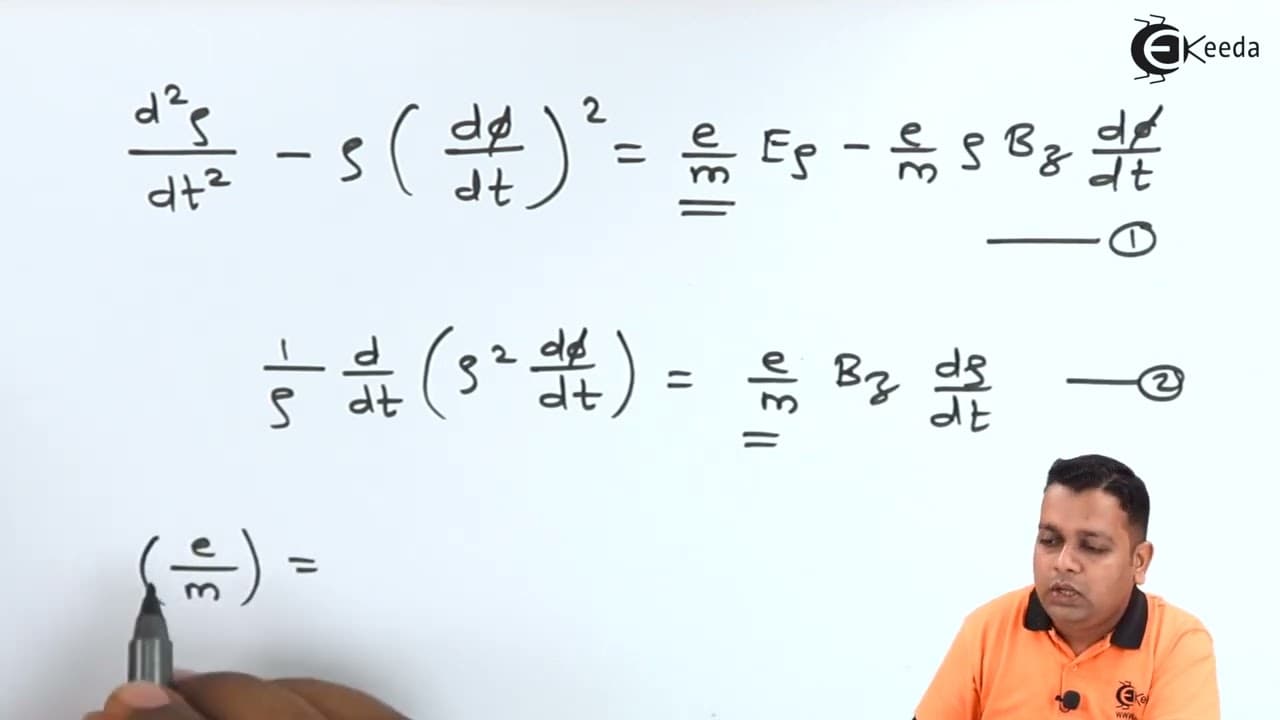
- ❓ Understanding electron motion equations is essential for analyzing the functioning of the magnetron oscillator.
Install to Summarize YouTube Videos and Get Transcripts
Explore YouTube Video Summarizer or Get YouTube Transcript Extractor
Questions & Answers
Q: How does a cylindrical magnetron oscillator generate microwave signals?
A cylindrical magnetron oscillator generates microwave signals through the cross orientation of DC electric and magnetic fields, allowing for electron motion and signal generation without RF input.
Q: What is the significance of the shape of the cathode and anode in the device?
The cylindrical shape of the cathode and anode in the magnetron oscillator aids in creating a cycloidal path for electron motion, crucial for generating microwave signals.
Q: How are magnetic fields and electric fields utilized in the operation of the oscillator?
Magnetic fields and electric fields work together to guide electron motion in the oscillator, ensuring a cycloidal path instead of a linear one, crucial for signal generation.
Q: What are the Hull's cut-off conditions in the context of a cylindrical magnetron oscillator?
Hull's cut-off conditions define the magnetic field density and voltage requirements to prevent electrons from reaching the anode, crucial for the proper functioning of the oscillator.
Summary & Key Takeaways
-
Cylindrical magnetron oscillator generates microwave signals without the need for RF input.
-
The device has a cross orientation of the DC electric and magnetic fields.
-
Electron motion in the device is governed by the presence of both fields, leading to a cycloidal path.
Read in Other Languages (beta)
Share This Summary 📚
Summarize YouTube Videos and Get Video Transcripts with 1-Click
Try YouTube Summary with ChatGPT & Claude or YouTube Transcript Generator
Explore More Summaries from Ekeeda 📚






Summarize YouTube Videos and Get Video Transcripts with 1-Click
Try YouTube Summary with ChatGPT & Claude or YouTube Transcript Generator