Products
Features
YouTube Video Summarizer
Summarize YouTube videos
Web & PDF Highlighter
Highlight web pages & PDFs
Chat with PDF
Ask any PDF questions with AI
Ask AI Clone
Chat with your highlights & memories
Audio Transcriber
Transcribe audio files to text
Glasp Reader
Read and highlight articles
Kindle Highlight Export
Export your Kindle highlights
Idea Hatch
Hatch ideas from your highlights
Integrations
Obsidian Plugin
Notion Integration
Pocket Integration
Instapaper Integration
Medium Integration
Readwise Integration
Snipd Integration
Hypothesis Integration
Apps & Extensions
Chrome Extension
Safari Extension
Edge Add-ons
Firefox Add-ons
iOS App
Android App
Discover
Discover
Ideas
Discover new ideas and insights
Articles
Curated articles and insights
Books
Book recommendations by great minds
Posts
Essays and notes from readers
Quotes
Inspiring quotes collection
Videos
Curated videos and summaries
Explore Glasp
Glasp Newsletter
Weekly insights and updates
Glasp Talk
Interview series with great minds
Glasp Blog
Latest news and articles
Glasp Use Cases
Learn how others use Glasp
Build & Support
Glasp API
Access Glasp's API for developers
MCP Connector
Connect Glasp to Claude & ChatGPT
Community
Glasp Reddit Community
Students
Student discount and benefits
FAQs
Frequently Asked Questions
AboutPricing
DashboardLog inSign up

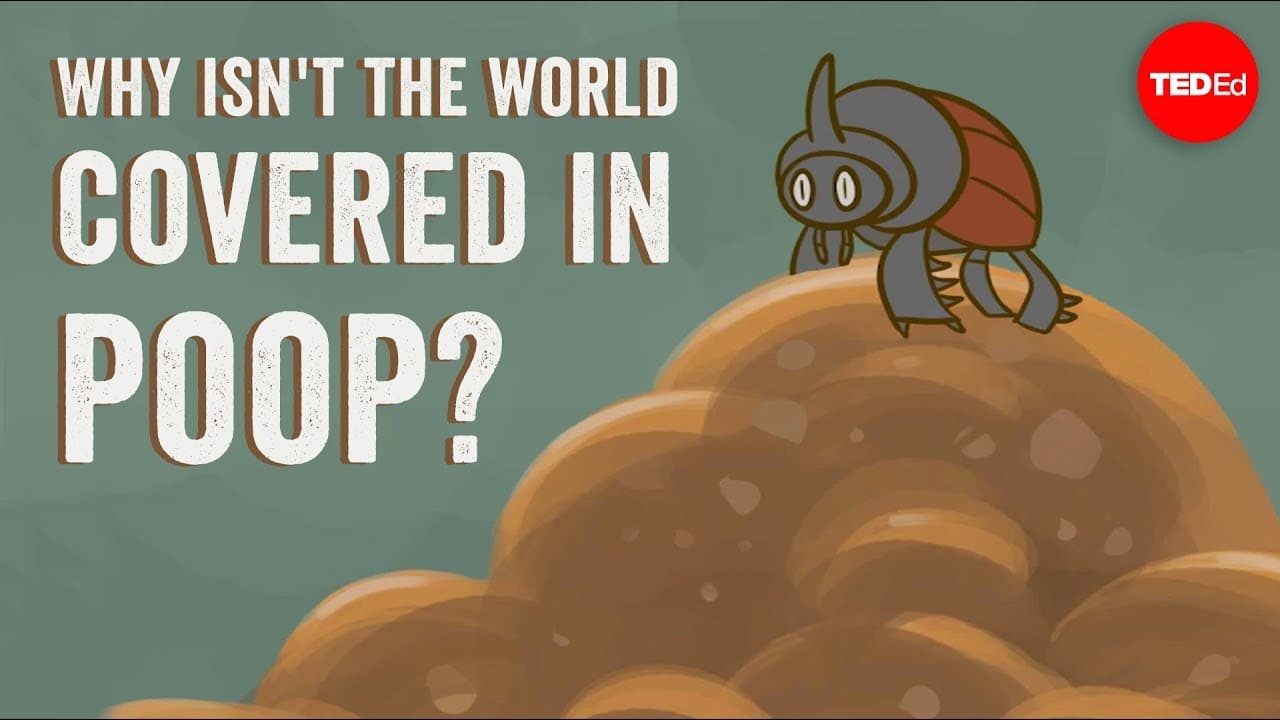
Why isn't the world covered in poop? - Eleanor Slade and Paul Manning
5.3M views
•
March 26, 2018
by
TED-Ed
YouTube video player
Why isn't the world covered in poop? - Eleanor Slade and Paul Manning

TL;DR

Dung beetles play a crucial role in nature by cleaning up animal feces, aiding in seed dispersal, benefiting agriculture, and reducing greenhouse gas emissions.

Transcript

Somewhere near you, an animal is defecating. In fact, each day, the animal kingdom produces roughly enough dung to match the volume of water pouring over the Victoria Falls. So why isn’t the planet covered in the stuff? You can thank the humble dung beetle for eating up the excess. Capable of burying 250 times their body weight in a single ni... Read More

Key Insights

  • 👎 Dung beetles bury animal waste, preventing the planet from being overrun by feces.
  • 🤣 Their diverse strategies for dealing with dung include rolling, tunneling, and dwelling.
  • 🪲 Dung beetles are crucial for agriculture by spreading seeds and enriching soil with nutrients.
  • 🫢 They play a significant role in reducing greenhouse gas emissions associated with livestock farming.
  • 🪲 The economic value of dung beetles in agriculture is substantial, contributing millions of dollars every year.
  • 🌱 Dung beetles inadvertently protect seeds by burying them along with dung, aiding in seed dispersal.
  • 🌱 Their actions have ecological importance beyond just waste removal, with implications for plant growth and climate change.

Install to Summarize YouTube Videos and Get Transcripts

Explore YouTube Video Summarizer or Get YouTube Transcript Extractor

Questions & Answers

Q: How do dung beetles contribute to seed dispersal?

Dung beetles inadvertently protect seeds from predators and help them germinate by burying them along with dung, aiding in the dispersal of seeds from fruits consumed by animals.

Q: What is the economic value of dung beetles in agriculture?

Dung beetles are estimated to provide services worth $380 million a year in the US and ÂŁ367 million a year in the UK by breaking down dung, enriching soil with nutrients, and benefiting plant growth.

Q: How do dung beetles help reduce greenhouse gas emissions?

Dung beetles prevent methane emissions from livestock dung by oxygenating pats when they tunnel into them, thus disrupting the microbial production of methane, contributing to the reduction of greenhouse gases.

Summary & Key Takeaways

  • Dung beetles are essential in preventing the planet from being covered in animal waste, with over 7,000 known species across six continents, except Antarctica.

  • They fall into three main groups: rollers, tunnelers, and dwellers, each with unique dung-burying strategies to secure food and reproduce.

  • Dung beetles have ecological significance as secondary seed dispersers, benefiting agriculture by breaking down dung, and reducing methane emissions.


Read in Other Languages (beta)

English

Share This Summary 📚

Summarize YouTube Videos and Get Video Transcripts with 1-Click

Download browser extensions on:

Try YouTube Summary with ChatGPT & Claude or YouTube Transcript Generator

Explore More Summaries from TED-Ed 📚
Why do animals have such different lifespans? - Joao Pedro de Magalhaes thumbnail
Why do animals have such different lifespans? - Joao Pedro de Magalhaes
TED-Ed
5 tips to improve your critical thinking - Samantha Agoos thumbnail
5 tips to improve your critical thinking - Samantha Agoos
TED-Ed
What would happen if you didn’t sleep? - Claudia Aguirre thumbnail
What would happen if you didn’t sleep? - Claudia Aguirre
TED-Ed
Why sitting is bad for you - Murat Dalkilinç thumbnail
Why sitting is bad for you - Murat Dalkilinç
TED-Ed
The psychology of narcissism - W. Keith Campbell thumbnail
The psychology of narcissism - W. Keith Campbell
TED-Ed
How do pregnancy tests work? - Tien Nguyen thumbnail
How do pregnancy tests work? - Tien Nguyen
TED-Ed

Summarize YouTube Videos and Get Video Transcripts with 1-Click

Download browser extensions on:

Try YouTube Summary with ChatGPT & Claude or YouTube Transcript Generator

Apps & Extensions

  • Chrome Extension
  • Safari Extension
  • Edge Add-ons
  • Firefox Add-ons
  • iOS App
  • Android App

Key Features

  • YouTube Video Summarizer
  • Web & PDF Summarizer
  • Web & PDF Highlighter
  • Chat with PDF
  • Ask AI Clone
  • Audio Transcriber
  • Glasp Reader
  • Kindle Highlight Export
  • Idea Hatch

Integrations

  • Obsidian Plugin
  • Notion Integration
  • Pocket Integration
  • Instapaper Integration
  • Medium Integration
  • Readwise Integration
  • Snipd Integration
  • Hypothesis Integration

More Features

  • APIs
  • MCP Connector
  • Blog & Post
  • Embed Links
  • Image Highlight
  • Personality Test
  • Quote Shots

Company

  • About us
  • Blog
  • Community
  • FAQs
  • Job Board
  • Newsletter
  • Pricing
Terms

•

Privacy

•

Guidelines

© 2026 Glasp Inc. All rights reserved.