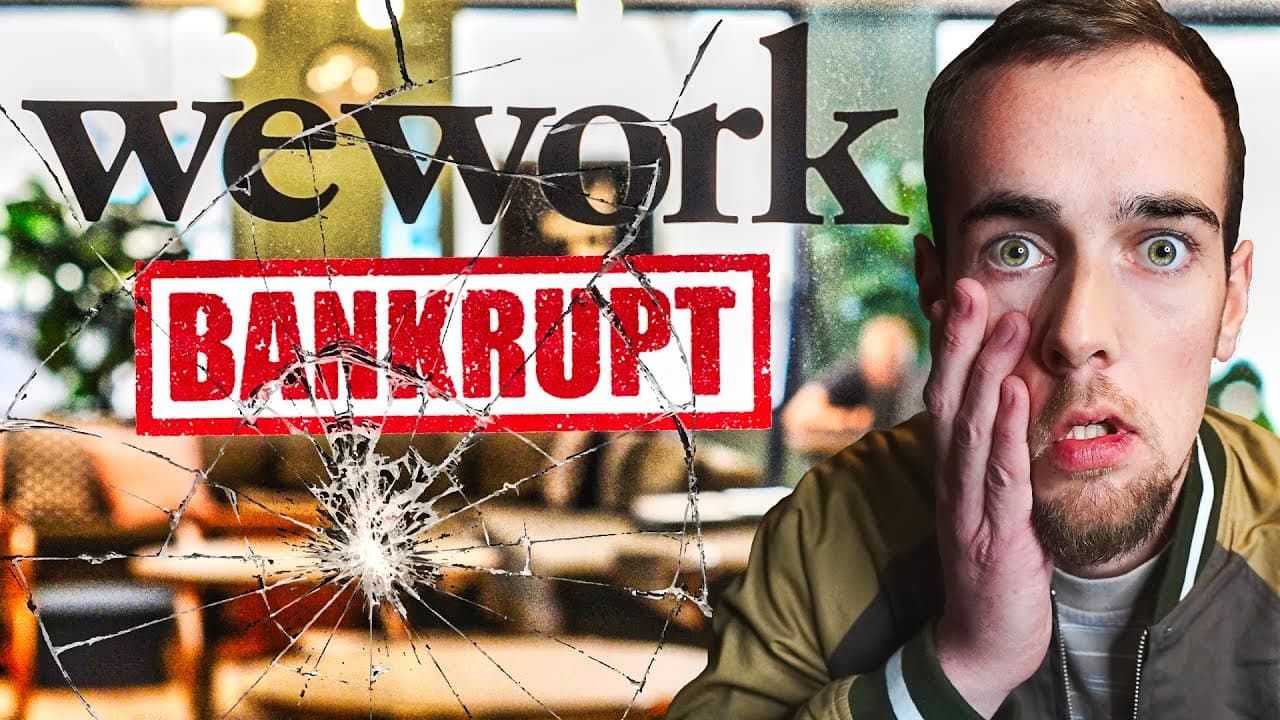
WeWork Goes BANKRUPT: From $47 Billion To $0
TL;DR
WeWork, a company that went public via special purpose acquisition company (SPAC), has filed for Chapter 11 bankruptcy due to its inability to make interest payments and its unsustainable business model.
Transcript
if you had invested $1,000 in wew work stock the day they went public via back today that investment would be worth $210 barely enough to buy a cup of coffee us corporations are filing for bankruptcies at an alarming rate as the Federal Reserve is holding strong on their higher interest rates so far in 2023 that list of major bankruptcies includes ... Read More
Key Insights
- 👨💼 WeWork's bankruptcy filing highlights the consequences of its unsustainable business model and excessive debt.
- 🤪 The company's stock decline after going public via SPAC reflects the risks associated with such investment vehicles.
- 🌸 SoftBank, a major investor, suffered significant losses, demonstrating the financial impact of WeWork's downfall.
- 😮 The commercial real estate sector as a whole is facing challenges, with rising interest rates and decreased property values leading to potential bankruptcies.
- ☠️ WeWork's bankruptcy is likely just the beginning of a wave of corporate bankruptcies, as companies struggle to refinance debt at higher interest rates.
- 😀 Both institutional and retail investors faced substantial losses in the WeWork case, emphasizing the need for thorough due diligence and risk assessment.
- 👨💼 The bankruptcy demonstrates the importance of adaptability and sustainable business models, especially during times of economic uncertainty.
Install to Summarize YouTube Videos and Get Transcripts
Explore YouTube Video Summarizer or Get YouTube Transcript Extractor
Questions & Answers
Q: What led to WeWork's bankruptcy filing?
WeWork faced financial difficulties due to its massive debt and inability to make interest payments, leading to negative equity. Additionally, its business model of long-term leases for short-term rentals proved unsustainable.
Q: How did WeWork's valuation change after going public?
WeWork had an initial valuation of $9 billion, but within the first year after its IPO, its stock lost 75% of its value. Subsequently, it lost an additional 83% and 95%, resulting in a share price of $0.84.
Q: Who were the major losers in WeWork's downfall?
SoftBank, a major investor, saw its $5 billion investment in WeWork shrink to $4.4 million, representing a 99.9% loss. Retail investors who participated in the IPO also suffered significant losses.
Q: Can the former CEO of WeWork, Adam Newman, be fully blamed for the company's situation?
While Adam Newman played a role in WeWork's expansion and reckless spending, he stepped down as CEO in 2019, four years before the bankruptcy filing. The current situation is more attributed to the pandemic and slow return to office trends.
Summary & Key Takeaways
-
WeWork reported total debts of $18.5 billion against $15 billion in assets, leading to negative equity of $3.5 billion.
-
WeWork's stock lost 75% of its value in the first year after going public, followed by further declines of 83% and 95%.
-
The bankruptcy is limited to their operations in the United States and Canada, and while the company is likely to survive, it needs to restructure its debts.
Read in Other Languages (beta)
Share This Summary 📚
Summarize YouTube Videos and Get Video Transcripts with 1-Click
Try YouTube Summary with ChatGPT & Claude or YouTube Transcript Generator
Explore More Summaries from Ryan Scribner 📚



Summarize YouTube Videos and Get Video Transcripts with 1-Click
Try YouTube Summary with ChatGPT & Claude or YouTube Transcript Generator