How I coded a BAR GRAPH with REACT
TL;DR
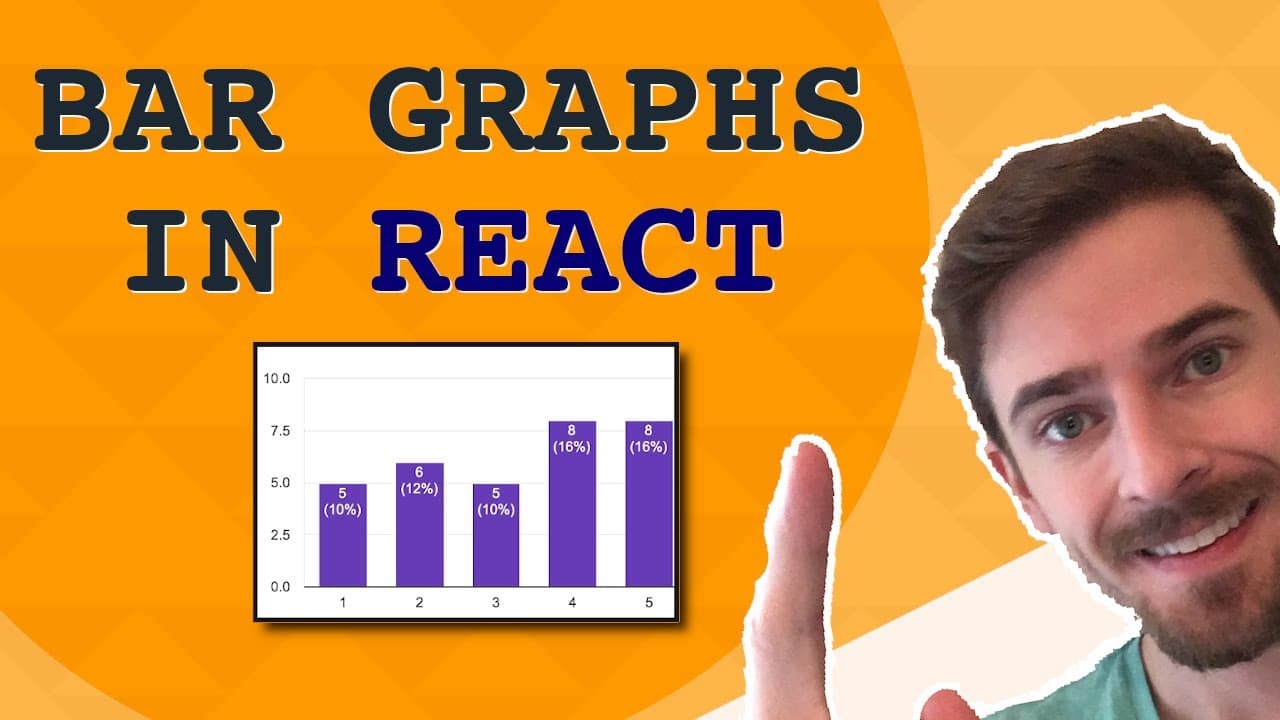
Learn to build a histogram of character counts in Moby Dick using React and Recharts.
Transcript
hey YouTube and welcome back to another video in this video I'm gonna be showing you how to use react and reach arts and parcel to load in a book and do a histogram of all the different character accounts that exist in that book if you see here we are doing the booked moby-dick and we have various different instances of these characters inside of t... Read More
Key Insights
- 📚 The tutorial simplifies character frequency analysis by combining various libraries, showcasing the integration of React, Parcel, and Recharts.
- 🍵 Fetching and processing text files can be effectively handled using standard JavaScript API methods, making it straightforward even for beginners.
- 💁 Converting character counts to a uniform format (lowercase) is critical in avoiding duplications during data analysis.
- 🫵 Sorting the data before visualization enhances clarity when producing graphical representations, ensuring that viewers can easily understand the output.
- 💦 Understanding copyright issues is essential when working with public domain texts; even if the book is available freely, it's wise to avoid repository conflict.
- 🫵 The focus on a real-world example, such as Moby Dick, provides context and relevance to the coding practices being taught, making it engaging for viewers.
- 🤔 The tutorial emphasizes the importance of preparing data for visualization, encouraging viewers to think critically about data preprocessing methods.
Install to Summarize YouTube Videos and Get Transcripts
Explore YouTube Video Summarizer or Get YouTube Transcript Extractor
Questions & Answers
Q: What tools and libraries are used in this tutorial to analyze Moby Dick?
The tutorial leverages React for building user interfaces, Parcel for module bundling, and Recharts for charting capabilities. Importantly, it shows how to combine these tools effectively to achieve the final visualization of character counts from the text.
Q: How does the tutorial handle text fetching from the book file?
The tutorial employs the Fetch API to retrieve the text of Moby Dick locally. It utilizes a combination of JavaScript functions to convert the fetched blob data into a readable text format, simplifying the character counting process through accessible data.
Q: What steps are taken to preprocess the character data before visualization?
The tutorial walks through a method to loop over the fetched text, counting occurrences of each character while converting them to lowercase. It filters out unwanted characters and organizes the data into a sorted array of characters from A to Z for clearer visualization purposes.
Q: How is the character frequency data represented visually in the tutorial?
The tutorial demonstrates the use of the Recharts library to create a bar chart displaying the frequency of characters. By configuring the chart with the processed data, it visually communicates the distribution of character counts in an easy-to-interpret format.
Summary & Key Takeaways
-
The video tutorial demonstrates how to create a histogram of character occurrences from the book Moby Dick by utilizing React, Parcel, and Recharts.
-
It illustrates the process of fetching the book text and processing it to count character occurrences, filtering out unwanted characters.
-
Finally, the tutorial shows how to render these character counts visually in a bar chart format using the Recharts library.
Read in Other Languages (beta)
Share This Summary 📚
Summarize YouTube Videos and Get Video Transcripts with 1-Click
Try YouTube Summary with ChatGPT & Claude or YouTube Transcript Generator
Explore More Summaries from Web Dev Cody 📚

Summarize YouTube Videos and Get Video Transcripts with 1-Click
Try YouTube Summary with ChatGPT & Claude or YouTube Transcript Generator