How to Unit Test Javascript Coding using Jest
TL;DR
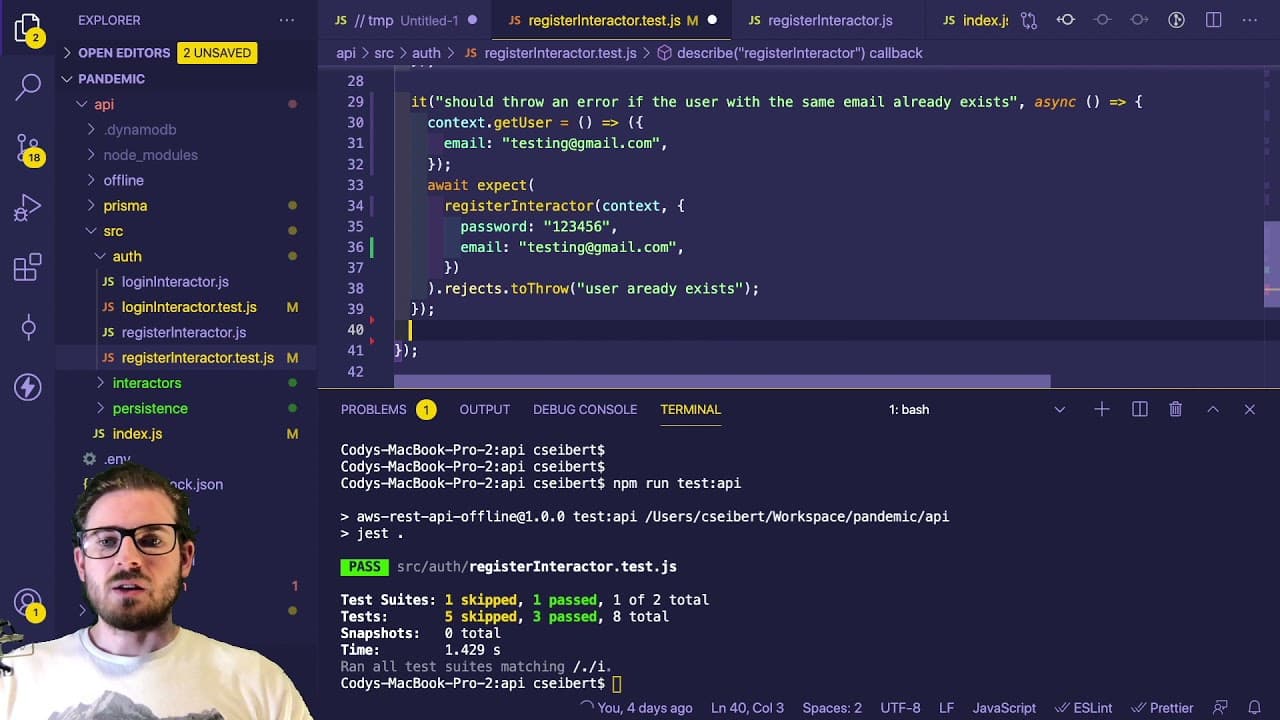
A walkthrough on using Jest for writing unit tests in web development.
Transcript
hey everyone i hope you guys are having a great day and welcome back to another web dev junkie video so in this video i wanted to give you a quick overview of how you can use jest which is basically a tool that you can use to run tests over your functions and your code and this is going to be kind of like a casual walkthrough i'm not going to kind ... Read More
Key Insights
- 🏆 Jest is essential for developers who need to write comprehensive tests to ensure software reliability and maintainability.
- 🔠 Writing unit tests for functions, especially those dealing with user input, can prevent runtime errors by validating that inputs adhere to expected formats.
- 👻 Utilizing tools such as stubs, mocks, and spies allows developers to focus on testing specific functionalities without the interference of external dependencies.
- 👋 Good testing practices include confirming that tests fail correctly when expectations are not met, reinforcing the importance of properly written assertions.
- 🏆 Effective use of async/await in tests is critical for managing asynchronous code, maintaining the integrity of test results.
- 📚 Validation libraries like Joi can streamline the process of input validation, helping to simplify testing procedures for functions with multiple criteria.
- 👋 Developers should frequently review and familiarize themselves with Jest’s documentation to discover advanced features and best practices for writing effective tests.
Install to Summarize YouTube Videos and Get Transcripts
Explore YouTube Video Summarizer or Get YouTube Transcript Extractor
Questions & Answers
Q: What is Jest, and why is it important for developers?
Jest is a JavaScript testing framework that allows developers to write tests for their code efficiently. It's important because it helps ensure the code works as intended by providing tools to create unit tests, integration tests, and more, ultimately contributing to higher quality software and easier debugging.
Q: How can you set up a basic unit test using Jest?
To set up a basic unit test in Jest, create a test file alongside the module you want to test. Import the function, then use a describe block to group related tests, and it statements to define individual test cases that verify specific functionality, using expect to assert expected outcomes.
Q: What is the purpose of stubbing functions in Jest tests?
Stubbing functions in Jest tests allows developers to replace real implementations of functions with mock versions so that tests can isolate functionality. This helps test specific behaviors or outcomes without relying on actual dependencies, ensuring that tests run reliably and quickly without side effects.
Q: How does the speaker demonstrate input validation in the registration function?
The speaker illustrates input validation by using a validation library and writing unit tests that check whether the registration function throws the correct errors when required fields, such as email and password, are missing from the input. The goal is to ensure the function behaves correctly and handles invalid inputs appropriately.
Q: What are spies in Jest, and how are they utilized in testing?
Spies in Jest are functions that allow developers to track calls to simulated functions. They provide insights into whether a function was called and what arguments were passed. In the video, the speaker uses spies to verify that certain functions, such as those dealing with user creation, are called as expected within the tests.
Q: What common pitfalls should developers avoid when writing tests in Jest?
Developers should avoid writing tests that pass without actually verifying desired outcomes, which can happen if assertions are incorrectly configured. It's also important to ensure asynchronous operations are awaited properly in tests, as failing to do so might result in false positives where tests appear to pass when they shouldn't.
Q: Can you explain how to validate that a function throws an exception in Jest?
To validate that a function throws an exception in Jest, the expect statement can be chained with .rejects.toThrow() or a similar method that verifies specific error conditions. This ensures the test fails if the expected exception is not thrown, providing confidence that error handling in the code is functioning as intended.
Q: What is the significance of using await in Jest tests, and when should you use it?
Using await in Jest tests is crucial for testing asynchronous code. It ensures that the test waits for a Promise to resolve before proceeding, allowing for accurate verification of outcomes. Without await, tests for asynchronous functions might pass without actually validating any deeper logic, leading to misleading results.
Summary & Key Takeaways
-
The video introduces Jest as a crucial tool for writing various types of tests, such as unit tests and integration tests, for professional-grade software development, focusing on a simple Express application.
-
The speaker demonstrates how to write and run unit tests for a function that handles user registration, including input validation and error handling using Jest’s features like describe and it statements.
-
Several testing strategies are explored, including the use of stubs, mocks, and spies to simulate function dependencies and validate that functions behave as expected when certain conditions are met.
Read in Other Languages (beta)
Share This Summary 📚
Summarize YouTube Videos and Get Video Transcripts with 1-Click
Try YouTube Summary with ChatGPT & Claude or YouTube Transcript Generator
Explore More Summaries from Web Dev Cody 📚

Summarize YouTube Videos and Get Video Transcripts with 1-Click
Try YouTube Summary with ChatGPT & Claude or YouTube Transcript Generator