Causes of shifts in currency supply and demand curves | AP Macroeconomics | Khan Academy
TL;DR
Understanding the factors that cause shifts in supply and demand in currency markets is crucial for analyzing exchange rates.
Transcript
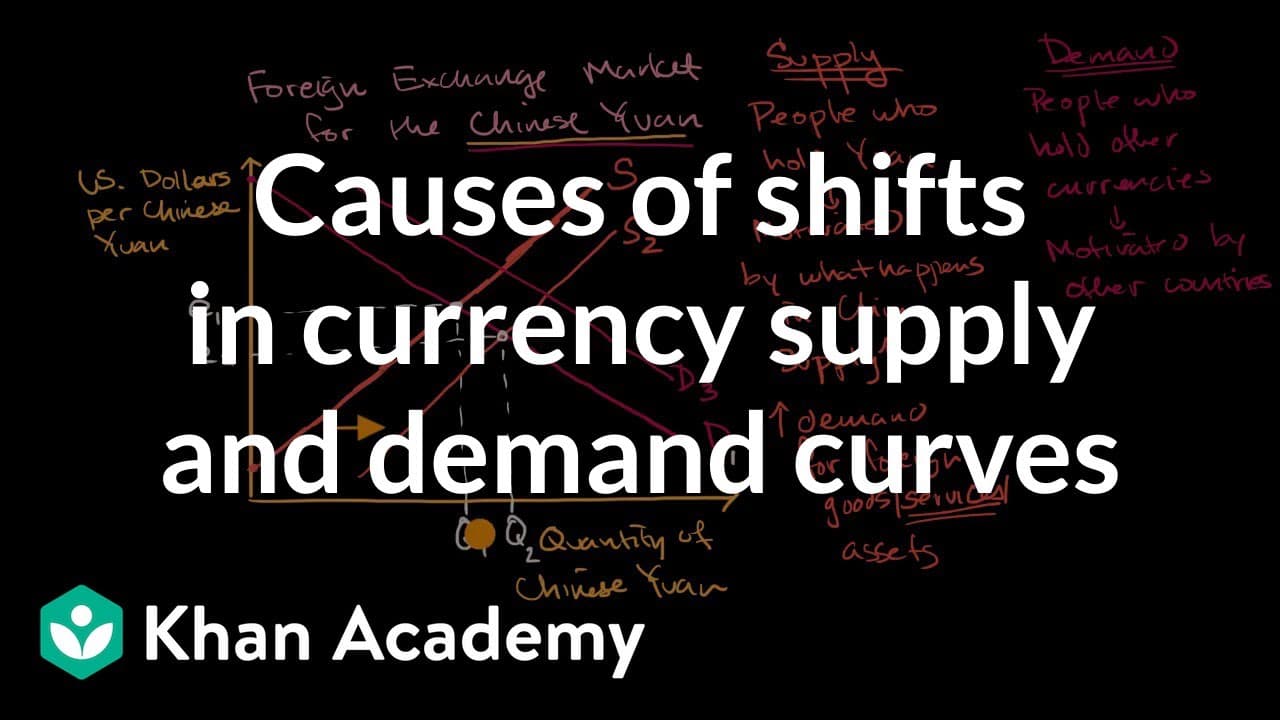
- [Instructor] Talk a little bit about what could cause a supply or a demand curve for a currency to shift. So here we have the foreign exchange market for the Chinese yuan which is why we have the quantity of yuan on the horizontal axis and the price of the yuan in terms of another currency on the vertical axis and here that other currency is the ... Read More
Key Insights
- 💱 The supply curve in the foreign exchange market is influenced by factors related to domestic conditions and the desire to convert the currency.
- 🗯️ Increases in demand for foreign goods, services, or assets can shift the supply curve to the right.
- 👋 Decreases in tariffs on foreign goods can also increase supply in the market.
- ⚾ On the demand side, the demand curve can shift based on the desire of foreigners to participate in the country's economy or trade.
- 🗯️ Increased demand for goods, services, or assets from foreign countries can shift the demand curve to the right.
- ☠️ Understanding these factors is essential for analyzing fluctuations in exchange rates.
- 💱 Shifts in supply and demand curves can lead to changes in the equilibrium exchange rate and quantity of currency exchanged.
Install to Summarize YouTube Videos and Get Transcripts
Explore YouTube Video Summarizer or Get YouTube Transcript Extractor
Questions & Answers
Q: What does the supply curve represent in the foreign exchange market?
The supply curve represents the people within the country who hold the currency, mainly motivated by internal factors such as the economic conditions of the country.
Q: What factors could increase the supply in the foreign exchange market?
Factors that could increase the supply include an increase in demand for foreign goods, services, or assets, a decrease in tariffs on those goods, or an increase in demand for goods, services, or assets from other countries.
Q: Who does the demand curve in the foreign exchange market represent?
The demand curve represents people from other countries who want to convert their currency into the currency in question, motivated by factors such as investment opportunities or foreign trade.
Q: How does the demand curve shift in the foreign exchange market?
The demand curve can shift to the right if there is an increase in demand for goods, services, or assets from the country in question, such as an increase in demand for Chinese goods, services, or assets from foreigners.
Summary & Key Takeaways
-
The supply curve in the foreign exchange market represents people within the country who hold the currency, while the demand curve represents people from other countries who want to convert their currency into that currency.
-
Factors that can increase supply include an increase in demand for foreign goods, services, or assets, a decrease in tariffs, or an increase in demand for American goods, services, or assets.
-
On the demand side, the demand curve can shift to the right if there is an increase in demand for Chinese goods, services, or assets from foreigners.
Read in Other Languages (beta)
Share This Summary 📚
Summarize YouTube Videos and Get Video Transcripts with 1-Click
Try YouTube Summary with ChatGPT & Claude or YouTube Transcript Generator
Explore More Summaries from Khan Academy 📚



Summarize YouTube Videos and Get Video Transcripts with 1-Click
Try YouTube Summary with ChatGPT & Claude or YouTube Transcript Generator