Ionic and Covalent Bonding - Chemistry
TL;DR
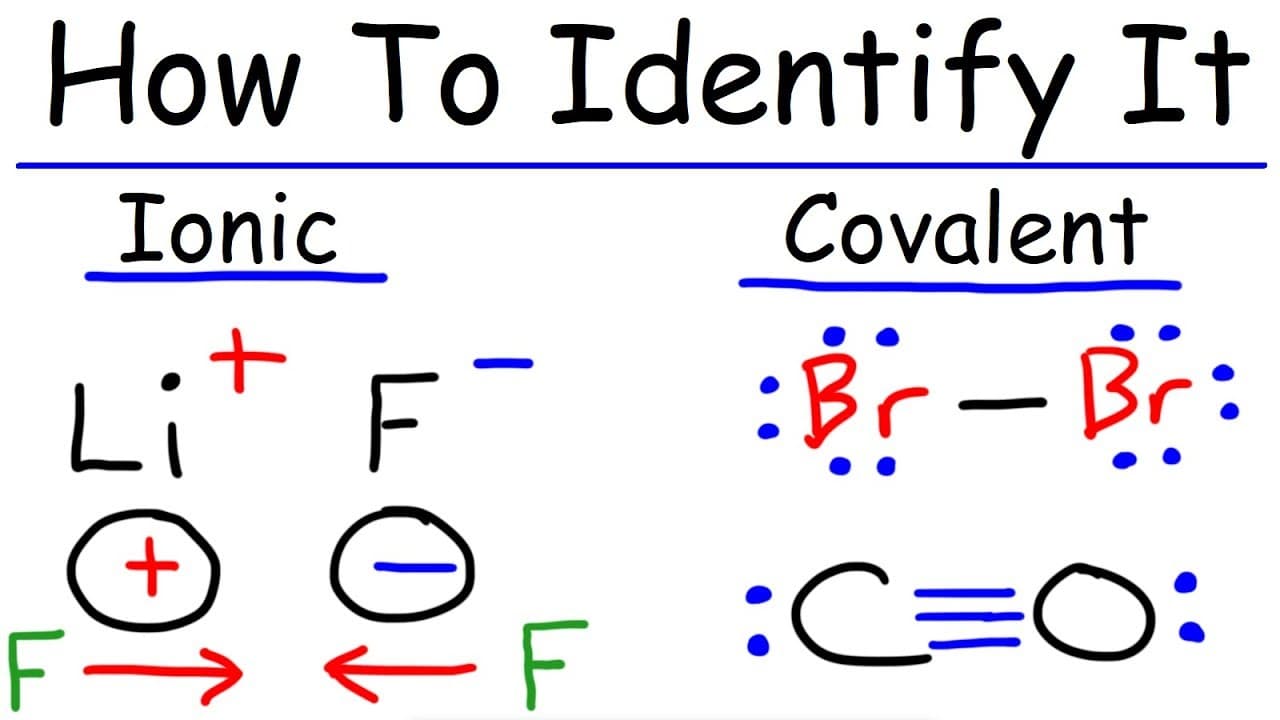
Ionic bonds occur between a metal and a non-metal, while covalent bonds occur between two non-metals. Covalent bonds can be polar or nonpolar depending on the electronegativity difference.
Transcript
consider this problem what type of bonds are contained in the following substances is it ionic or covalent and if it's covalent would you describe it as being polar covalent or nonpolar covalent now before we tackle this problem we need to be able to determine the difference between an ionic bond and a covalent bond so how can we quickly distinguis... Read More
Key Insights
- 🤘 Ionic bonds occur between metals and non-metals, while covalent bonds form between non-metals.
- 🫀 Covalent bonds can be either polar or nonpolar depending on the electronegativity difference between the atoms.
- ❓ Some compounds, like ammonium nitrate, contain a mixture of ionic and covalent bonds.
- 🫀 In covalent bonds, electrons are shared between atoms, while in ionic bonds, electrons are transferred.
- 🚱 The position of an element in the periodic table can help determine its metallic or non-metallic nature.
- ❓ Electronegativity values can be used to determine the polarity of a covalent bond.
- 🐻❄️ Nonpolar covalent bonds have an electronegativity difference of 0.4 or less, while polar covalent bonds have a difference of 0.5 or more.
Install to Summarize YouTube Videos and Get Transcripts
Explore YouTube Video Summarizer or Get YouTube Transcript Extractor
Questions & Answers
Q: How can we distinguish between ionic and covalent bonds?
Ionic bonds occur between a metal and a non-metal, while covalent bonds exist between two non-metals. This distinction is based on the types of elements involved in the bond formation.
Q: What is the difference between ionic and covalent bonds in terms of electron sharing?
In an ionic bond, electrons are transferred from one atom to another, resulting in the formation of ions. In covalent bonds, electrons are shared between atoms.
Q: How do we determine if a covalent bond is polar or nonpolar?
The electronegativity difference between the atoms in a covalent bond determines its polarity. A difference of 0.5 or more indicates a polar covalent bond, while a difference of 0.4 or less suggests a nonpolar covalent bond.
Q: Can covalent bonds have partial charges?
Yes, in polar covalent bonds, one atom has a stronger pull on the electrons, resulting in partial charges. The atom with a higher electronegativity has a partial negative charge, while the other atom has a partial positive charge.
Summary & Key Takeaways
-
Ionic bonds are formed between a metal and a non-metal, involving a transfer of electrons, while covalent bonds occur between two non-metals and involve a sharing of electrons.
-
In a covalent bond, if the electronegativity difference between the atoms is 0.5 or more, the bond is considered polar covalent. If the difference is 0.4 or less, the bond is nonpolar covalent.
-
Some compounds can have a mixture of ionic and covalent bonds, such as ammonium nitrate.
Read in Other Languages (beta)
Share This Summary 📚
Summarize YouTube Videos and Get Video Transcripts with 1-Click
Try YouTube Summary with ChatGPT & Claude or YouTube Transcript Generator
Explore More Summaries from The Organic Chemistry Tutor 📚




Summarize YouTube Videos and Get Video Transcripts with 1-Click
Try YouTube Summary with ChatGPT & Claude or YouTube Transcript Generator