Interference in quantum mechanics
TL;DR
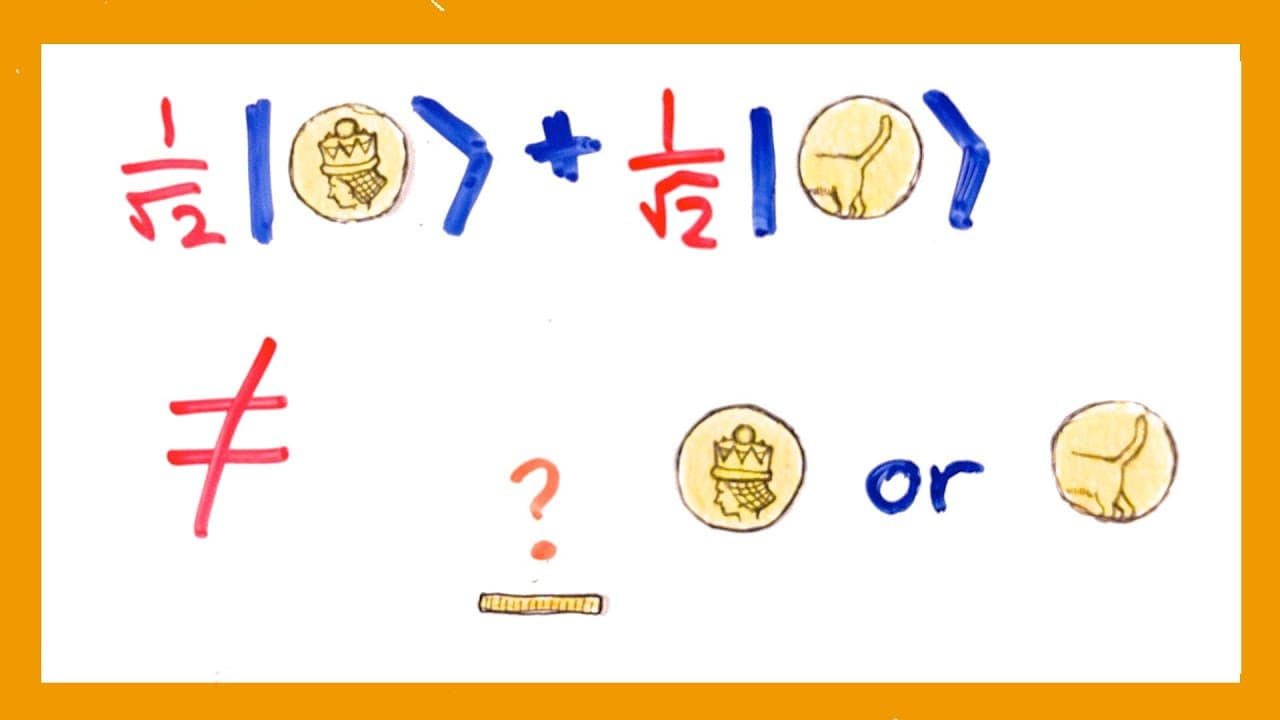
The content explains the concept of superposition in quantum mechanics and its implications, highlighting the difference between classical physics and quantum mechanics.
Transcript
What we’re covering today is a rule of quantum mechanics we haven’t met before that is responsible for a lot of the weirdness. It explains the Heisenberg uncertainty principle- but even more importantly, explains why a superposition is different from not knowing what an object is doing. I know I’ve been away for a while, so if you need to refresh o... Read More
Key Insights
- 🦾 Quantum mechanics introduces the concept of superposition, where objects can exist in multiple states or positions simultaneously until measured.
- 🦾 Different observables in quantum mechanics can be in independent superpositions, challenging classical physics concepts.
- 🦾 The difference between classical physics and quantum mechanics becomes apparent when considering multiple observables, as only quantum mechanics accurately predicts the measurement outcomes.
- 🥺 Superposition in quantum mechanics leads to interference effects, where wavefunctions of different states interact and affect measurement probabilities.
- ❓ Converting wavefunctions between different observables requires understanding the eigenstates of each observable.
- 🈸 The concept of superposition and its implications go beyond theoretical physics and have practical applications in quantum computing and technology.
- 🦾 Quantum mechanics challenges the idea of fixed determinism in classical physics and introduces probabilistic predictions for observables.
Install to Summarize YouTube Videos and Get Transcripts
Explore YouTube Video Summarizer or Get YouTube Transcript Extractor
Questions & Answers
Q: What is the Heisenberg uncertainty principle, and how does it relate to the concept of superposition?
The Heisenberg uncertainty principle states that there is a fundamental limit to the precision with which certain pairs of physical properties can be known simultaneously. Superposition is the idea that an object can be in multiple states or positions simultaneously until measured, which relates to the uncertainty principle as it introduces the concept of probabilities for observables.
Q: Why does quantum mechanics propose superposition instead of assuming objects have fixed values for observables?
Quantum mechanics suggests the superposition because experiments have shown that observables, such as position and speed, do not have fixed values until measured. Instead, objects exist in all potential states simultaneously, and the wavefunction describes the probabilities for each state.
Q: How does quantum mechanics handle different observables being in superposition independently?
Quantum mechanics treats different observables as independent superpositions. For example, if an object is in a superposition of position states, it can also be in a separate and independent superposition of speed states. There is no way to determine the values of one observable without measuring it directly.
Q: What is interference in quantum mechanics, and why is it essential to understand?
Interference is the phenomenon in quantum mechanics where the wavefunctions of different states can interfere constructively or destructively, affecting the probabilities of measurement outcomes. Understanding interference is crucial as it provides insights into the behavior and predictions of quantum systems.
Summary & Key Takeaways
-
Quantum mechanics introduces the idea of objects being in a superposition of all possible values for observables, such as position or speed.
-
Different observables can be independent, and quantum mechanics describes them being in superposition as well.
-
The difference between classical physics and quantum mechanics is not just a technical curiosity but has significant consequences, including interference.
Read in Other Languages (beta)
Share This Summary 📚
Summarize YouTube Videos and Get Video Transcripts with 1-Click
Try YouTube Summary with ChatGPT & Claude or YouTube Transcript Generator
Explore More Summaries from Looking Glass Universe 📚


Summarize YouTube Videos and Get Video Transcripts with 1-Click
Try YouTube Summary with ChatGPT & Claude or YouTube Transcript Generator