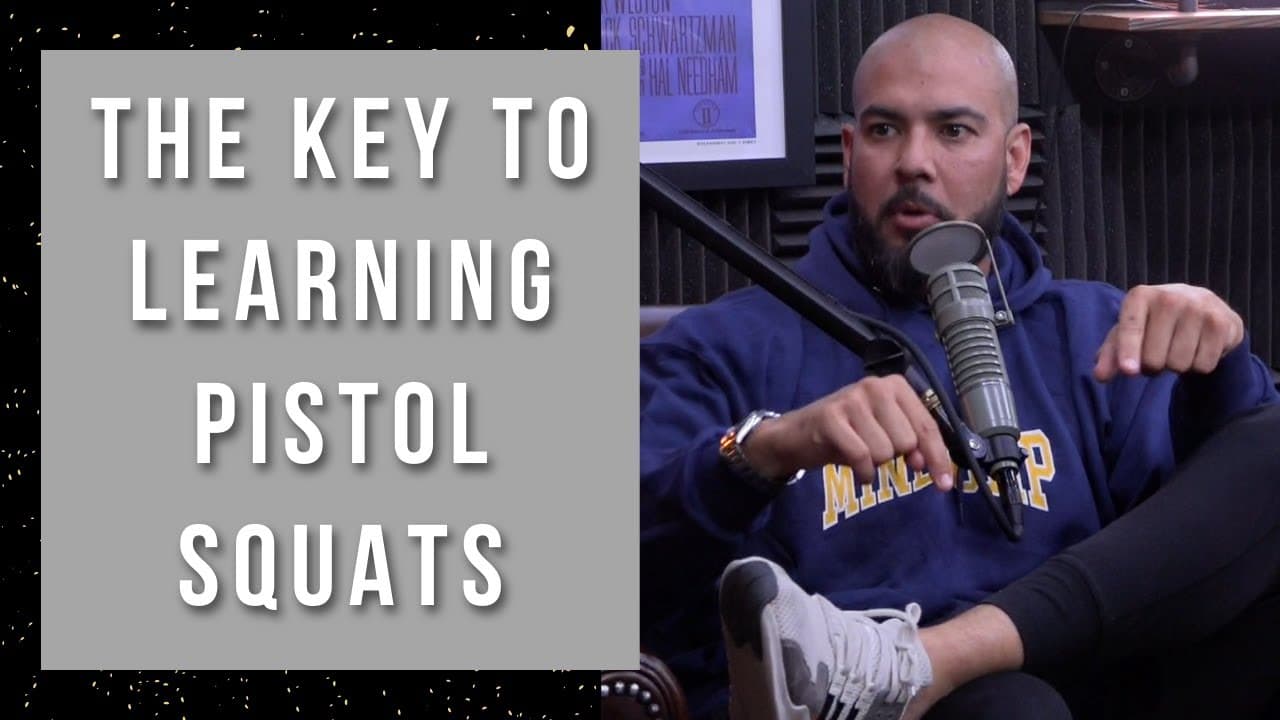
How to Learn to Pistol Squat Unassisted
TL;DR
Progress gradually with focus on form and ankle mobility.
Transcript
first question is from catherine health journey what is the best way to progress to a full unassisted pistol squad well okay assuming you can already do you know two-legged squats with good form and you're strong and you could do barbell squats the next in my opinion best way to do there's two exercises i really like one is a one-legged get up off ... Read More
Key Insights
- Progressing to a full unassisted pistol squat requires mastering two-legged squats and barbell squats first, ensuring good form and strength.
- One-legged get-ups from a bench and squats from a box are effective exercises to practice single-leg lifts and build necessary strength.
- Using stairs as a progression tool can help gradually improve the ability to perform single-leg lifts, starting from a higher step and moving lower.
- Suspension trainers can act as training wheels, aiding in maintaining form and gradually reducing assistance as strength improves.
- Focusing on form is crucial; avoid rushing to achieve a pistol squat at the cost of proper mechanics and muscle engagement.
- Ankle mobility is a significant factor in successfully performing a pistol squat, often more limiting than leg strength.
- Knees-over-toes exercises and combat stretches can improve ankle mobility, allowing for better squat form and stability.
- Ensuring the heel remains on the ground during a pistol squat is essential; if it rises, address ankle mobility issues first.
Install to Summarize YouTube Videos and Get Transcripts
Explore YouTube Video Summarizer or Get YouTube Transcript Extractor
Questions & Answers
Q: What is the best initial exercise to progress towards a pistol squat?
One of the best initial exercises is the one-legged get-up from a bench. This exercise allows you to practice single-leg lifts, building the necessary strength and muscle engagement required for a full pistol squat. It also helps in ensuring proper form and balance.
Q: How can stairs be used effectively for pistol squat progression?
Stairs can serve as a natural progression tool by allowing you to start with a higher step and gradually move to lower steps. This method helps in building single-leg strength and balance, providing a structured way to improve your ability to perform a full pistol squat.
Q: What role do suspension trainers play in learning pistol squats?
Suspension trainers act as training wheels for learning pistol squats. They provide support and stability, allowing you to maintain proper form while gradually reducing reliance on the trainer as your strength and balance improve. This approach helps in achieving a smooth transition to unassisted squats.
Q: Why is ankle mobility crucial for performing a pistol squat?
Ankle mobility is crucial because it allows for the necessary range of motion and stability required in a pistol squat. Many people struggle with this aspect more than leg strength, as the knee needs to travel significantly forward, demanding greater ankle flexion and stability to maintain form.
Q: What exercises can improve ankle mobility for pistol squats?
Knees-over-toes exercises and combat stretches are effective for improving ankle mobility. These exercises help increase the range of motion and flexibility in the ankle, ensuring that the knee can travel forward comfortably during a pistol squat, thus enhancing stability and form.
Q: How important is maintaining form during pistol squat progression?
Maintaining form is crucial during pistol squat progression. Proper mechanics ensure effective muscle engagement and prevent injury. Rushing to achieve a full squat without focusing on form can lead to poor technique and negate the benefits of the exercise. Emphasizing form over speed is essential.
Q: What is a common mistake people make when attempting a pistol squat?
A common mistake is allowing the heel to rise off the ground during the squat, which indicates insufficient ankle mobility. This error disrupts balance and form, making it harder to achieve a proper squat. Addressing ankle mobility issues is essential before progressing to full pistol squats.
Q: How can one modify exercises for different skill levels in pistol squat training?
Exercises can be modified by adjusting the height of the starting position or using supportive tools like suspension trainers. For beginners, starting with higher benches or more support helps maintain form. As skill levels increase, gradually reducing these aids allows for progression to full, unassisted squats.
Summary & Key Takeaways
-
To achieve a full unassisted pistol squat, one must first excel in two-legged and barbell squats, ensuring strength and proper form. Progress can be made through one-legged get-ups and controlled squats from a box, focusing on single-leg strength and lift.
-
Utilizing stairs as a natural progression tool can help in gradually mastering single-leg lifts. Suspension trainers provide support, allowing for form maintenance while reducing assistance as strength and balance improve over time.
-
Ankle mobility is often a more significant barrier than leg strength in performing pistol squats. Improving mobility through specific exercises is crucial, as is maintaining proper form, such as keeping the heel grounded during the squat.
Read in Other Languages (beta)
Share This Summary 📚
Summarize YouTube Videos and Get Video Transcripts with 1-Click
Try YouTube Summary with ChatGPT & Claude or YouTube Transcript Generator
Explore More Summaries from Mind Pump Show 📚

Summarize YouTube Videos and Get Video Transcripts with 1-Click
Try YouTube Summary with ChatGPT & Claude or YouTube Transcript Generator