PhD Student Advice - 15 Things I Wish I Knew Before Starting a PhD

TL;DR
Learn valuable insights to navigate and succeed in your PhD journey, including understanding the assessment process, the importance of the research process, overcoming feelings of inadequacy, and the need for effective organization and note-taking.
Transcript
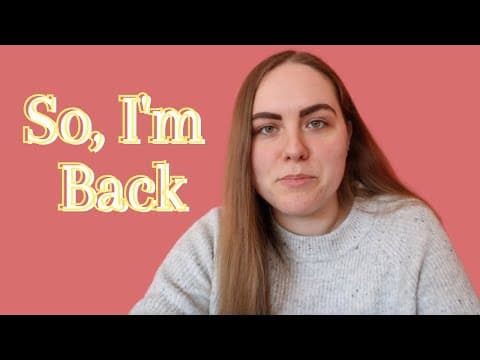
thank you hello everyone and welcome back to my channel in today's video I'm going to share with you 15 things that I wish I knew sooner on my PhD or before I started my PhD as a final year PhD student which in Europe is fourth year of my PhD I'm definitely being able to look back on the first couple of years of my PhD and consider what points of k... Read More
Key Insights
- ❓ Understanding the assessment process and the role of the Viva in PhD evaluation.
- 👨🔬 Acknowledging that a PhD is not only about scientific contribution but also the ability to conduct independent research.
- ❓ Recognizing the uniqueness of each PhD journey and avoiding comparisons with others.
- 🉑 Overcoming feelings of inadequacy and accepting that they are common in the academic journey.
- 🤝 Dealing with unexpected delays and adapting to challenges beyond one's control.
- 👨🔬 Emphasizing the importance of keeping a research diary and organizing code or files effectively.
- 🥡 Adopting a digital note-taking system to enhance productivity and accessibility.
- ⌛ Appreciating the passage of time in a PhD journey and adjusting expectations accordingly.
Install to Summarize YouTube Videos and Get Transcripts
Explore YouTube Video Summarizer or Get YouTube Transcript Extractor
Questions & Answers
Q: How are PhDs typically assessed?
PhDs are assessed through the submission of a thesis and a Viva, in which the candidate presents their research and engages in a discussion with examiners.
Q: What happens if minor corrections are required after the Viva?
If minor corrections are needed, the candidate is still considered to have passed their PhD. These corrections usually involve adding a few pages to the thesis and addressing small errors.
Q: Is it common to feel inadequate while pursuing a PhD?
Yes, feeling inadequate is a common experience among PhD students. Impostor syndrome is prevalent, even among accomplished professors. Accepting this feeling as normal can help in coping with it.
Q: How can unexpected delays impact a PhD journey?
Unexpected delays, such as a global pandemic or professional commitments, can affect the time and focus available for a PhD. These challenges can create a sense of not doing enough, but it is important to adapt and manage expectations.
Q: Why is keeping a research diary important?
A research diary helps in tracking progress, recording thoughts and interpretations, and providing a reference for future work. It saves time and ensures clarity when revisiting previous research.
Q: How can organizing code or files benefit a PhD project?
Organizing code or files in a structured manner improves efficiency and makes it easier to revisit and understand earlier work. Clear organization allows for faster progress and reduces time spent searching for specific information.
Q: Why is having a digital note-taking system important?
A digital note-taking system provides easy access, searchability, and organization for your research notes. It allows for efficient retrieval of information and streamlines the writing and referencing process.
Q: How can planning save time in a PhD project?
Taking the time to plan a project thoroughly before starting helps in avoiding confusion and procrastination. It provides clear actions to follow and enables smooth progress throughout the project.
Summary & Key Takeaways
-
The PhD assessment process typically involves submitting a thesis, followed by a Viva where you present and engage in a question-and-answer session with examiners.
-
A PhD is not solely about the scientific contribution but also about demonstrating the ability to conduct independent research.
-
Each PhD journey is unique, and comparing oneself to others is not helpful. Challenges and roadblocks faced will vary for each individual.
-
Impostor syndrome and feelings of inadequacy are common among PhD students. It is important to accept that these feelings may never fully go away but are experienced by many in academia.
Read in Other Languages (beta)
Share This Summary 📚
Summarize YouTube Videos and Get Video Transcripts with 1-Click
Try YouTube Summary with ChatGPT & Claude or YouTube Transcript Generator
Explore More Summaries from PhD and Productivity 📚

Summarize YouTube Videos and Get Video Transcripts with 1-Click
Try YouTube Summary with ChatGPT & Claude or YouTube Transcript Generator