Investigating the underlying neural circuits that regulate female aggressive behavior
TL;DR
Female aggression, a behavior often overlooked in research, is present across species. Understanding the neural circuits behind it can have implications for psychiatric disorders in women.
Transcript
so uh we're going to trans uh transition to unfortunately our last session um but we are fortunate to have a a great um moderator for that session uh miriam goodman who is at the stanford school of medicine where she is the uh chairman of the department of molecular and cellular physiology she's also engaged with uh with mentoring she's the chair o... Read More
Key Insights
- 🕵️♀️ Female aggression is an important behavior present across species, but it has been understudied compared to male aggression.
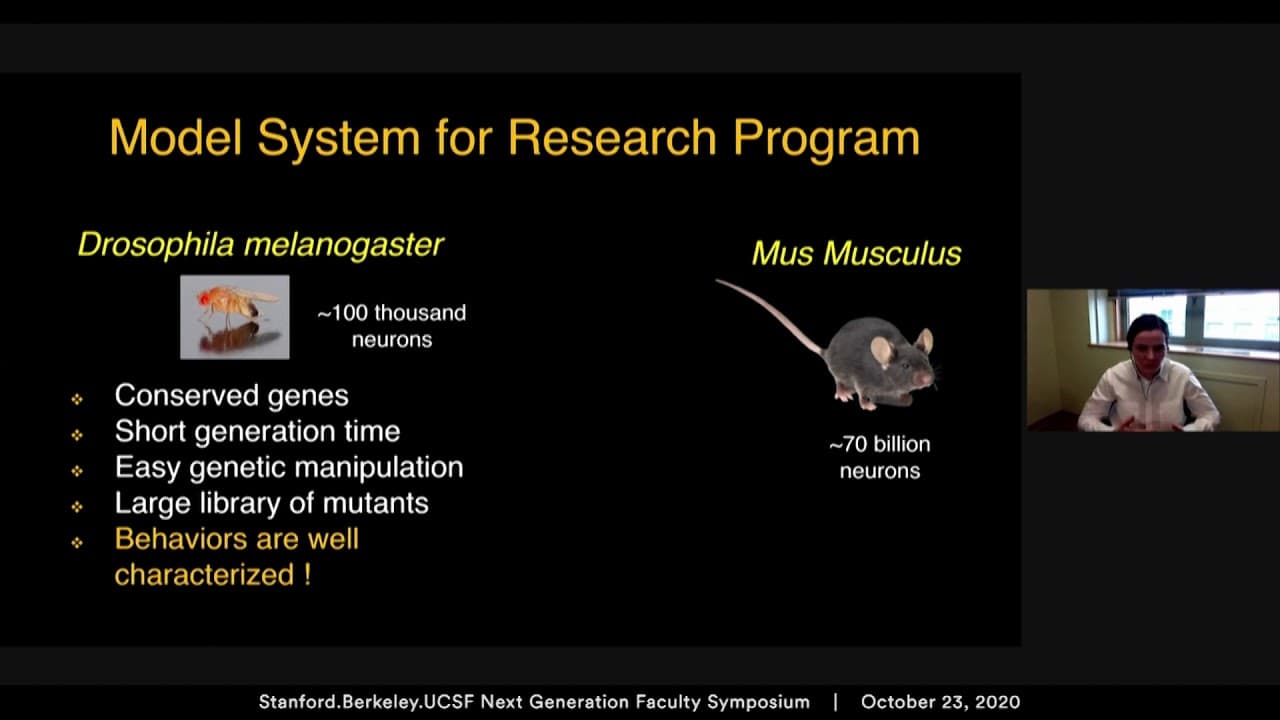
- 🪽 Drosophila, or fruit flies, provide a valuable model system to study the genetic and neural basis of aggression due to their conserved genes and well-characterized behavior.
- 😑 By using binary expression systems and behavioral screens, specific neural circuits and genes involved in aggression can be identified and studied.
- 🧔♀️ Understanding the neural basis of aggression is crucial for gaining insights into psychiatric disorders, as rates of aggression among women are higher than among men.
- 🐭 Fruit fly studies can provide valuable insights that can be translated to vertebrate systems, such as mice, to further investigate the neural circuits of aggression.
- 🕵️♀️ Research on female aggression can help identify potential therapeutic targets for psychiatric disorders and shed light on the distinct features of female aggression compared to male aggression.
- 🧑⚕️ Women's mental health and wellbeing can be positively impacted by understanding the underlying neural mechanisms of aggression.
Install to Summarize YouTube Videos and Get Transcripts
Explore YouTube Video Summarizer or Get YouTube Transcript Extractor
Questions & Answers
Q: How does female aggression differ from male aggression?
Female aggression has historically been overlooked, but it is present in nature and pervasive across species. Understanding the neural basis of female aggression can shed light on its distinct features compared to male aggression.
Q: What animal model is used to study the neural circuits of aggression?
The Drosophila model system, or fruit flies, is used due to its advantages such as quick reproduction, conserved genes and structures, and well-characterized behavior. It allows for manipulating genes and neural circuits to uncover the underlying mechanisms.
Q: Why is it important to study female aggression?
Female aggression has implications for both mating behaviors and psychiatric disorders. Rates of psychiatric disorders, including aggression, are higher among women. Understanding the neural basis of female aggression can help identify potential targets for therapeutic interventions.
Q: How can fruit flies help unravel the neural circuits of aggression?
Fruit flies possess a genetically traceable system with well-characterized aggressive behavior. By using binary expression systems and behavioral screens, specific circuits and genes involved in aggression can be identified. These findings can then be translated to vertebrate systems, such as mice.
Summary & Key Takeaways
-
Female aggression, although often overlooked, is a widespread behavior present in various species.
-
The neural circuits underlying female aggression are not well understood and require further investigation.
-
Drosophila, or fruit flies, offer a valuable model system to study and uncover the genetic and neural basis of female aggression.
Read in Other Languages (beta)
Share This Summary 📚
Summarize YouTube Videos and Get Video Transcripts with 1-Click
Try YouTube Summary with ChatGPT & Claude or YouTube Transcript Generator
Explore More Summaries from Stanford 📚






Summarize YouTube Videos and Get Video Transcripts with 1-Click
Try YouTube Summary with ChatGPT & Claude or YouTube Transcript Generator