This AI Makes Puzzle Solving Look Easy! 🧩
TL;DR
A learning-based algorithm tackles difficult puzzles with excellent performance.
Transcript
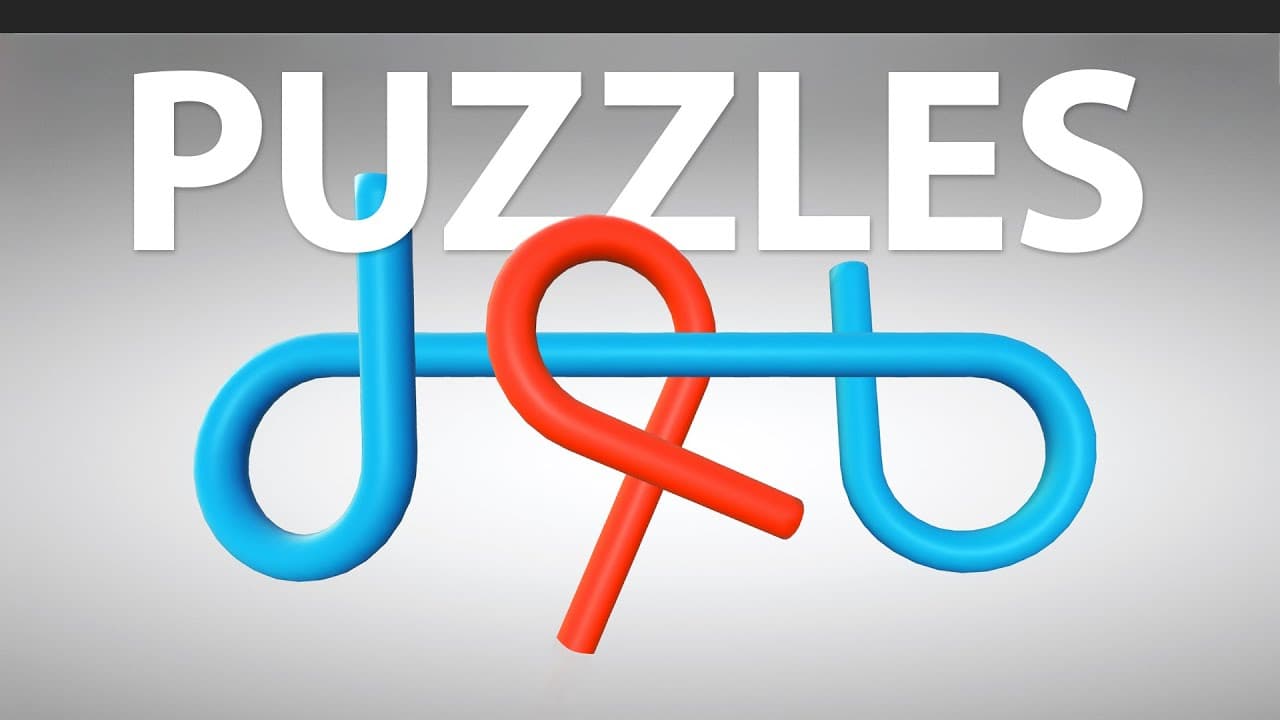
Dear Fellow Scholars, this is Two Minute Papers with Dr. Károly Zsolnai-Fehér. Today we are going to immerse ourselves into a wonderful art of rigid body disentanglement, or in simpler words, we are going to solve these puzzles! To be more exact, we’ll sit and enjoy our time while a learning-based algorithm is going to miraculously solve some reall... Read More
Key Insights
- 🤩 Learning-based algorithm excels in solving challenging puzzles by recognizing key movements and notches.
- 🧩 Tunnel discovery and path planning are crucial techniques for navigating through puzzle obstacles.
- 🥳 Narrow tunnels represent the most challenging parts of the puzzles, requiring intricate rotations.
- ✊ Machine learning and computer graphics research power the algorithm's success in puzzle solving.
- 🧩 The algorithm progresses from easier to more difficult puzzles with increasing efficiency.
- 🥶 Puzzle solving involves identifying starting and goal positions, generating collision-free paths, and finding the shortest route.
- 🧩 Two Minute Papers episode 478 reveals intricate details of puzzle-solving techniques.
Install to Summarize YouTube Videos and Get Transcripts
Explore YouTube Video Summarizer or Get YouTube Transcript Extractor
Questions & Answers
Q: How does the algorithm approach solving puzzles of different difficulties?
The algorithm identifies key movements and rotations needed to progress through each puzzle, starting with easier ones and gradually tackling more complex challenges.
Q: What techniques are crucial for the algorithm's success in puzzle solving?
Tunnel discovery and path planning are key techniques utilized by the algorithm to navigate through narrow tunnels, identify collision-free configurations, and find the shortest path to solve the puzzle.
Q: What distinguishes the most challenging parts of the puzzles?
Narrow tunnels represent the most challenging parts of the puzzles, requiring unintuitive rotations and movements to progress, which the algorithm addresses through the blooming step to reach the larger puzzle areas.
Q: How does machine learning contribute to solving these puzzles?
Machine learning enables the algorithm to analyze puzzle structures, identify obstacles and goals, and generate collision-free paths for successful puzzle completion.
Summary & Key Takeaways
-
A learning-based algorithm solves challenging puzzles of increasing difficulty by recognizing key movements and rotations.
-
The algorithm successfully navigates through the puzzles by identifying notches and narrow tunnels.
-
Machine learning and computer graphics research enable the algorithm to excel in puzzle solving.
Read in Other Languages (beta)
Share This Summary 📚
Summarize YouTube Videos and Get Video Transcripts with 1-Click
Try YouTube Summary with ChatGPT & Claude or YouTube Transcript Generator
Explore More Summaries from Two Minute Papers 📚





Summarize YouTube Videos and Get Video Transcripts with 1-Click
Try YouTube Summary with ChatGPT & Claude or YouTube Transcript Generator