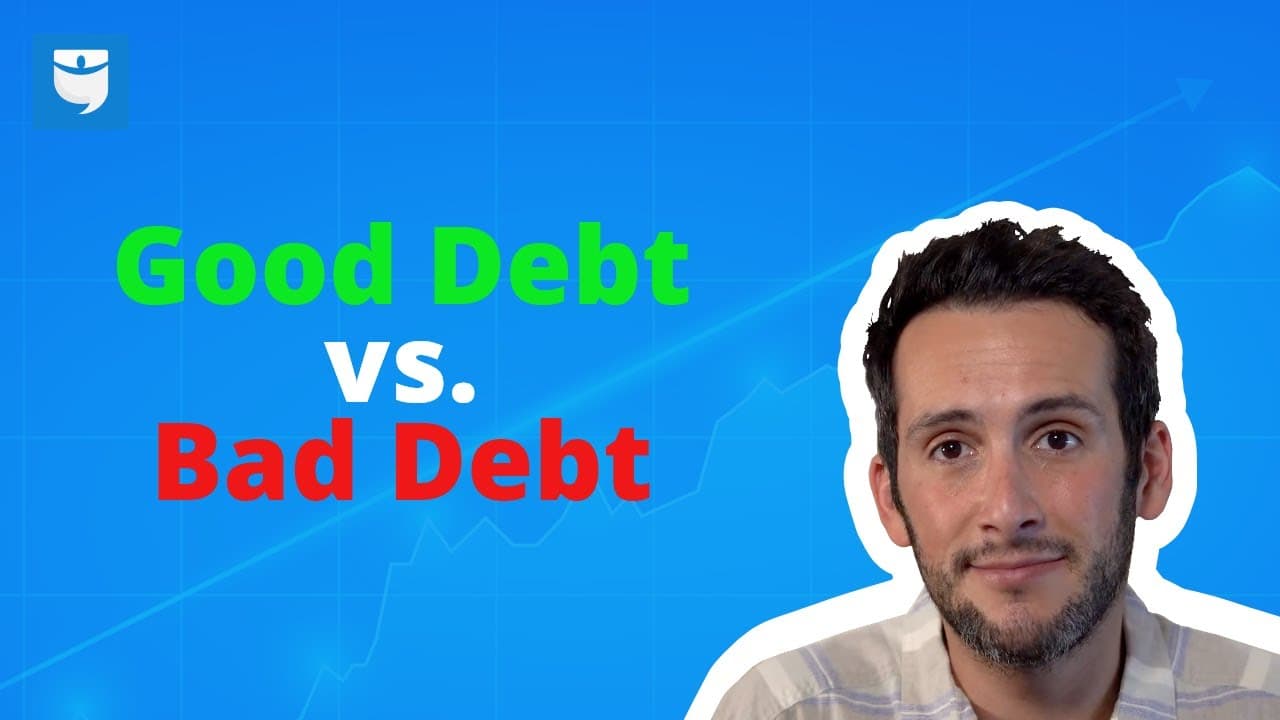
Good Debt vs. Bad Debt (& When to Use Both)
TL;DR
Debt can be beneficial or harmful depending on its purpose.
Transcript
is debt good or bad this is an extremely common question i hear it all the time it's something i hear personal finance people talking about all the time and it is a really good question because today's society and our economy is in many ways designed around debt whether it's student loans credit card debt car loans or mortgages it is everywhere aro... Read More
Key Insights
- Debt is a common aspect of modern economies, encompassing various forms like student loans, credit card debt, and mortgages.
- Bad debt is often used to fund a lifestyle beyond one's means, leading to financial instability and increased stress.
- Credit card debt can become overwhelming due to high interest rates and the compounding effect, significantly increasing the cost of purchases over time.
- Good debt is an investment in oneself, such as student loans for education that may lead to higher lifetime earnings.
- Auto loans can be considered good debt if they facilitate business ventures that increase income, such as starting a landscaping company.
- Real estate investment through debt can yield high returns due to property appreciation and rental income, despite initial high debt levels.
- Interest rates are currently low, making it an opportune time for long-term investments in real estate using debt.
- Understanding the difference between good and bad debt is crucial for making informed financial decisions and building wealth over time.
Install to Summarize YouTube Videos and Get Transcripts
Explore YouTube Video Summarizer or Get YouTube Transcript Extractor
Questions & Answers
Q: What is the main difference between good debt and bad debt?
The main difference between good and bad debt lies in their purpose and impact on financial health. Good debt is an investment that can increase one's income and net worth over time, such as student loans or real estate investments. Bad debt, on the other hand, is used to fund a lifestyle beyond one's means, often leading to financial instability and stress due to high interest rates and compounding effects.
Q: How does compounding interest affect credit card debt?
Compounding interest significantly increases the cost of credit card debt over time. As interest is charged on the accumulated amount each year, the total debt grows exponentially. For example, a $1,000 purchase on a credit card with a 22% interest rate can balloon to $7,300 over ten years if not paid off. This highlights the importance of paying off credit card debt quickly to avoid excessive financial burdens.
Q: Why are student loans considered good debt?
Student loans are considered good debt because they are an investment in one's education, which statistically leads to higher lifetime earnings compared to those without a college degree. By borrowing money to obtain a degree, individuals can increase their income potential, enabling them to pay back the debt and improve their financial situation over time.
Q: How can auto loans be classified as good debt?
Auto loans can be classified as good debt when they are used to acquire vehicles necessary for business ventures, such as a truck for a landscaping company. In such cases, the vehicle is an asset that facilitates income generation, making the debt an investment in the business. This can lead to increased earnings that outweigh the cost of the loan, thereby enhancing financial stability.
Q: What role do interest rates play in determining the cost of debt?
Interest rates are crucial in determining the cost of debt as they dictate how much extra money must be paid back in addition to the principal amount borrowed. Higher interest rates make borrowing more expensive, while lower rates reduce the cost. Therefore, securing debt at low interest rates can be financially advantageous, as it minimizes the overall repayment amount.
Q: Why is now considered a good time to take on debt for real estate investments?
Currently, interest rates are near historic lows, making it an attractive time to take on debt for real estate investments. Low rates reduce borrowing costs, allowing investors to maximize returns from property appreciation and rental income. For long-term investors, locking in low rates can significantly enhance financial outcomes over 10 to 20 years, despite potential short-term economic fluctuations.
Q: What is the significance of understanding the difference between good and bad debt?
Understanding the difference between good and bad debt is essential for making informed financial decisions. Recognizing how different types of debt impact financial health enables individuals to strategically use debt as a tool for wealth building. By avoiding bad debt and leveraging good debt, individuals can enhance their income potential, improve net worth, and achieve long-term financial stability.
Q: How can rental properties be a form of good debt?
Rental properties can be a form of good debt because they typically require significant borrowing but offer substantial returns through property appreciation and rental income. By investing a portion of the property's cost and financing the rest through a mortgage, investors can achieve high returns on investment. Over time, the property's value increases, and the mortgage is paid down, resulting in a positive financial outcome.
Summary & Key Takeaways
-
Debt is omnipresent in today's society, with varying impacts on personal finance. Bad debt, often used to fund an unsustainable lifestyle, can lead to financial distress. Conversely, good debt, such as student loans or real estate investments, can enhance financial prospects by increasing income potential.
-
The compounding nature of debt, especially with high-interest credit cards, can exponentially increase the cost of purchases, highlighting the importance of paying off such debts quickly. Good debt, however, is an investment in one's future, potentially leading to significant returns.
-
Current low interest rates present an opportunity for leveraging debt effectively, particularly in real estate investments. By understanding the nuances of debt, individuals can make strategic decisions to enhance their financial well-being and achieve long-term wealth.
Read in Other Languages (beta)
Share This Summary 📚
Summarize YouTube Videos and Get Video Transcripts with 1-Click
Try YouTube Summary with ChatGPT & Claude or YouTube Transcript Generator
Explore More Summaries from BiggerPockets 📚





Summarize YouTube Videos and Get Video Transcripts with 1-Click
Try YouTube Summary with ChatGPT & Claude or YouTube Transcript Generator