System in Package - Mixed Signal Circuit - Analog & Mixed VLSI Design
TL;DR
System in Package combines multiple integrated circuits in a single module for efficient electronic system functionality.
Transcript
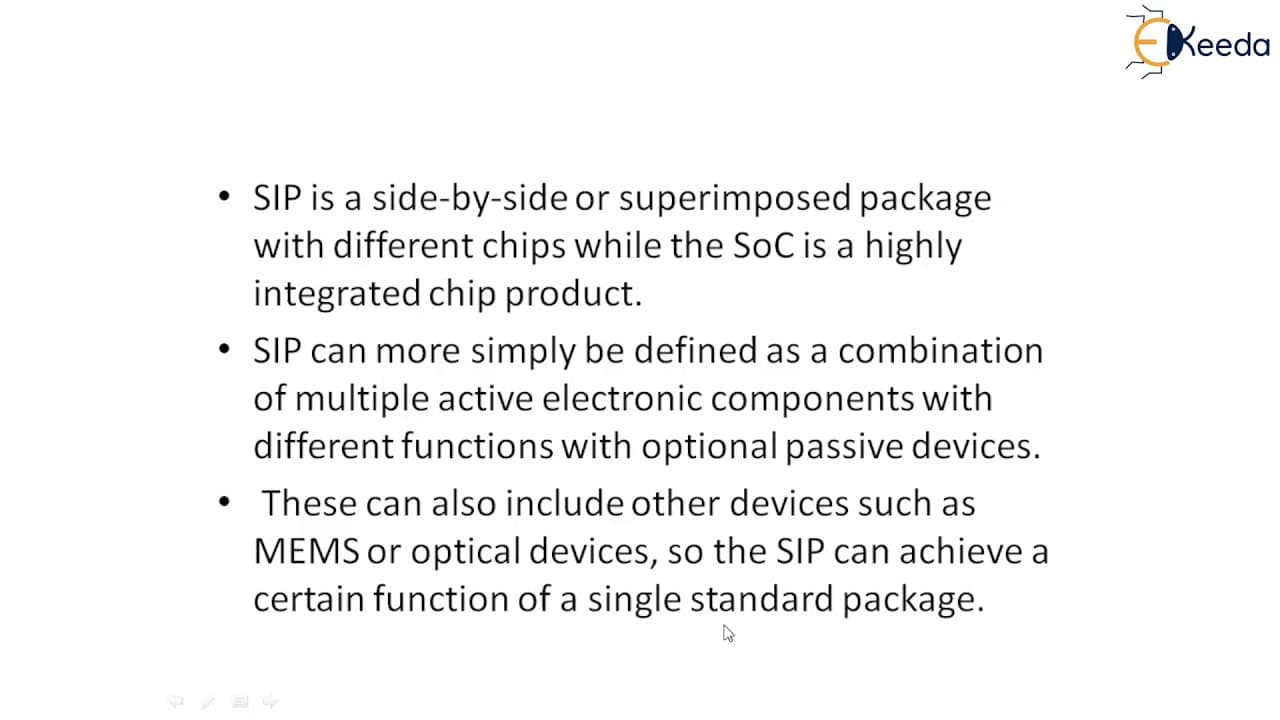
hello everyone in this lecture we will study about system in package under the heading basic concept let's begin so system and package or you can see a system in a package is a number of integrated circuits that are enclosed in a single module the system in package perform all or most of the functions of an electronic system and it is typically use... Read More
Key Insights
- 🎨 System in Package (SiP) integrates multiple integrated circuits into a single module, offering compact design and enhanced functionality.
- 🐿️ SiP utilizes vertical stacking of dies on a substrate using wire bonding or flip chip technology for efficient electronic system integration.
- 💨 SiP technology provides cost efficiency and faster time-to-market compared to traditional system design approaches.
- ❓ Technical difficulties in SiP implementation include complex fabrication processes, layout considerations for efficient system performance, and utilization of advanced packaging technologies.
- ✋ SiP technology offers high flexibility, integration, and cost efficiency compared to system-on-chip (SoC) technology.
- 🧡 SiP technology is suitable for a wide range of applications such as power amplifiers, GPS modules, Bluetooth devices, and memory cards.
- 📱 SiP technology is popular in industries like mobile phones, smartwatches, smart glasses, and IoT devices for its compact design and enhanced functionality.
Install to Summarize YouTube Videos and Get Transcripts
Explore YouTube Video Summarizer or Get YouTube Transcript Extractor
Questions & Answers
Q: What is System in Package (SiP) and how does it differ from traditional system approaches?
System in Package is a method that combines multiple integrated circuits in a single module, offering enhanced functionality and cost-efficiency compared to traditional system design processes.
Q: What are the main benefits of utilizing System in Package technology?
SiP technology provides cost efficiency, optimized functionality in limited space, and faster time-to-market compared to traditional system approaches, making it a preferred choice for electronic system integration.
Q: How does System in Package address the complexities associated with integrated circuit design?
SiP technology simplifies integrated circuit design by allowing for vertical stacking of dies on a substrate and utilizing wire bonding or flip chip technology for efficient component integration and space optimization.
Q: What are the challenges and technical difficulties associated with System in Package implementation?
Technical challenges in SiP implementation include complex trace patterns, multiple dye stack integration, and ensuring proper layout considerations for efficient system performance and fabrication processes.
Summary & Key Takeaways
-
System in Package (SiP) integrates multiple integrated circuits into a single module for enhanced electronic system functionality.
-
SiP utilizes vertical stacking of dies on a substrate using wire bonding or flip chip technology for compact design.
-
SiP offers cost-efficiency, function optimization, and faster time-to-market compared to traditional system approaches.
Read in Other Languages (beta)
Share This Summary 📚
Summarize YouTube Videos and Get Video Transcripts with 1-Click
Try YouTube Summary with ChatGPT & Claude or YouTube Transcript Generator
Explore More Summaries from Ekeeda 📚






Summarize YouTube Videos and Get Video Transcripts with 1-Click
Try YouTube Summary with ChatGPT & Claude or YouTube Transcript Generator