The Truth About Equestrian Statues and Whether Their Leg Positions Mean Anything
TL;DR
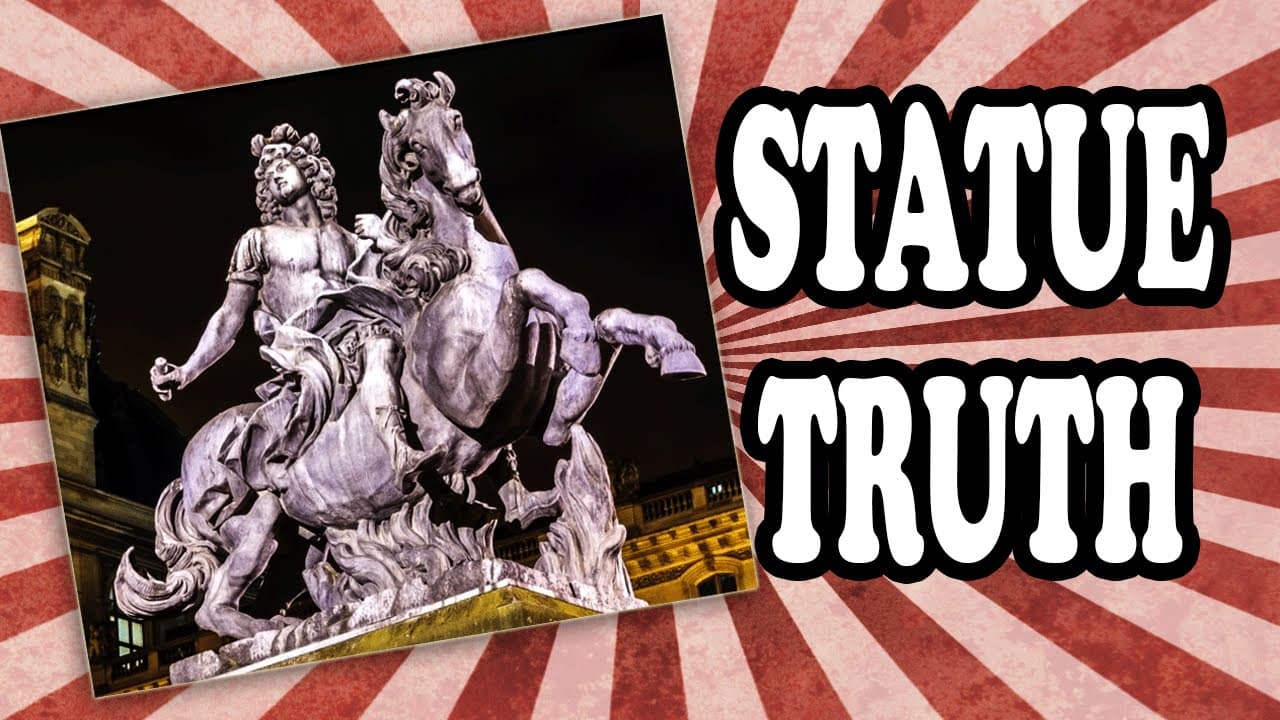
The position of a horse's legs in equestrian statues does not indicate how the soldier died, debunking a common myth perpetuated by tourist guides.
Transcript
The Truth About Equestrian Statues You’ll often hear that the way a soldier’s horse is portrayed in an equestrian statue indicates how the soldier died. This myth, perpetuated by many a tourist guide the world over, simply isn’t true. An example of a tourist guidebook that perpetuates the equestrian myth is the 1987 Hands on Chicago: “At Sheridan R... Read More
Key Insights
- 🦿 The myth that the position of a horse's legs in equestrian statues represents how the soldier died is not supported by evidence.
- 🗽 Examples of equestrian statues across different cities and time periods do not conform to any consistent pattern.
- 🥹 The only place where the myth loosely holds true is in the equestrian statues of soldiers who fought in the Battle of Gettysburg.
- 🦿 Sculptors seem to choose the position of a horse's legs based on personal artistic preference rather than any historical or symbolic meaning.
- 🌍 Equestrian statues in Rome, medieval Europe, and more recent times do not correlate with the myth.
- 👨💻 There is no record of a code or tradition followed by sculptors in creating equestrian statues.
- 🍉 The term "equestrian" derives from the Latin word "eques," meaning "knight."
- 😵 The myth of crossed legs or arms on knight statues representing participation in the Crusades has no evidence to support it.
Install to Summarize YouTube Videos and Get Transcripts
Explore YouTube Video Summarizer or Get YouTube Transcript Extractor
Questions & Answers
Q: Is it true that the way a soldier's horse is portrayed in an equestrian statue indicates how the soldier died?
No, this is a myth perpetuated by tourist guides. The position of a horse's legs in equestrian statues does not have any symbolic meaning related to the soldier's death.
Q: What is the largest collection of equestrian statues in the world?
Washington D.C. has the largest collection of equestrian statues. However, only about 30% of these statues conform to the myth, debunking its validity.
Q: Are there any surviving equestrian statues from ancient Rome?
Yes, there is one surviving equestrian statue of Emperor Marcus Aurelius, and his horse has one foreleg up. However, Marcus Aurelius was never wounded in battle.
Q: Is there any evidence of a code or tradition followed by sculptors in creating equestrian statues?
No, there is no evidence to support the existence of a code or tradition related to the position of a horse's legs in equestrian statues. Sculptors seem to choose the horse's attitude based on personal artistic preference.
Summary & Key Takeaways
-
Many tourist guides claim that the position of a horse's legs in equestrian statues represents how the soldier died, but this is not true.
-
There is no evidence to support the myth, and examples of equestrian statues across different cities and time periods do not conform to any consistent pattern.
-
The only place where the myth loosely holds true is in the equestrian statues of soldiers who fought in the Battle of Gettysburg.
Read in Other Languages (beta)
Share This Summary 📚
Summarize YouTube Videos and Get Video Transcripts with 1-Click
Try YouTube Summary with ChatGPT & Claude or YouTube Transcript Generator
Explore More Summaries from Today I Found Out 📚






Summarize YouTube Videos and Get Video Transcripts with 1-Click
Try YouTube Summary with ChatGPT & Claude or YouTube Transcript Generator