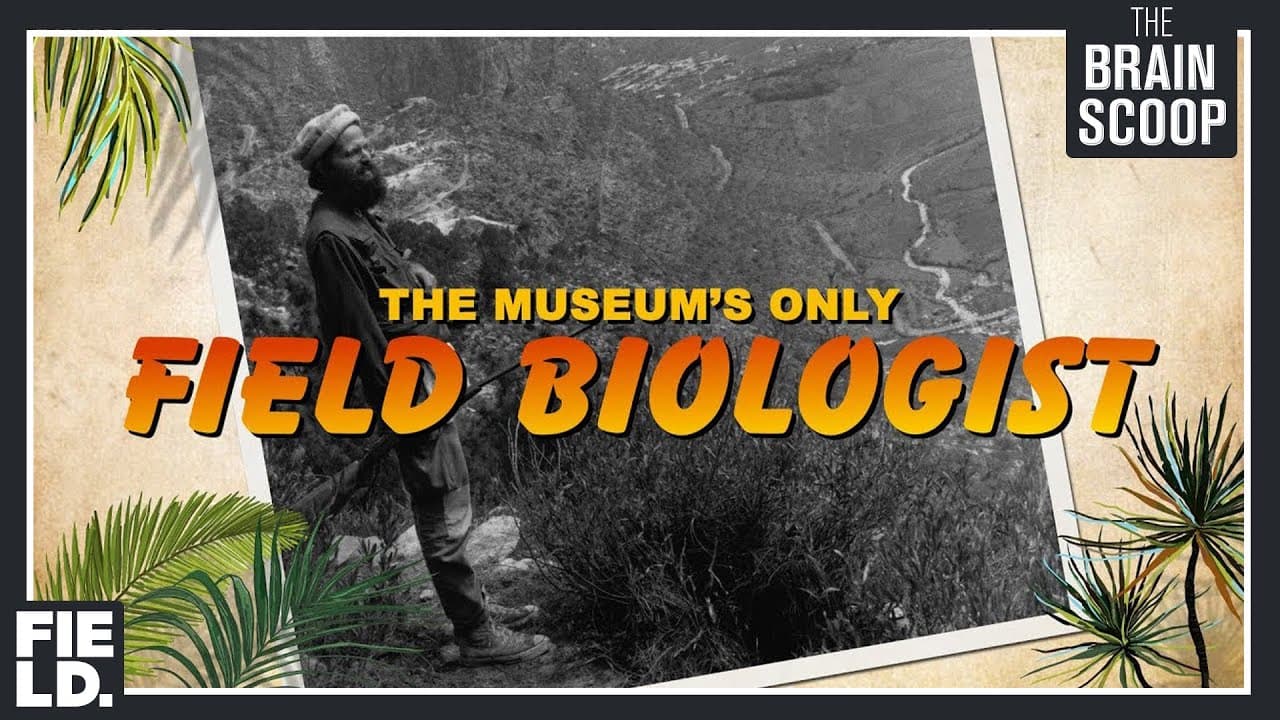
Meet the Museum's only Field Biologist
TL;DR
Steve Goodman, a renowned field biologist, discusses his impactful work in Madagascar, highlighting biodiversity studies and conservation efforts.
Transcript
This is Dr.. Steve Goodman. He's a field biologist here at the Field Museum and by here, I mean mostly everywhere but here. Since he was 19, Steve has studied animals and plants all over the world, first spending nine years in Egypt and Northern Sudan, and then working in Tanzania, Gabon, Central African Republic, South Africa, Pakistan, India, the... Read More
Key Insights
- 👨🔬 Steve Goodman's extensive research spans numerous countries, with a focus on biodiversity documentation and conservation.
- 💦 Goodman's work in Madagascar involves training Malagasy scientists and prioritizing conservation efforts based on scientific data.
- 📌 Challenges in conducting biological surveys include vast terrains and remote locations in Madagascar, requiring dedication and logistical planning.
- 🤩 Discoveries of new species like mouse lemurs underscore the importance of protecting key species for biodiversity conservation.
- 🪡 Goodman emphasizes the need for socio-economic improvements in Madagascar to address underlying issues affecting conservation efforts.
- 🦮 The future of conservation in Madagascar relies on empowering local biologists to guide sustainable practices and protect the island's unique biodiversity.
- 🏑 Goodman's unwavering dedication to biology exemplifies the transformative impact of pursuing one's passion and making significant contributions to the field.
Install to Summarize YouTube Videos and Get Transcripts
Explore YouTube Video Summarizer or Get YouTube Transcript Extractor
Questions & Answers
Q: What inspired Steve Goodman to become a field biologist and focus on biodiversity in Madagascar?
Steve Goodman's passion for biology led him to study animals and plants worldwide, ultimately dedicating his efforts to documenting biodiversity in Madagascar due to its unique endemic species and the need for conservation.
Q: How has Steve Goodman’s work positively impacted Malagasy scientists and conservation efforts in Madagascar?
Goodman's initiatives have empowered Malagasy scientists, enabling them to conduct independent research and lead conservation efforts, contributing significantly to the understanding and protection of Madagascar’s biodiversity.
Q: What challenges does Steve Goodman face in conducting biological surveys in Madagascar?
Goodman encounters challenges such as vast terrains, lack of infrastructure, and remote locations, making fieldwork in Madagascar physically demanding and logistically complex, requiring various modes of transportation.
Q: How does Steve Goodman emphasize the importance of protecting key species in Madagascar for conservation?
Goodman highlights the significance of protecting species like mouse lemurs to safeguard biodiversity, advocating for tailored conservation strategies that consider the unique habitat requirements of various organisms in Madagascar.
Summary & Key Takeaways
-
Steve Goodman, a field biologist with extensive global experience, has dedicated his career to studying animals and plants in diverse regions like Madagascar.
-
He has discovered numerous new species and played a pivotal role in establishing ecological training programs in Madagascar.
-
Goodman's work focuses on documenting biodiversity, training Malagasy scientists, and addressing socio-economic challenges in conservation efforts.
Read in Other Languages (beta)
Share This Summary 📚
Summarize YouTube Videos and Get Video Transcripts with 1-Click
Try YouTube Summary with ChatGPT & Claude or YouTube Transcript Generator
Explore More Summaries from thebrainscoop 📚

Summarize YouTube Videos and Get Video Transcripts with 1-Click
Try YouTube Summary with ChatGPT & Claude or YouTube Transcript Generator