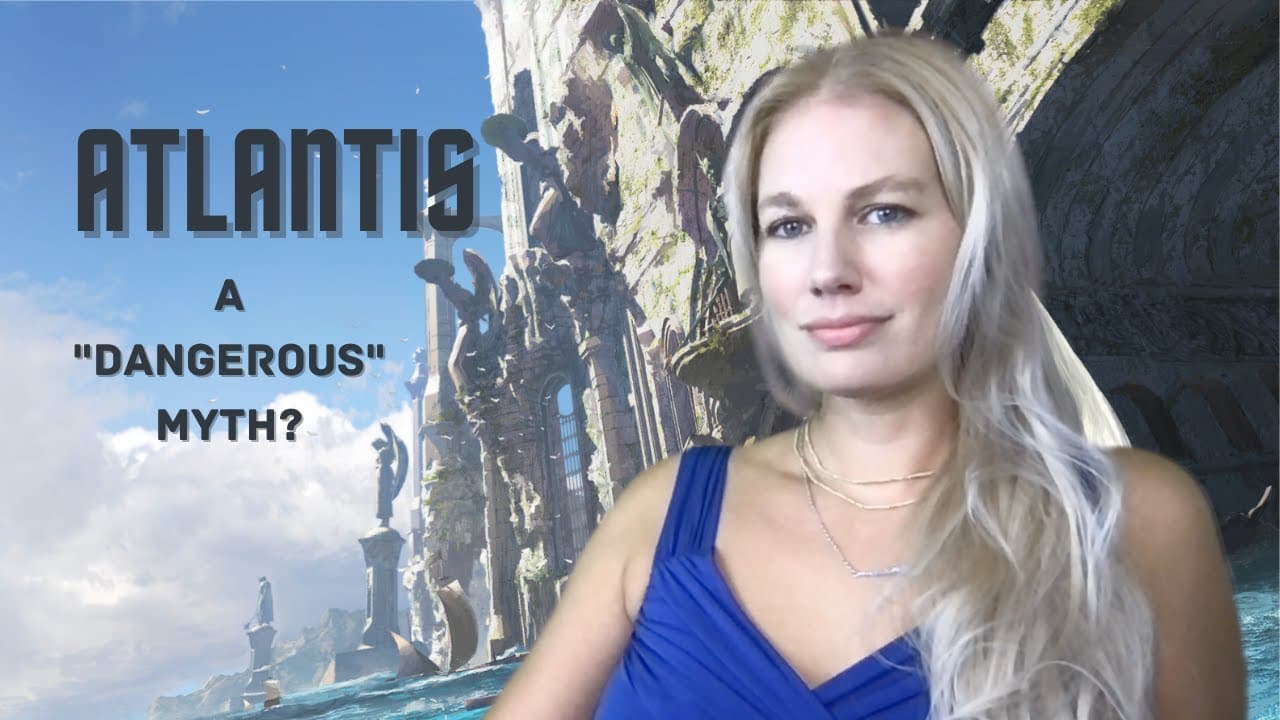
Atlantis: A Dangerous Myth?
TL;DR
Netflix's Ancient Apocalypse sparks debate over ancient civilizations and their significance in history.
Transcript
hey guys so by now you've probably heard about Netflix's series ancient apocalypse maybe you've even watched it it's produced and presented by this guy Graham Hancock author of this book and many others and it's exploring this idea of a lost ancient civilization that you know may have vanished into cataclysm and I actually really recommend this boo... Read More
Key Insights
- 🉑 Hancock's theories challenge the notion of linear human progress by suggesting advanced civilizations could have predated currently accepted historical timelines.
- 🫵 The Netflix series Ancient Apocalypse resonates with viewers due to its mythological allure and engaging narrative style.
- 🛄 The polemics surrounding Hancock's claims underscore broader societal tensions regarding interpretations of history and cultural heritage.
- 🚁 The ongoing debate surrounding the myth of Atlantis reveals how stories can be co-opted into various ideological frameworks over time.
- 💦 Hancock's work demonstrates the interplay between historical inquiry, personal narrative, and public fascination, complicating the pursuit of truth in historic studies.
- ✳️ Critics emphasize the risk of promoting theories that could reinforce racial narratives, arguing for the importance of context in interpreting cultural histories.
- ❓ The backlash against Hancock illustrates resistance from established academic perspectives that feel threatened by alternative hypotheses regarding early civilizations.
Install to Summarize YouTube Videos and Get Transcripts
Explore YouTube Video Summarizer or Get YouTube Transcript Extractor
Questions & Answers
Q: What is the main thesis of Graham Hancock's Ancient Apocalypse series?
Hancock's series proposes that a sophisticated civilization existed and was destroyed by catastrophic events, such as a comet impact, which led to the spread of knowledge to various hunter-gatherer societies across the globe. This narrative challenges conventional historical perspectives on human progress and civilization development.
Q: Why is there backlash from the academic community regarding Hancock's claims?
Critics in the academic community denounce Hancock's ideas as misleading, lacking substantial evidence, and perpetuating conspiracy theories. They argue that his interpretations undermine scientific understandings of ancient cultures while promoting speculative connections to race, which they believe detracts from the heritage of indigenous peoples.
Q: How do Hancock's theories about Atlantis differ from mainstream archaeological views?
Hancock suggests that Atlantis was not merely a singular city but a representation of a vast empire, proposing that survivors of its destruction influenced future civilizations globally. In contrast, mainstream archaeology often argues that cultural advancements developed linearly and independently among societies without the need for a lost civilization to have instigated them.
Q: What does the criticism about "race science" refer to in the context of Ancient Apocalypse?
The criticism accuses Hancock's series of implying that a lost white civilization may have been responsible for advancements in global civilizations, which critics view as rooted in outdated racial theories. They argue this perspective ignores the contributions of existing indigenous cultures and could potentially support racial supremacy narratives.
Q: What historical context does Hancock provide through his theories?
Hancock links his theories to ancient myths and stories, particularly the legend of Atlantis, pointing to various global sites as potential remnants of a lost civilization. He draws connections between cataclysmic events throughout history and how they may have influenced cultural developments across different societies.
Q: How has Hancock's work influenced popular culture and public discourse?
Hancock's theories and the accompanying Netflix series have reignited widespread interest in ancient civilizations and myths, stimulating public debate about history, culture, and race. His work has encouraged audiences to question established narratives, fostering both admiration and skepticism across the cultural landscape.
Summary & Key Takeaways
-
Graham Hancock's Netflix series Ancient Apocalypse presents the idea of a lost civilization destroyed by cataclysms, which ignites controversy among academia and media.
-
Critics argue that Hancock's claims lack solid evidence and promote controversial ideas associated with race, while proponents defend the appeal of exploring humanity's shared heritage.
-
The enduring legend of Atlantis raises questions about linear historical progress and the human fascination with myths, suggesting deeper cultural implications beyond mere entertainment.
Read in Other Languages (beta)
Share This Summary 📚
Summarize YouTube Videos and Get Video Transcripts with 1-Click
Try YouTube Summary with ChatGPT & Claude or YouTube Transcript Generator
Explore More Summaries from PhilosophiCat 📚
Summarize YouTube Videos and Get Video Transcripts with 1-Click
Try YouTube Summary with ChatGPT & Claude or YouTube Transcript Generator