The History and Future of U.S. Foreign Aid
TL;DR
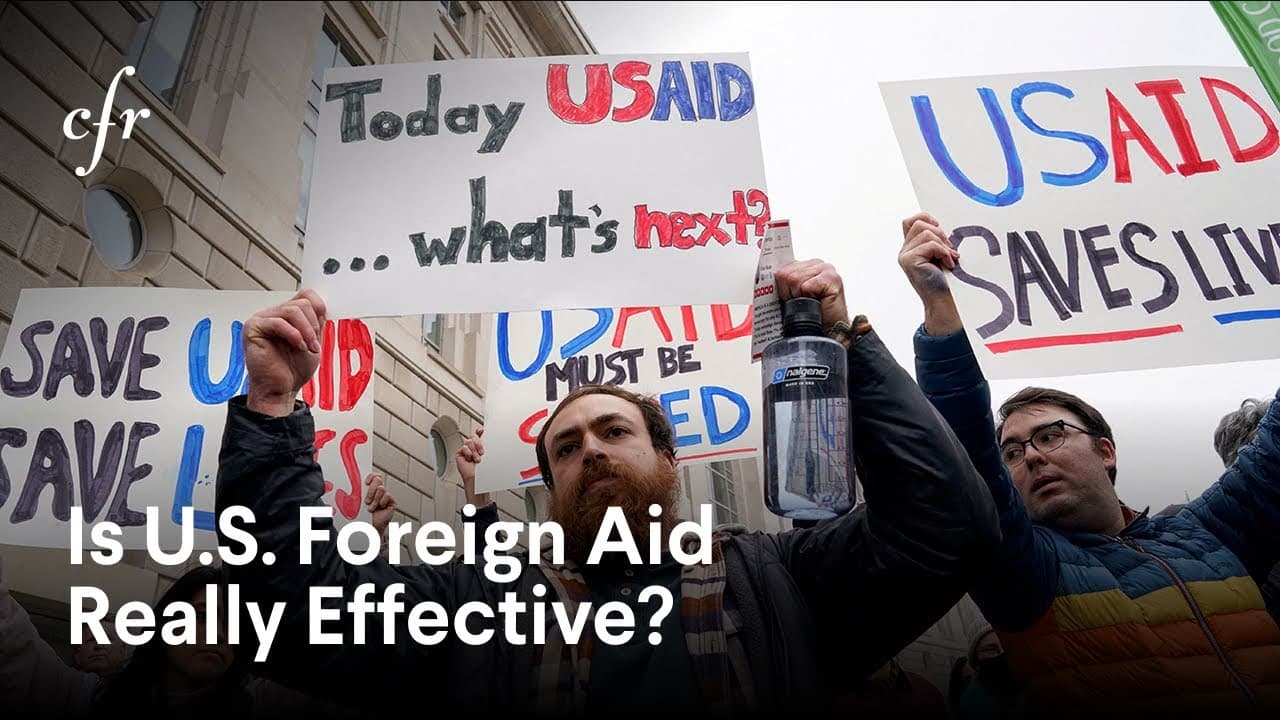
Panelists discuss the history and future of U.S. foreign aid.
Transcript
TALEV: Thank you, Anne (sp). And welcome to everyone to today’s Council on Foreign Relations meeting. You are in the right meeting if you were trying to join “The History and Future of U.S. Foreign Aid.” No light topic. My name is Margaret Talev. I am director of Syracuse University’s Institute for Democracy, Journalism and Citizenship. And ... Read More
Key Insights
- The perception of U.S. foreign aid spending is often exaggerated among the public, with many believing it constitutes a larger portion of the federal budget than it does.
- There is a significant partisan divide in the U.S. regarding the value and impact of foreign aid, with Democrats generally more supportive than Republicans.
- Foreign aid has historically been a bipartisan effort, but recent political shifts have challenged this consensus.
- There is a need for a comprehensive reevaluation of U.S. foreign aid, focusing on aligning it with national interests and global needs.
- The private sector could play a crucial role in the future of foreign aid through partnerships and investments, but this requires clear strategies and de-risking mechanisms.
- The U.S. has been a leader in global humanitarian efforts, but recent cuts have damaged its reputation and effectiveness.
- Rebuilding trust and infrastructure in foreign aid will be challenging but necessary for re-establishing the U.S. as a reliable partner.
- There is a call for innovative approaches to foreign aid, including leveraging local actors and focusing on sustainable development.
Install to Summarize YouTube Videos and Get Transcripts
Explore YouTube Video Summarizer or Get YouTube Transcript Extractor
Questions & Answers
Q: What are the main challenges facing U.S. foreign aid today?
The primary challenges include a significant partisan divide on the value of foreign aid, misperceptions about its budgetary impact, and recent cuts that have damaged the U.S.'s reputation as a reliable partner. Additionally, there's a need to align aid with national interests while addressing global needs.
Q: How has U.S. foreign aid evolved over the years?
U.S. foreign aid has historically been bipartisan, focused on strategic interests, and has evolved to address global challenges such as health crises and poverty. Over time, it has also aimed to leverage private sector partnerships and local actors to enhance its effectiveness.
Q: What role can the private sector play in the future of U.S. foreign aid?
The private sector can play a crucial role by providing investments and partnerships that complement government aid. This requires clear strategies and mechanisms to de-risk projects, encouraging private sector involvement in sustainable development initiatives.
Q: What are the implications of recent cuts to U.S. foreign aid?
Recent cuts have led to the dismantling of aid infrastructure and have damaged the U.S.'s reputation as a reliable partner. This has resulted in humanitarian crises and reduced the effectiveness of aid programs, making it challenging to rebuild trust and infrastructure.
Q: How can U.S. foreign aid be reimagined for the future?
Reimagining U.S. foreign aid requires a comprehensive reevaluation of strategies, focusing on aligning aid with national interests and global needs. This includes leveraging local actors, enhancing private sector partnerships, and ensuring sustainable development outcomes.
Q: What impact does the partisan divide have on U.S. foreign aid?
The partisan divide complicates efforts to reform and sustain aid programs, with Democrats generally more supportive than Republicans. This divide influences public perception and policy decisions, making it challenging to achieve consensus on aid strategies.
Q: What are the potential consequences of the U.S. retreating from foreign aid?
A retreat from foreign aid could lead to increased global instability, humanitarian crises, and a loss of U.S. influence. It may also create opportunities for other countries, like China, to fill the void and expand their influence in regions previously aided by the U.S.
Q: How can the U.S. rebuild its reputation as a reliable aid partner?
Rebuilding the U.S.'s reputation requires restoring aid programs, enhancing transparency, and demonstrating a commitment to global humanitarian efforts. Engaging in partnerships with local actors and the private sector, and ensuring aid aligns with shared values and interests, are crucial steps.
Summary & Key Takeaways
-
The discussion highlighted the need to reimagine U.S. foreign aid in the context of modern global challenges and national interests. Panelists emphasized the importance of aligning aid with economic and security goals while maintaining humanitarian commitments.
-
There is a significant partisan divide in the U.S. regarding foreign aid, with Democrats generally more supportive than Republicans. This divide complicates efforts to reform and sustain aid programs.
-
The panelists called for a comprehensive reevaluation of foreign aid strategies, emphasizing the need for partnerships with the private sector and leveraging local actors to enhance effectiveness and sustainability.
Read in Other Languages (beta)
Share This Summary 📚
Summarize YouTube Videos and Get Video Transcripts with 1-Click
Try YouTube Summary with ChatGPT & Claude or YouTube Transcript Generator
Explore More Summaries from Council on Foreign Relations 📚

Summarize YouTube Videos and Get Video Transcripts with 1-Click
Try YouTube Summary with ChatGPT & Claude or YouTube Transcript Generator