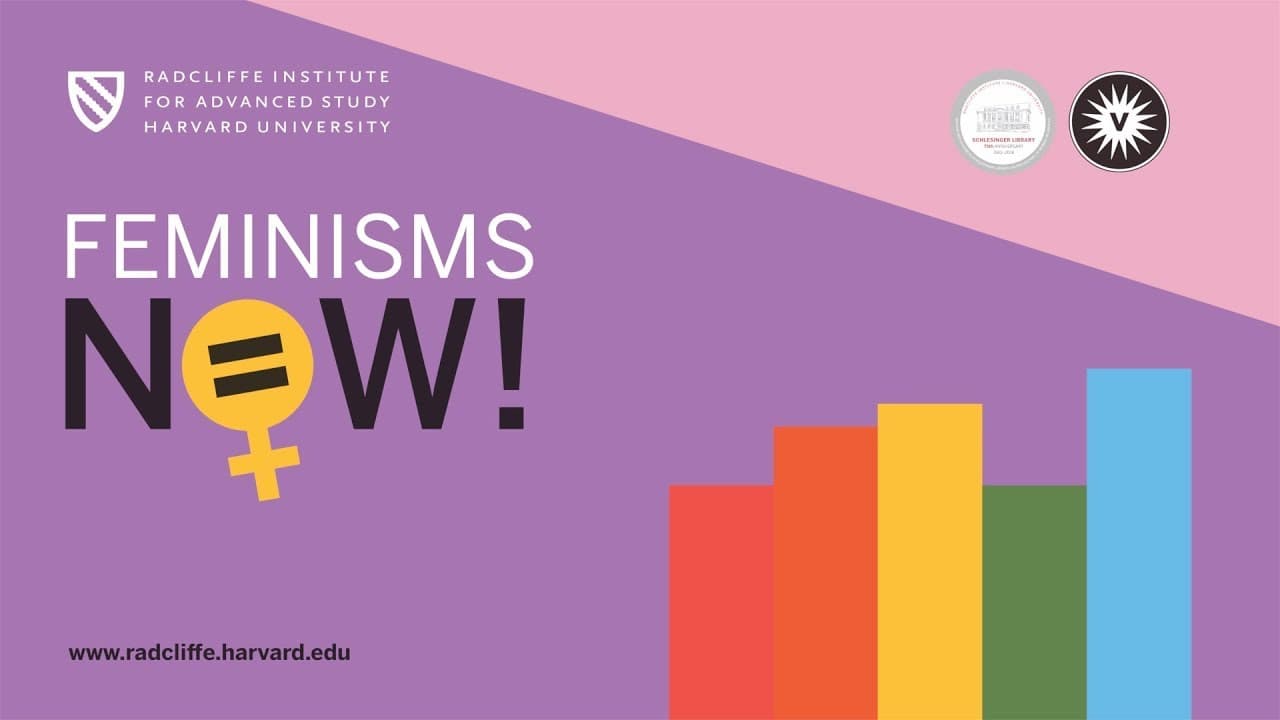
Feminisms Now! | A Schlesinger Library 75th Anniversary Event || Radcliffe Institute
TL;DR
A discussion exploring the intersections of feminism with transgender identities and digital communities, and the need for progress beyond surface-level understandings of gender equality.
Transcript
[MUSIC PLAYING] - Good afternoon and welcome. I'm Tomiko Brown-Nagin, the dean of the Radcliffe Institute. And we are delighted to have all of you here with us today. Let me start by thanking VIDA, women in literary arts, for partnering with the Schlesinger Library on the History of Women to organize this event. And of course, I'm grateful to this ... Read More
Key Insights
- 🚨 Feminist movements cannot be divorced from the historical context in which they emerged and the contributions of marginalized communities.
- 👻 Digital media has provided a platform for marginalized voices and facilitated dialogue and activism, allowing for the sharing of stories and experiences.
- ❓ Intersectionality is a crucial aspect of feminist discourse, and ongoing dialogue and engagement are necessary for progress.
- 🤦♀️ Black women have played an integral role in shaping feminism, bringing attention to the specific issues faced by women of color and emphasizing the need for inclusivity and intersectionality.
Install to Summarize YouTube Videos and Get Transcripts
Explore YouTube Video Summarizer or Get YouTube Transcript Extractor
Questions & Answers
Q: How has digital media impacted the feminist movement and intersectional identities?
Digital media has provided a platform for marginalized voices, allowing for the sharing of stories and experiences. It has facilitated dialogue and raised awareness about intersectionality, bringing to light issues faced by underrepresented communities.
Q: How can we go beyond surface-level understandings of gender equality and address the complex issues faced by marginalized communities?
It is important to acknowledge and listen to diverse voices within feminism, centering the experiences of those most marginalized. Intersectionality should be an integral part of feminist discourse, and ongoing dialogue and engagement are necessary for progress.
Q: How has the role of black women influenced the development of feminism?
Black women have played a crucial role in shaping feminist theory, activism, and discourse. Their contributions have brought attention to the specific issues faced by women of color, highlighting the need for inclusivity and a recognition of shared struggles.
Q: What is the significance of historical context and understanding when it comes to feminist movements?
Recognizing the historical context of feminist movements is essential for understanding the progress made and the work that remains. It allows us to appreciate the contributions of past generations and build upon their work to create a more inclusive and equitable future.
Summary & Key Takeaways
-
The panel discussion, organized by VIDA and the Schlesinger Library, focuses on the current state of feminisms and the progress made in the fight for equality.
-
The panelists discuss the importance of intersectionality and the need to go beyond surface-level understandings of gender equality to address the complex issues faced by marginalized communities.
-
The role of digital communities in shaping feminist discourse and the need for ongoing dialogue and engagement is highlighted.
-
The historical significance of black women in shaping feminism is recognized, emphasizing the need for inclusivity and the acknowledgement of shared struggles.
Read in Other Languages (beta)
Share This Summary 📚
Summarize YouTube Videos and Get Video Transcripts with 1-Click
Try YouTube Summary with ChatGPT & Claude or YouTube Transcript Generator
Explore More Summaries from Harvard University 📚



Summarize YouTube Videos and Get Video Transcripts with 1-Click
Try YouTube Summary with ChatGPT & Claude or YouTube Transcript Generator