Analysis Of Heat Exchanger By Lmtd Method Parallel Flow - Heat Exchanger - Heat Transfer
TL;DR
Analyzing heat exchangers using LM TD method for parallel flow.
Transcript
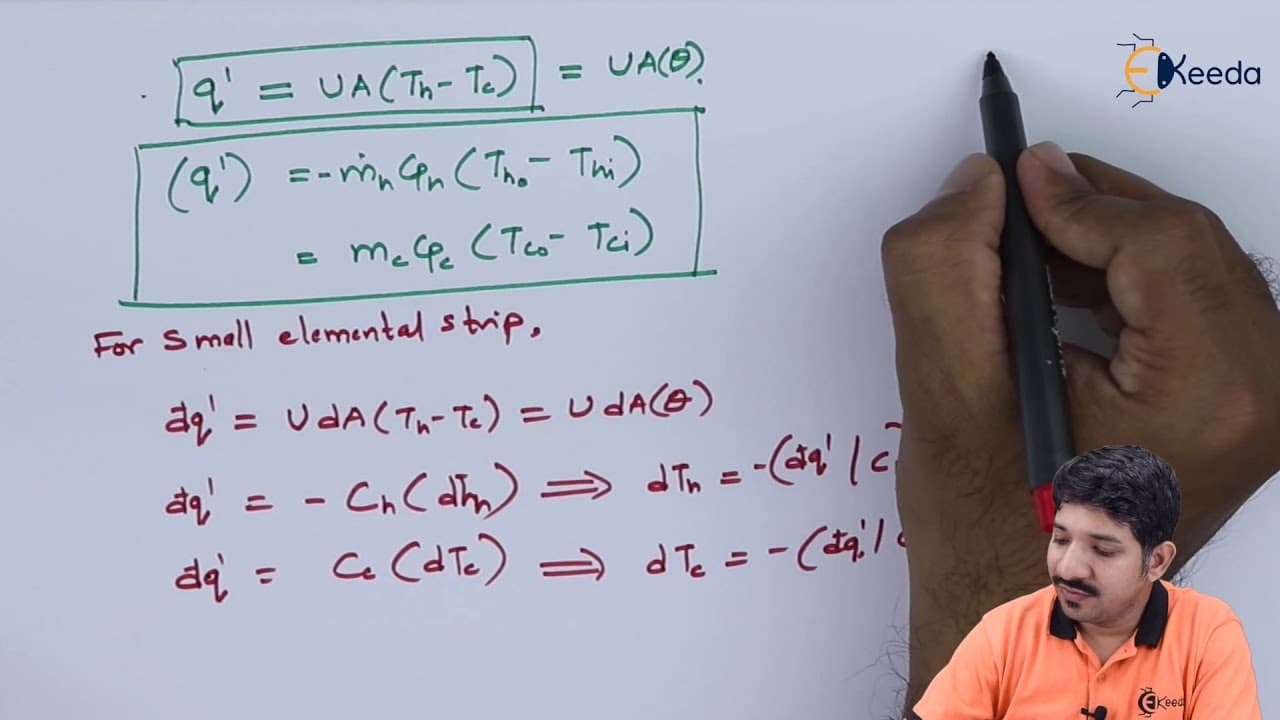
click the bell icon to get latest videos from akira hello friends we have seen what do you mean by heat exchanger what are its classification now let us look at the analysis of heat exchanger by a lambda method for parallel flow now this is an analysis of heat exchanger by lmpd method for parallel flow now what is Olimpia method this obviously we a... Read More
Key Insights
- 🥵 LM TD method crucial for determining heat transfer rates in parallel flow heat exchangers.
- 🥵 LM TD simplifies the analysis of heat exchangers by standardizing temperature difference calculations.
- 🥵 Heat transfer rate derived using LM TD involves overall heat transfer coefficient and log mean temperature difference.
- 🎴 LM TD plays a vital role in optimizing heat exchange efficiency in parallel flow configurations.
- 🥵 Understanding log mean temperature difference is fundamental in efficient heat exchanger design and operation.
- 🥵 LM TD method offers a systematic approach to analyzing heat transfer processes in heat exchangers.
- 🥵 Proper application of LM TD can enhance the performance and effectiveness of parallel flow heat exchangers.
Install to Summarize YouTube Videos and Get Transcripts
Explore YouTube Video Summarizer or Get YouTube Transcript Extractor
Questions & Answers
Q: What is the LM TD method used for in heat exchanger analysis?
The LM TD method is utilized to determine the log mean temperature difference in heat exchangers, crucial for calculating heat transfer rates efficiently.
Q: How is the heat transfer rate derived using LM TD for parallel flow heat exchangers?
The heat transfer rate is calculated by multiplying the overall heat transfer coefficient by the log mean temperature difference, essential for efficient heat exchange processes.
Q: What significance does the LM TD hold in the analysis of heat exchangers?
LM TD provides a standardized method to evaluate heat exchange efficiency in parallel flow arrangements, facilitating accurate calculations of heat transfer rates.
Q: How does LM TD aid in optimizing heat transfer rates in parallel flow heat exchangers?
By determining the log mean temperature difference, LM TD enables engineers to fine-tune heat exchanger designs for enhanced thermal performance and efficiency.
Summary & Key Takeaways
-
Explanation of LM TD method for parallel flow in heat exchangers.
-
Derivation of heat transfer rate using LM TD for parallel flow.
-
Importance of LM TD in determining heat transfer rate in heat exchangers.
Read in Other Languages (beta)
Share This Summary 📚
Summarize YouTube Videos and Get Video Transcripts with 1-Click
Try YouTube Summary with ChatGPT & Claude or YouTube Transcript Generator
Explore More Summaries from Ekeeda 📚




Summarize YouTube Videos and Get Video Transcripts with 1-Click
Try YouTube Summary with ChatGPT & Claude or YouTube Transcript Generator