How Brunei's Oil Wealth Shapes Its Economy
TL;DR
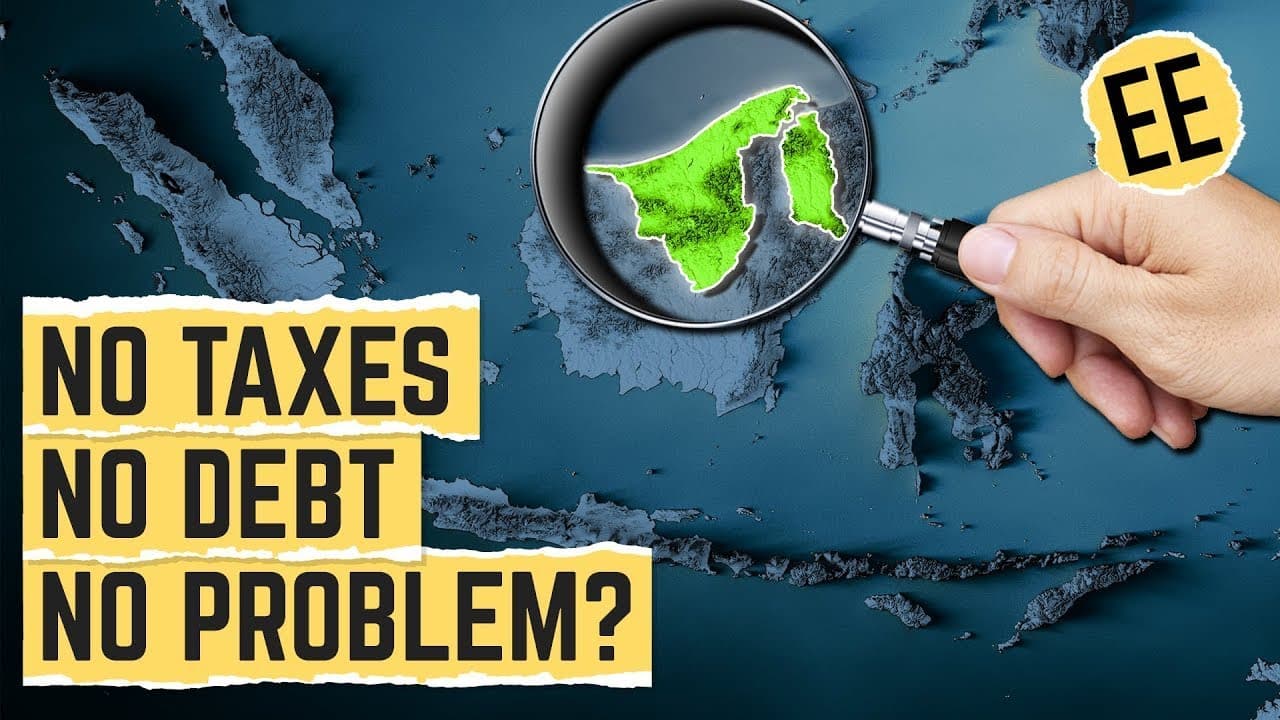
Brunei's economy heavily relies on oil and gas, contributing to its status as a welfare state with minimal taxation. However, this dependency poses risks as reserves are depleting. Efforts to diversify the economy are crucial, but challenges like youth unemployment and a rentier mentality hinder progress. Learning from countries like Norway could help Brunei achieve sustainable economic growth.
Transcript
This video is sponsored by Grammarly This is Brunei. With an area of less than 6,000 sq km and a population of 450,000 it is one of the smallest countries in Asia. But it punches well above its weight in what we can learn from its unique economic system. Brunei is a welfare state where the government pays for almost everything. This includes health... Read More
Key Insights
- Brunei is a welfare state where the government covers most citizen expenses, including healthcare and education, due to oil revenue.
- The country's economy is heavily dependent on oil and gas, which constitute 62% of GDP and 90% of exports.
- Brunei faces the resource curse, where abundant resources lead to less economic diversification and accountability.
- The oil-to-cash initiative proposes distributing oil revenue directly to citizens to enhance government accountability.
- Youth unemployment in Brunei is high due to a mismatch between job opportunities and skills, and a preference for government jobs.
- Diversification efforts include promoting foreign investment and improving infrastructure, but challenges persist.
- Norway's model of economic diversification and education could serve as an example for Brunei to overcome the resource curse.
- Brunei's GDP per capita is high, but economic growth has stagnated due to reliance on fluctuating oil prices.
Install to Summarize YouTube Videos and Get Transcripts
Explore YouTube Video Summarizer or Get YouTube Transcript Extractor
Questions & Answers
Q: How does Brunei's welfare state operate without taxation?
Brunei's welfare state is funded primarily through its oil and gas revenues, allowing the government to provide extensive public services without taxing its citizens. This includes free healthcare, education, and subsidized housing. However, this model is heavily reliant on the continued availability of natural resources, which poses long-term sustainability challenges as reserves deplete.
Q: What is the resource curse and how does it affect Brunei?
The resource curse refers to the paradox where countries rich in natural resources, like Brunei, experience less economic diversification and poor governance. In Brunei, this manifests as over-reliance on oil and gas, leading to limited growth in other sectors, reduced government accountability, and challenges in achieving sustainable economic development.
Q: Why is economic diversification important for Brunei?
Economic diversification is crucial for Brunei to reduce its dependency on oil and gas, which are finite resources. Diversifying into other industries can provide more stable and sustainable sources of income, mitigate the risks associated with fluctuating oil prices, and create job opportunities, particularly for the youth, thereby ensuring long-term economic resilience.
Q: What challenges does Brunei face in diversifying its economy?
Brunei faces several challenges in diversifying its economy, including a high youth unemployment rate, a rentier mentality that favors government jobs, and a skills mismatch between job seekers and market needs. Additionally, the economy's heavy reliance on oil and gas revenues makes it difficult to invest in and develop other sectors effectively.
Q: How does the oil-to-cash initiative aim to improve governance in Brunei?
The oil-to-cash initiative proposes distributing oil revenues directly to citizens, creating a fiscal contract that enhances government accountability. By taxing these payments, the government would be more accountable to its citizens, promoting transparency and responsible management of natural resource wealth, thereby fostering better governance and economic stability.
Q: What lessons can Brunei learn from Norway's economic model?
Brunei can learn from Norway's approach to managing natural resource wealth, which includes prioritizing education, promoting entrepreneurship, and maintaining transparency in resource management. Norway's diversified economy and emphasis on skills development have helped mitigate the resource curse, providing a model for Brunei to achieve sustainable economic growth and reduce oil dependency.
Q: Why is youth unemployment a critical issue in Brunei?
Youth unemployment in Brunei is critical due to a mismatch between the skills of job seekers and market demands, coupled with a preference for stable government jobs. The generous welfare system allows young people to be selective, often rejecting manual or low-prestige jobs, which exacerbates unemployment and hinders economic diversification efforts.
Q: How does Brunei's reliance on oil impact its economic stability?
Brunei's reliance on oil impacts its economic stability by making it vulnerable to fluctuations in global oil prices. This dependency limits economic growth and diversification, creating uncertainty as oil reserves are finite. To ensure long-term stability, Brunei must develop other sectors and reduce its reliance on oil revenues as the primary source of government funding.
Summary & Key Takeaways
-
Brunei's economy is highly dependent on oil and gas, which fund its welfare state model, providing citizens with free healthcare, education, and more. However, this reliance poses risks as reserves are expected to deplete in 27 years. Efforts to diversify the economy are crucial to ensure sustainable growth and reduce dependency on oil revenue.
-
The lack of taxation in Brunei creates a participation deficit, reducing citizen engagement and government accountability. The oil-to-cash initiative could address this by distributing oil revenue directly to citizens, fostering a fiscal contract and encouraging responsible wealth management.
-
Youth unemployment is a significant challenge in Brunei, exacerbated by a rentier mentality and a preference for stable government jobs. To diversify the economy, Brunei must promote entrepreneurship, improve education, and align skills with market demands, learning from models like Norway's diversified economy.
Read in Other Languages (beta)
Share This Summary 📚
Summarize YouTube Videos and Get Video Transcripts with 1-Click
Try YouTube Summary with ChatGPT & Claude or YouTube Transcript Generator
Explore More Summaries from Economics Explained 📚
Summarize YouTube Videos and Get Video Transcripts with 1-Click
Try YouTube Summary with ChatGPT & Claude or YouTube Transcript Generator