Natural resources | Earth and society | Middle school Earth and space science | Khan Academy
TL;DR
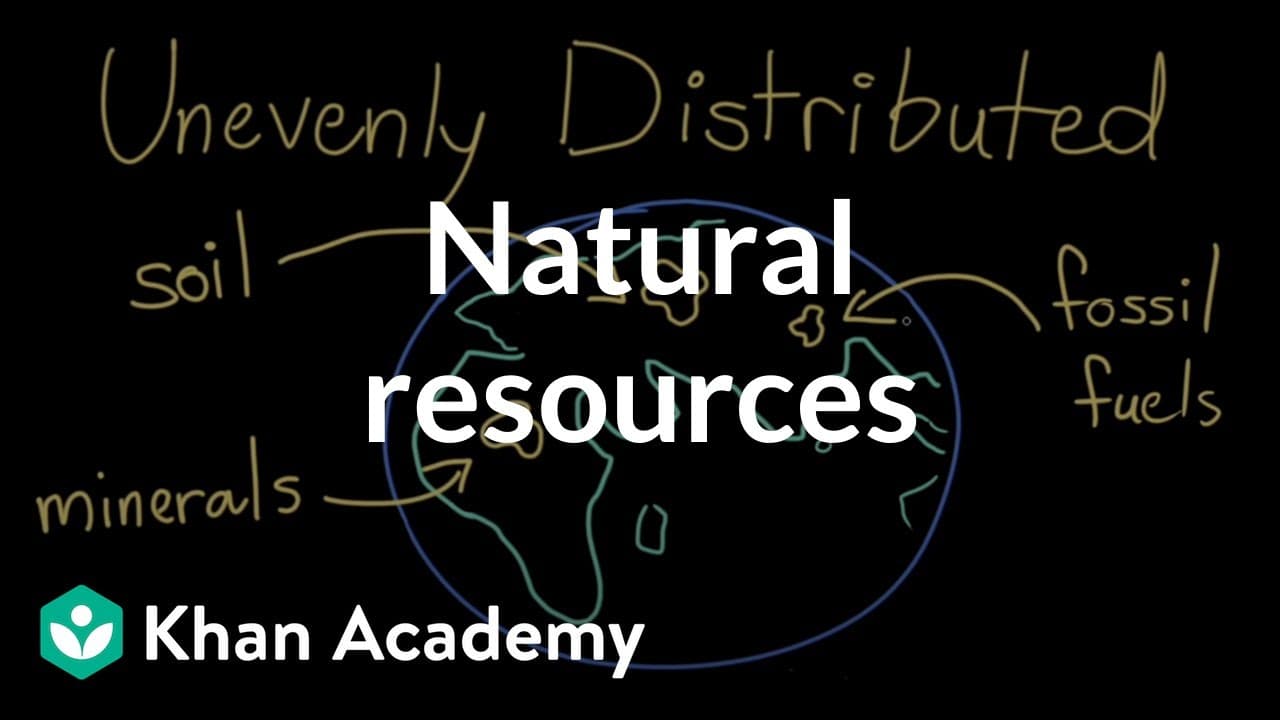
Natural resources, both renewable and non-renewable, are unevenly distributed across the Earth, impacting human adaptation and thriving in different regions.
Transcript
- [Instructor] Humans are an amazingly adaptable species. Not only can we survive almost anywhere, we also find ways to thrive even in the most inhospitable environments. Our clever brains allow us to look the world around us and figure out how to find food and water, build safe and comfortable shelters, and design useful tools. All of this is poss... Read More
Key Insights
- ❓ Humans adapt and thrive by utilizing natural resources in their surroundings.
- 🙈 Non-renewable resources like metal ores form in specific locations due to geological processes.
- 💨 Renewable resources like sunlight and wind display uneven distribution based on geographic factors.
- 🚱 Human activities such as extraction and redistribution impact the distribution and availability of both renewable and non-renewable resources.
Install to Summarize YouTube Videos and Get Transcripts
Explore YouTube Video Summarizer or Get YouTube Transcript Extractor
Questions & Answers
Q: What are natural resources, and how do they impact human survival?
Natural resources are anything found in nature that humans can use. They are essential for finding food, water, building shelters, and designing tools, enabling human survival and development.
Q: What is the difference between renewable and non-renewable resources?
Renewable resources can be replenished within a human lifetime, such as sunlight and wind. Non-renewable resources, like minerals and fossil fuels, take longer to replace and are often concentrated in specific locations.
Q: How do geological processes affect the distribution of non-renewable resources?
Non-renewable resources like metal ores are formed through geological processes like plate tectonics. These processes create deposits that are often concentrated in specific areas, but, over time, they can be found in different regions due to geological activity.
Q: How does human activity impact the distribution of natural resources?
Human activity can impact the distribution of natural resources. For instance, mining and drilling operations transport fossil fuels across the world. This extraction and use of non-renewable resources depletes their availability for future use.
Summary & Key Takeaways
-
Humans are adaptable and can thrive in diverse environments by utilizing natural resources.
-
Natural resources can be renewable or non-renewable, with uneven distribution across the Earth.
-
Non-renewable resources such as metal ores are often concentrated in specific locations, formed through geological processes.
Read in Other Languages (beta)
Share This Summary 📚
Summarize YouTube Videos and Get Video Transcripts with 1-Click
Try YouTube Summary with ChatGPT & Claude or YouTube Transcript Generator
Explore More Summaries from Khan Academy 📚



Summarize YouTube Videos and Get Video Transcripts with 1-Click
Try YouTube Summary with ChatGPT & Claude or YouTube Transcript Generator