How to SEO optimize your ecommerce website (8 Tips)
TL;DR
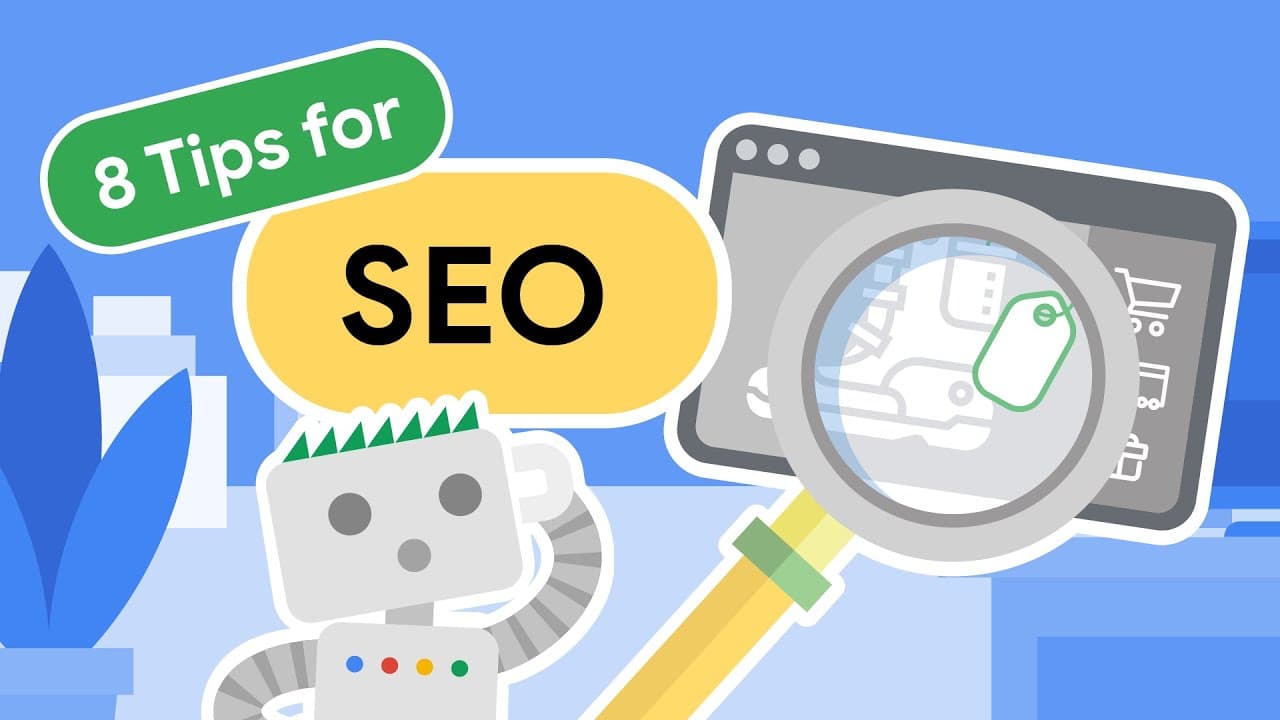
Learn eight essential SEO tips to boost your e-commerce site.
Transcript
[MUSIC PLAYING] ALAN KENT: So you want your e-commerce website to be number one in search results. Go for it. The challenge is, is so does your competitors. Hi, my name is Alan Kent. And I'm a developer advocate at Google. In this episode, I introduce some basic SEO tips, particularly relevant to e-commerce. These tips are not a guarantee of succes... Read More
Key Insights
- SEO involves optimizing web pages to rank higher in search results, crucial for e-commerce sites aiming to increase sales.
- Technical basics are crucial; ensure Google can crawl your site using tools like Google Search Console to identify issues.
- Include relevant content for users at different shopping stages to improve site recognition and reputation.
- Correctly mark up product variant pages to help Google understand relationships between products and improve search visibility.
- Reuse URLs for recurring events to maintain page authority and provide consistent information to Google.
- Page performance impacts user experience and search ranking; use tools like PageSpeed Insights to optimize loading times.
- SEO is a long-term strategy; diversify traffic sources through marketing campaigns and social media to supplement organic growth.
- Focus on user-centric content creation rather than solely optimizing for search algorithms to ensure long-term SEO success.
Install to Summarize YouTube Videos and Get Transcripts
Explore YouTube Video Summarizer or Get YouTube Transcript Extractor
Questions & Answers
Q: What is the primary goal of SEO for e-commerce sites?
The primary goal of SEO for e-commerce sites is to increase sales by improving the visibility of product pages in search results. This involves attracting visitors who are more likely to make purchases, rather than just increasing overall traffic. Optimizing content to align with business goals and user needs is essential.
Q: Why is it important to nail the technical basics in SEO?
Nailing the technical basics in SEO is crucial because if Google cannot crawl your site, your content will not appear in search results, regardless of its quality. Tools like Google Search Console help identify and resolve technical issues, ensuring your site is accessible and optimized for search engines.
Q: How can content relevance impact SEO for e-commerce sites?
Content relevance impacts SEO by addressing the needs of users at different stages of their shopping journey. Providing valuable information, such as product reviews and buying guides, can enhance site reputation and visibility. Understanding and targeting user queries with relevant content can improve search rankings.
Q: What is the importance of reusing URLs for recurring events?
Reusing URLs for recurring events is important because it maintains the page's authority and helps Google understand the page's purpose. Consistent URLs prevent the need for re-indexing and ensure the page remains in Google's index, facilitating better search performance and user trust over time.
Q: How does page performance affect SEO rankings?
Page performance affects SEO rankings because user experience, including page load speed, is a Google ranking signal. Slow-loading pages can lead to higher bounce rates and lower search rankings. Tools like PageSpeed Insights provide recommendations for improving page speed, which can enhance both user experience and search visibility.
Q: Why is patience important in SEO strategies?
Patience is important in SEO strategies because improvements in search rankings and traffic can take months to manifest. SEO is a long-term investment, and results are not immediate. Consistent efforts in content creation, technical optimization, and diversification of traffic sources are necessary for sustained success.
Q: What role do external links play in SEO?
External links play a significant role in SEO by enhancing site authority and credibility. Authentic links from reputable sources can improve search rankings. However, artificially creating links violates Google guidelines and can negatively impact rankings. Building genuine relationships and content that naturally attracts links is recommended.
Q: How should e-commerce sites balance user experience and SEO?
E-commerce sites should balance user experience and SEO by focusing on creating high-quality, user-centric content that meets customer needs. While optimizing for search algorithms is important, the ultimate goal is to provide the best possible experience for users. This approach aligns with Google's mission to deliver valuable content.
Summary & Key Takeaways
-
SEO is essential for e-commerce sites to improve search rankings and increase sales. This video provides eight tips, focusing on technical basics, content relevance, and user experience. Tools like Google Search Console and PageSpeed Insights are recommended for optimization.
-
Technical SEO, including URL structure and structured data, is crucial for ensuring Google can effectively crawl and understand your site. Properly marking up product variants and reusing URLs for events can enhance search visibility.
-
Patience is key in SEO, as results take time. Meanwhile, diversify traffic sources through marketing and social media. Ultimately, prioritize user experience and content quality over short-term algorithmic gains for sustained success.
Read in Other Languages (beta)
Share This Summary 📚
Summarize YouTube Videos and Get Video Transcripts with 1-Click
Try YouTube Summary with ChatGPT & Claude or YouTube Transcript Generator
Explore More Summaries from Google Search Central 📚





Summarize YouTube Videos and Get Video Transcripts with 1-Click
Try YouTube Summary with ChatGPT & Claude or YouTube Transcript Generator