Chromosomes, Chromatids, Chromatin, etc.
TL;DR
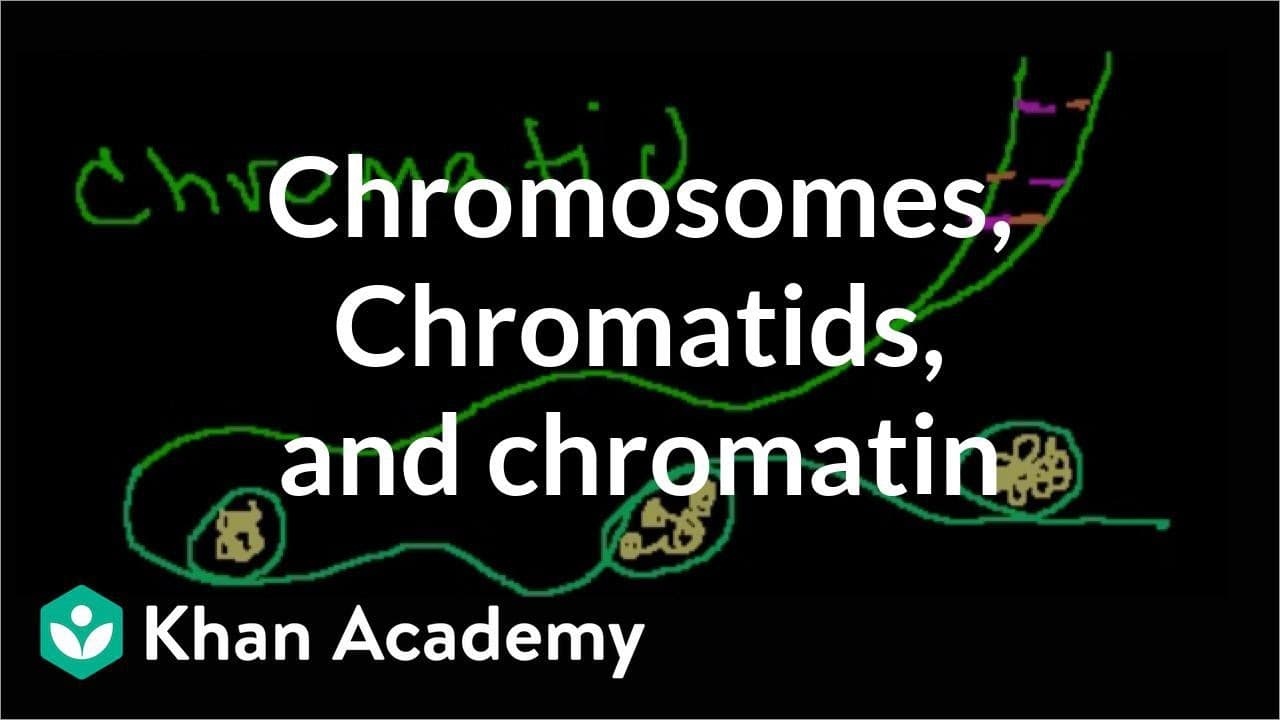
This video explains the vocabulary associated with DNA, including replication, transcription, and translation, and clarifies the terms chromosome, chromatin, and chromatid.
Transcript
Before I dive into the mechanics of how cells divide, I think it could be useful to talk a little bit about a lot of the vocabulary that surrounds DNA. There's a lot of words and some of them kind of sound like each other, but they can be very confusing. So the first few I'd like to talk about is just about how DNA either generates more DNA, makes ... Read More
Key Insights
- 🧬 DNA replication occurs when the DNA strands separate and complementary bases attract to form new nucleotides, resulting in the duplication of the DNA molecule.
- 💁 Transcription is the process of converting DNA into mRNA, which then leaves the nucleus to deliver the genetic information for protein synthesis.
- 🙏 Translation is the step where mRNA is converted into proteins. Transfer RNA molecules bring specific amino acids to form a chain, which then folds into a unique protein shape.
- 🧬 Chromatin refers to DNA combined with structural proteins, while a chromatid is an individual copy of a chromosome. Chromosomes can consist of two chromatids or a single chromatid with a specific DNA sequence.
Install to Summarize YouTube Videos and Get Transcripts
Explore YouTube Video Summarizer or Get YouTube Transcript Extractor
Questions & Answers
Q: What is replication and how does it occur?
Replication is the process of DNA copying itself. The DNA strands separate, and complementary bases attract to create new nucleotides, resulting in the duplication of the DNA molecule.
Q: What is transcription and why is it important?
Transcription is the step where DNA is converted into mRNA. This mRNA carries the genetic information from the nucleus to the ribosomes for protein synthesis. It is an essential intermediate step in converting DNA to proteins.
Q: How does translation occur?
Translation is the process of converting mRNA into proteins. The mRNA leaves the nucleus and enters the ribosomes, where transfer RNA (tRNA) molecules bring specific amino acids to form a chain. This chain then folds into a protein with a unique shape.
Q: What is the difference between chromatin, a chromatid, and a chromosome?
Chromatin refers to the combination of DNA and proteins that give structure to the chromosome. A chromatid is an individual copy of a chromosome formed during DNA replication. A chromosome is a structure consisting of two chromatids or one chromatid that contains a specific sequence of DNA.
Summary & Key Takeaways
-
The video introduces the vocabulary surrounding DNA, including replication, transcription, and translation.
-
The process of DNA replication is explained, highlighting how the DNA strands separate and attract complementary bases to duplicate the molecule.
-
Transcription is described as the process of converting DNA into mRNA, which then leaves the nucleus and undergoes translation to form proteins.
Read in Other Languages (beta)
Share This Summary 📚
Summarize YouTube Videos and Get Video Transcripts with 1-Click
Try YouTube Summary with ChatGPT & Claude or YouTube Transcript Generator
Explore More Summaries from Khan Academy 📚



Summarize YouTube Videos and Get Video Transcripts with 1-Click
Try YouTube Summary with ChatGPT & Claude or YouTube Transcript Generator