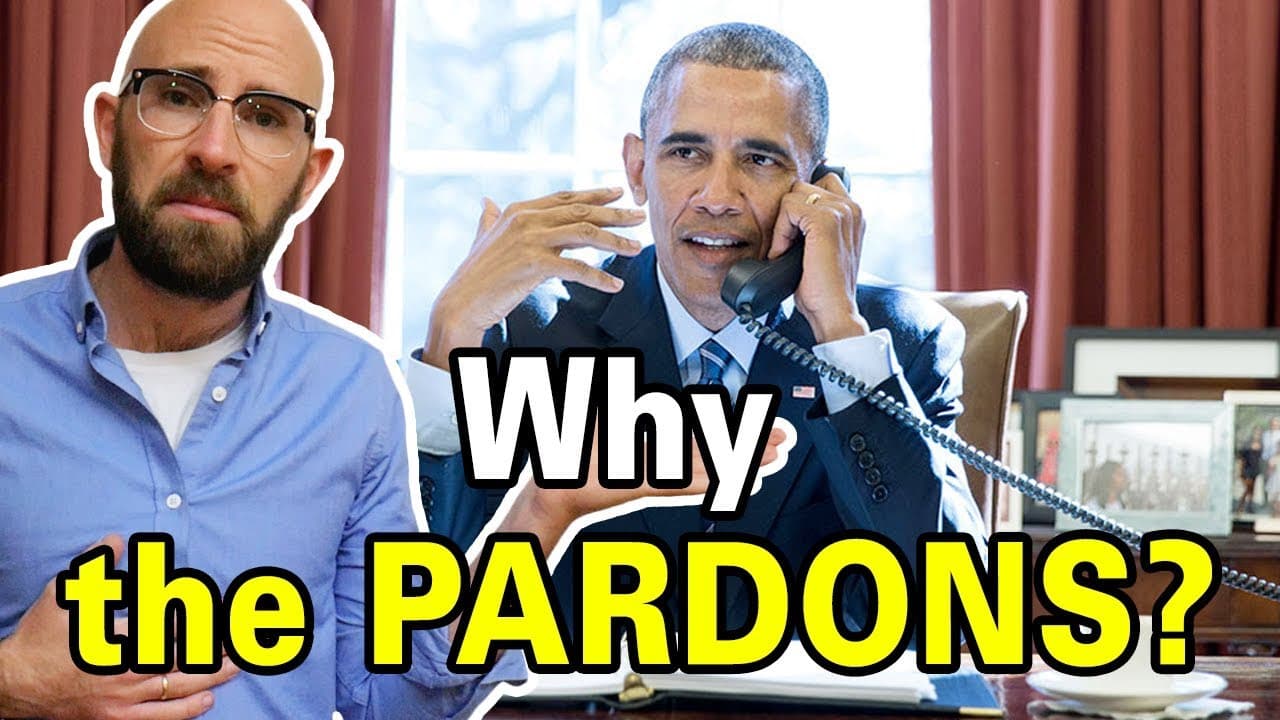
Why Do Presidents Get to Pardon So Many People at the End of Their Terms?
TL;DR
Throughout history, presidential pardons have been used to grant clemency and mercy, execute public policy, and maintain peace during times of insurrection or rebellion.
Transcript
An armed insurrectionist, teamster with (perhaps) ties to the mafia, socialite turned terrorist, presidential sibling and even a former President of the United States have all received either a presidential pardon or commutation of their sentence. A tradition far older than any modern republic, with various emperors and monarchs having similar powe... Read More
Key Insights
- ✊ The power to grant pardons has a long history and can be traced back to ancient times.
- ✊ The interpretation of the presidential pardoning power has been a subject of debate among jurists.
- ✌️ Presidents have used the power of clemency for various purposes, including mercy, public policy, and maintaining peace.
- 🤙 Not all presidential pardons have been without controversy, and motives for granting clemency have been called into question.
- ✊ Over time, the power of pardons has expanded and presidents have been able to exercise their authority to grant clemency to individuals convicted of various offenses.
- 🫱 Presidential pardons have been used to forgive treason, sedition, criticism of the government, the surrender of forts, and to avoid war drafts.
- #️⃣ The number of pardons granted has varied among different presidents, with some issuing more pardons than others.
Install to Summarize YouTube Videos and Get Transcripts
Explore YouTube Video Summarizer or Get YouTube Transcript Extractor
Questions & Answers
Q: What is the origin of the power to grant pardons?
The power to grant pardons can be traced back to the Anglo-Saxon rulers of England, specifically during the reign of King Ine in the 7th century AD.
Q: How did the power of pardons evolve over time?
Over time, the power of pardons expanded to include offenses such as thievery, sedition, breach of peace, and killing of servants. It remained with the monarch in England and was included in the United States Constitution.
Q: What are the three purposes of the presidential pardoning power?
The three purposes of the presidential pardoning power are to temper justice with mercy, execute public policy, such as obtaining accomplice testimony, and ensure peace during insurrection or rebellion.
Q: What are some notable examples of presidential pardons throughout history?
Examples include pardoning individuals involved in the Whiskey Rebellion, sedition, surrendering forts, Mormons in the Utah War, Jimmy Hoffa, Richard Nixon, Patty Hearst, Marc Rich, and Roger Clinton Jr.
Summary & Key Takeaways
-
The tradition of presidential pardons dates back to ancient times and has its roots in the Anglo-Saxon rulers of England.
-
The power to grant pardons and commutations was included in the United States Constitution and has been interpreted by the Supreme Court as being broad in scope.
-
Presidents throughout history have used the power of clemency for various purposes, including forgiving treason, sedition, criticizing the government, surrendering forts, and avoiding war drafts.
Read in Other Languages (beta)
Share This Summary 📚
Summarize YouTube Videos and Get Video Transcripts with 1-Click
Try YouTube Summary with ChatGPT & Claude or YouTube Transcript Generator
Explore More Summaries from Today I Found Out 📚




Summarize YouTube Videos and Get Video Transcripts with 1-Click
Try YouTube Summary with ChatGPT & Claude or YouTube Transcript Generator