SPNs Might Change the World, So What Are They?
TL;DR
Scientists develop a super jelly hydrogel with unique properties and potential applications in soft robotics and bioelectronics.
Transcript
Thank you to Climeworks for sponsoring today’s video. Climeworks removes carbon dioxide from the atmosphere, helping fight the climate crisis. Go to gift.climeworks.com/SciShow to give the sustainable gift of CO2 removal this holiday season. [♪ INTRO] Science is always fun, but it’s not every day that researchers get to go out into the parking ... Read More
Key Insights
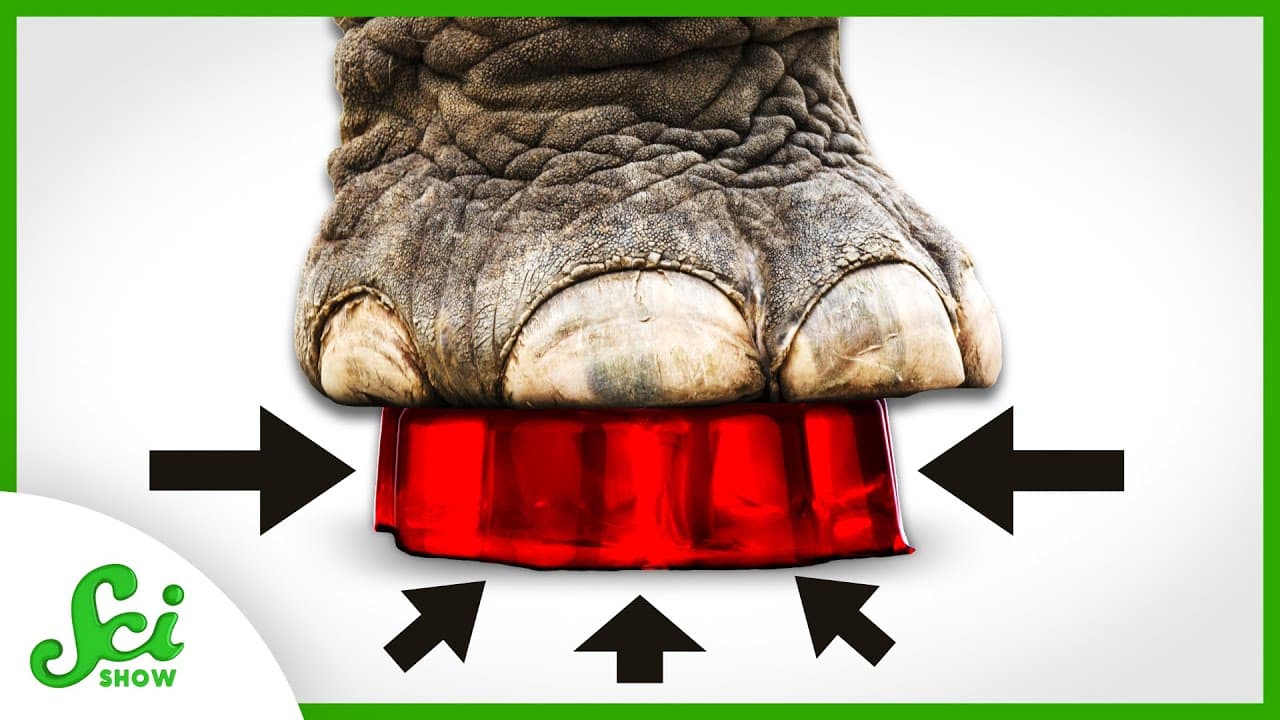
- 😎 The super jelly hydrogel contains 80% water and retains its shape under high pressure, behaving like a glass.
- 💁 Supramolecular polymer networks (SPNs) have temporary crosslinks formed by intermolecular forces like hydrogen bonding.
- 🐭 Nanofibers injected in paralyzed mice triggered spinal cord cell regeneration, allowing the mice to walk again.
- 😇 The nanofibers formed a gel-like SPN that mimicked the normal scaffolding around spinal cord cells.
- ❓ The movement of nanofibers within the SPN structure correlated with better healing and regeneration outcomes in the study.
- 😒 Researchers aim to adapt the nanofiber technique for use in humans soon.
- 📡 The findings suggest that motion is important for cell signaling and could have broader applications in counteracting diseases and drug targeting.
Install to Summarize YouTube Videos and Get Transcripts
Explore YouTube Video Summarizer or Get YouTube Transcript Extractor
Questions & Answers
Q: What is the super jelly hydrogel made of, and how does it retain its shape under pressure?
The super jelly hydrogel is made of 80% water and belongs to the class of materials known as supramolecular polymer networks (SPNs). It retains its shape under pressure due to temporary crosslinks formed by intermolecular forces like hydrogen bonding.
Q: How did researchers in a separate study use nanofibers to help paralyzed mice walk again?
Researchers injected paralyzed mice with nanofibers that triggered injured spinal cord cells to regenerate, allowing the mice to walk within 3 to 4 weeks. The nanofibers formed a gel-like SPN that mimicked the normal scaffolding around spinal cord cells.
Q: What are the potential applications of the super jelly hydrogel and nanofibers in scientific research?
The super jelly hydrogel has applications in soft robotics and bioelectronics, while the nanofibers could be adapted for humans to treat spinal injuries. Both materials show promise in aiding cell regeneration and repair in different contexts.
Q: How do the researchers believe that the movement of the nanofibers within the SPN structure contributed to better healing and regeneration in the study?
The researchers found that the movement of the nanofibers within the structure correlated with better healing and regeneration outcomes. This movement may increase the chance of nanofibers colliding with receptors on cells, aiding in cellular signaling and repair processes.
Summary & Key Takeaways
-
Researchers created a super jelly hydrogel that is 80% water and retains its shape under high pressure, behaving like a glass.
-
The hydrogel is part of a class of materials known as supramolecular polymer networks (SPNs) that have temporary crosslinks, giving them unique properties.
-
Another study used nanofibers to help paralyzed mice walk again by triggering spinal cord cell regeneration.
Read in Other Languages (beta)
Share This Summary 📚
Summarize YouTube Videos and Get Video Transcripts with 1-Click
Try YouTube Summary with ChatGPT & Claude or YouTube Transcript Generator
Explore More Summaries from SciShow 📚






Summarize YouTube Videos and Get Video Transcripts with 1-Click
Try YouTube Summary with ChatGPT & Claude or YouTube Transcript Generator