Why the US banned Red 3
TL;DR
Red 3 remains in food despite cancer concerns and bans elsewhere.
Transcript
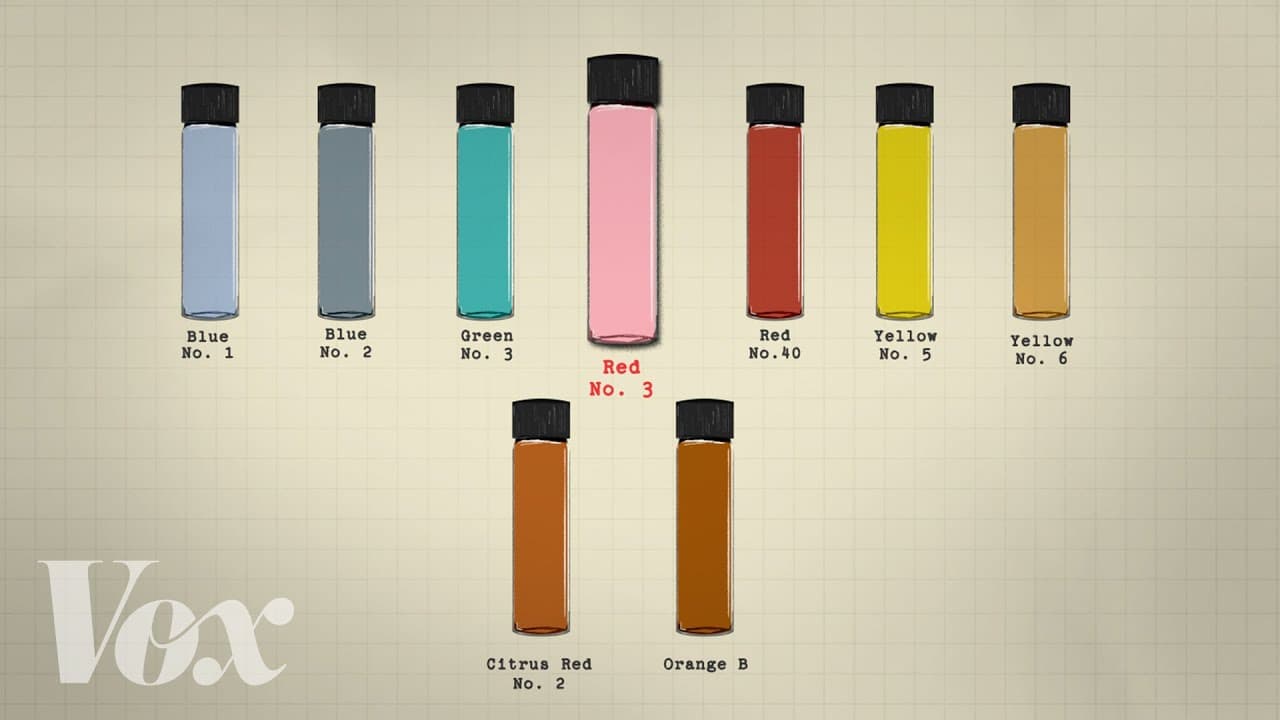
Halloween night, 1950. Dozens of children in cities across the United States were sick. There was something in the candy. Okay, no one died, but this was obviously a problem. The issue was an FDA approved ingredient called Orange 1, a color additive that was in all types of food at the time, from Halloween candy to hot dogs. The large amounts of it... Read More
Key Insights
- In 1950, a Halloween incident involving the toxic dye Orange 1 led to its ban, highlighting the dangers of certain color additives.
- Red 3, linked to cancer in rats, remains in food despite being banned in cosmetics and topical drugs since 1990.
- The FDA's regulations on synthetic dyes have largely remained unchanged since the late 1960s, despite new research findings.
- California has passed a bill to ban Red 3 in food by 2027, potentially influencing nationwide changes in the food industry.
- The Delaney clause requires the FDA to ban additives linked to cancer, but Red 3 remains due to inaction.
- Many synthetic dyes, including Red 3, are already banned or require warning labels in the EU, highlighting regulatory differences.
- The food industry has alternatives to Red 3 but continues to use it in the US, prioritizing aesthetics over safety.
- The case of Red 3 underscores flaws in US food regulation, allowing unsafe chemicals to persist in the market.
Install to Summarize YouTube Videos and Get Transcripts
Explore YouTube Video Summarizer or Get YouTube Transcript Extractor
Questions & Answers
Q: Why is Red 3 still in food despite being linked to cancer?
Red 3 remains in food due to regulatory inaction by the FDA. Although evidence links it to cancer in rats, the FDA has not banned it in food, citing limited relevance to humans. This inaction persists despite the Delaney clause, which mandates banning additives causing cancer in animals.
Q: What actions has California taken regarding Red 3?
California has passed a bill to ban Red 3 in food by 2027, responding to evidence of its potential health risks. This move, driven by frustration over FDA inaction, may lead to broader industry changes, as California's economic influence often sets national trends in food safety standards.
Q: How does the EU's regulation of synthetic dyes compare to the US?
The EU has stricter regulations on synthetic dyes, banning or requiring warning labels for many, including Red 3. In contrast, the US allows these dyes, highlighting a regulatory gap. The EU's approach prioritizes consumer safety, whereas the US lags in updating its regulations based on new scientific findings.
Q: What historical event highlighted the dangers of color additives in the US?
The 1950 Halloween incident, where children fell ill due to the dye Orange 1 in candy, underscored the dangers of certain color additives. This event led to a ban on Orange 1 and prompted stricter regulations on food dyes, though gaps remain, as seen with the continued use of Red 3.
Q: What is the Delaney clause and how does it relate to Red 3?
The Delaney clause, part of the 1958 Food Additives Amendment, requires the FDA to ban food additives linked to cancer in humans or animals. Despite Red 3's link to cancer in rats, it remains in food due to FDA inaction, highlighting the clause's lack of enforcement in this case.
Q: How has the food industry responded to California's ban on Red 3?
Following California's ban on Red 3, the food industry is beginning to adjust, with some companies removing the dye from their products. This response reflects California's influence on national trends, as companies often preemptively align with state regulations to avoid disrupting their market presence.
Q: Why are synthetic food dyes like Red 3 used in the food industry?
Synthetic food dyes like Red 3 are used primarily for aesthetic reasons, enhancing the visual appeal of food products. They do not alter taste, nutrition, or preservation. However, their use poses health risks, raising questions about the necessity of such additives, especially when safer alternatives exist.
Q: What does the case of Red 3 reveal about US food regulation?
The case of Red 3 highlights significant flaws in US food regulation, where outdated policies allow potentially harmful chemicals to remain in the market. It underscores the need for updated safety assessments and proactive measures to protect consumers, particularly in light of new scientific evidence and international standards.
Summary & Key Takeaways
-
Red 3, a synthetic dye linked to cancer in rats, remains in US food despite being banned in cosmetics since 1990. California's recent legislation aims to ban it by 2027, highlighting regulatory flaws and industry inaction.
-
The FDA's outdated regulations on food dyes, unchanged since the 1960s, allow Red 3 to persist despite the Delaney clause mandating bans on carcinogenic additives. California's proactive stance may prompt nationwide changes.
-
While the EU bans or labels many synthetic dyes, the US lags behind. Red 3's continued use emphasizes the need for updated safety assessments and regulations to protect consumers, especially children, from potential health risks.
Read in Other Languages (beta)
Share This Summary 📚
Summarize YouTube Videos and Get Video Transcripts with 1-Click
Try YouTube Summary with ChatGPT & Claude or YouTube Transcript Generator
Explore More Summaries from Vox 📚



Summarize YouTube Videos and Get Video Transcripts with 1-Click
Try YouTube Summary with ChatGPT & Claude or YouTube Transcript Generator