How Will Humanity Survive a 10 Billion Population By 2050?
TL;DR
Humanity's survival as the population reaches 10 billion by 2050 will depend on collaboration between 'wizards,' who advocate for tech-driven solutions, and 'prophets,' who emphasize ecological sustainability. Both sides must find common ground, balancing technological advancements with the need to respect natural limits to ensure food, water, and energy for all.
Transcript
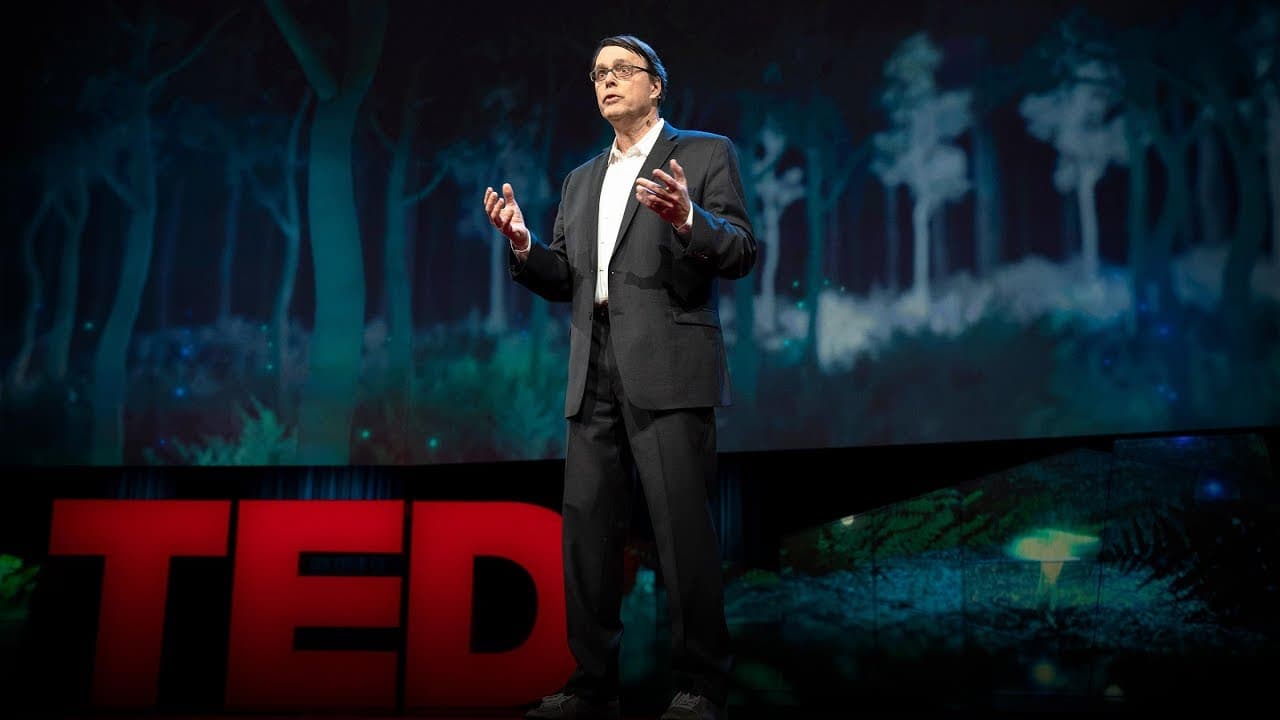
How are we doing? No, no, no, by that, I meant, how are we, homo sapiens "we" ... (Laughter) doing as a species? (Laughter) Now the typical way to answer that question is this. You choose some measure of human physical well-being: average longevity, average calories per day, average income, overall population, that sort of thing, and draw a graph o... Read More
Key Insights
- 📊 The typical measure of human physical well-being has seen exponential growth in the 19th and 20th centuries.
- 🌍 Biologists define this explosion of growth as an "outbreak" that ultimately leads to negative consequences.
- 🔬 From a biological standpoint, humans are not fundamentally different from other species, and outbreaks in nature do not end well.
- 🔒 The future of humanity is divided between the "wizards" and the "prophets" - those who believe in technology-driven solutions, and those who advocate for a more ecological approach.
- 🏙️ Wizards envision a world of hyper-efficient megacities and dematerialized capitalist societies, while prophets envision interconnected communities and reduced corporate control.
- 💡 Both wizards and prophets believe technology is key to our future, but they have different visions of what that technology should be.
- 🌿 Prophets emphasize the need for smaller, interconnected communities and changing individual habits to live in harmony with nature.
- 🌍 The future of humanity and resolving the challenges we face lies in a collaborative effort between wizards and prophets, finding common ground and working towards a shared vision.
Install to Summarize YouTube Videos and Get Transcripts
Explore YouTube Video Summarizer or Get YouTube Transcript Extractor
Questions & Answers
Q: What is the typical way to measure human well-being as a species over time?
The typical way to measure human well-being as a species over time is to choose a measure such as average longevity, average calories per day, average income, or overall population and graph its value over time.
Q: What is the term used by biologists to describe when a population or species exceeds the bounds of natural selection?
Biologists use the term "outbreak" to describe when a population or species exceeds the bounds of natural selection.
Q: What typically happens when a population or species experiences an outbreak in nature?
Outbreaks in nature do not end well. They usually result in negative consequences such as drowning in waste, starving from lack of resources, or a combination of both.
Q: How are we, as homo sapiens, doing as a species?
As a species, homo sapiens are viewed as an outbreak species that will eventually hit the edge of the metaphorical "petri dish" of our resources and environment. This suggests that our long-term prospects may not be favorable.
Q: What are the two broad categories of answers provided by researchers when asked how we can escape biology and ensure long-term prosperity?
The two broad categories of answers are "wizards" and "prophets." Wizards believe that science and technology, when properly applied, can solve our dilemmas and produce a successful future. Prophets, on the other hand, believe in the importance of ecological processes and advocate for using less and conserving resources.
Summary & Key Takeaways
-
Human population and consumption have increased exponentially in recent centuries, leading to concerns about exceeding the limits of natural selection.
-
There are two contrasting viewpoints on how to address the challenges of feeding, providing water, and mitigating climate change for a population of 10 billion by 2050.
-
Collaboration between "wizards" (technology-focused) and "prophets" (ecologically-focused) is needed to find solutions that respect both the limits of nature and human aspirations.
Read in Other Languages (beta)
Share This Summary 📚
Summarize YouTube Videos and Get Video Transcripts with 1-Click
Try YouTube Summary with ChatGPT & Claude or YouTube Transcript Generator
Explore More Summaries from TED 📚
Summarize YouTube Videos and Get Video Transcripts with 1-Click
Try YouTube Summary with ChatGPT & Claude or YouTube Transcript Generator