Meta-communication
TL;DR
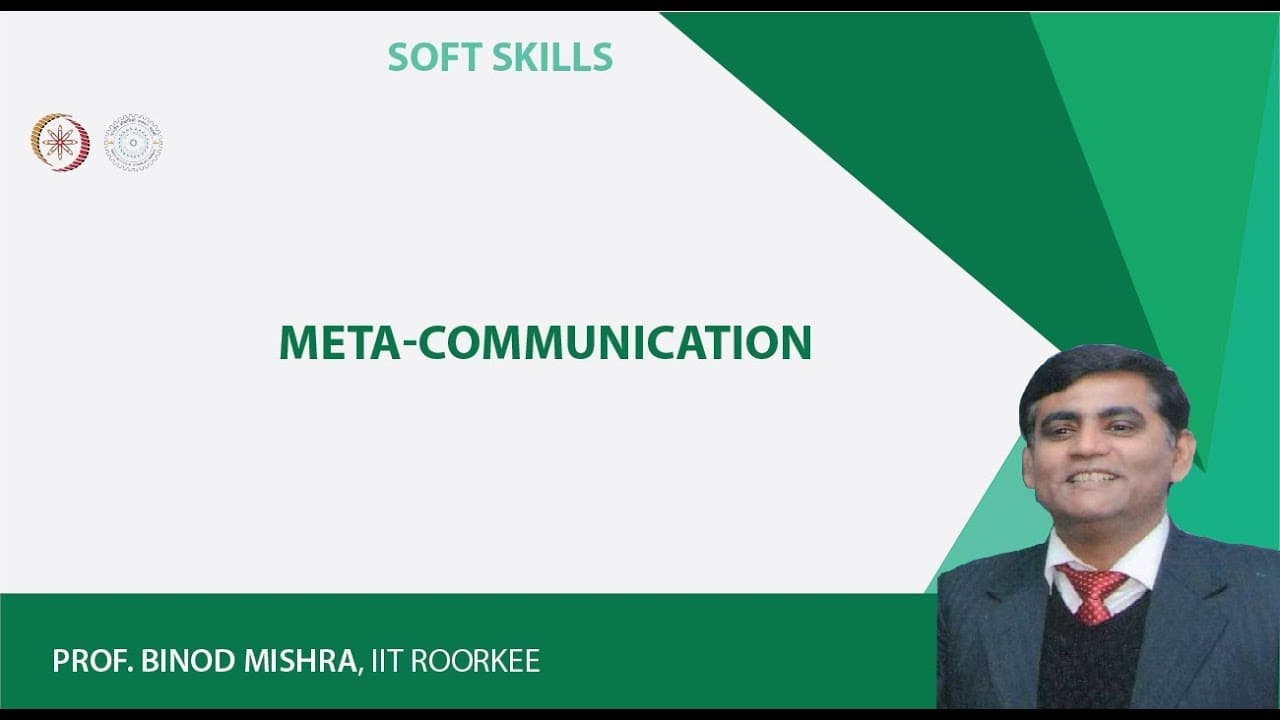
Meta-communication involves communication beyond words, using silence and pauses.
Transcript
hello welcome back to the series of lectures on soft skills as you all remember till now we have done various lessons on effective ways to acquire soft skills and in the previous lectures we had been talking how communicating without words is also a skill in that lecture we had referred to the various nonverbal cues which actually help in face to f... Read More
Key Insights
- Meta-communication refers to the communication that occurs beyond spoken words, involving factors like tone, silence, and pauses.
- The meaning of words can change based on context, tone, and speaker intent, highlighting the importance of meta-communication.
- Silence in communication can convey neutrality, hide emotions, or express disagreement, depending on the context.
- Meta-communication can signal a lack of interest or engagement, affecting the dynamics of interpersonal interactions.
- Silence and pauses in speech can provide relief, enhance clarity, and allow time for thought and reflection.
- Effective use of silence and pauses can improve speech delivery, making it more engaging and less monotonous.
- Non-words, such as vocalized pauses, can indicate uncertainty or lack of preparation in speech.
- Understanding and utilizing meta-communication effectively can lead to more impactful and meaningful interactions.
Install to Summarize YouTube Videos and Get Transcripts
Explore YouTube Video Summarizer or Get YouTube Transcript Extractor
Questions & Answers
Q: What is meta-communication?
Meta-communication refers to the communication that occurs beyond the literal meaning of words. It involves non-verbal cues such as tone, silence, pauses, and body language, which can convey additional meanings and emotions. Meta-communication helps in understanding the implied context and emotional undertones in a conversation.
Q: How does silence function in meta-communication?
Silence in meta-communication can serve multiple functions. It can convey neutrality, allow for reflection, and provide relief from continuous speech. It can also express emotions like disagreement, lack of interest, or even agreement without verbal acknowledgment. The meaning of silence can vary based on cultural contexts and the situation.
Q: Why are pauses important in communication?
Pauses are crucial in communication as they provide a break from continuous speech, allowing both the speaker and the listener time to process information. They help in emphasizing points, enhancing clarity, and preventing monotony. Pauses also offer the speaker time to gather thoughts and the listener time to reflect and understand the message being conveyed.
Q: How can meta-communication affect interpersonal interactions?
Meta-communication significantly impacts interpersonal interactions by conveying emotions and intentions beyond spoken words. It can indicate interest, disinterest, agreement, or disagreement. Effective use of meta-communication can enhance understanding and rapport between individuals, while misinterpretation can lead to misunderstandings and conflicts.
Q: What role does tone play in meta-communication?
Tone is a critical component of meta-communication. It influences the perceived meaning of words and can convey emotions such as sarcasm, sincerity, anger, or empathy. The tone can alter the interpretation of a message, making it essential for speakers to be mindful of their tone to ensure their intended message is accurately received.
Q: Can meta-communication be unintentional?
Yes, meta-communication can be unintentional. Individuals may unknowingly convey messages through their tone, body language, or silence. These non-verbal cues may reveal emotions or attitudes that the speaker did not intend to express, leading to potential misinterpretations by the listener. Awareness and control over these cues are crucial for effective communication.
Q: How do non-words affect speech delivery?
Non-words, such as vocalized pauses like 'um' and 'ah,' can negatively impact speech delivery by indicating uncertainty or lack of preparation. They can disrupt the flow of speech and distract listeners. Minimizing non-words and incorporating deliberate pauses can enhance clarity and make speech more engaging and effective.
Q: What is the significance of balancing silence and speech?
Balancing silence and speech is vital for effective communication. Silence provides time for reflection and enhances the impact of spoken words, while speech conveys the primary message. A well-balanced use of both elements can make communication more engaging, clear, and impactful, ensuring that the message is comprehended and appreciated by the audience.
Summary & Key Takeaways
-
Meta-communication is a form of communication that goes beyond words, involving elements like tone, silence, and pauses. It plays a crucial role in conveying implied meanings that words alone cannot express.
-
Silence and pauses are powerful tools in communication, offering relief from monotony, allowing reflection, and enhancing the clarity and impact of speech. They can also convey various emotions and intentions.
-
Effective speakers understand the importance of balancing words with non-verbal cues like pauses and silence, which can enhance the listener's comprehension and engagement, making communication more effective.
Read in Other Languages (beta)
Share This Summary 📚
Summarize YouTube Videos and Get Video Transcripts with 1-Click
Try YouTube Summary with ChatGPT & Claude or YouTube Transcript Generator
Explore More Summaries from Soft Skills 📚






Summarize YouTube Videos and Get Video Transcripts with 1-Click
Try YouTube Summary with ChatGPT & Claude or YouTube Transcript Generator