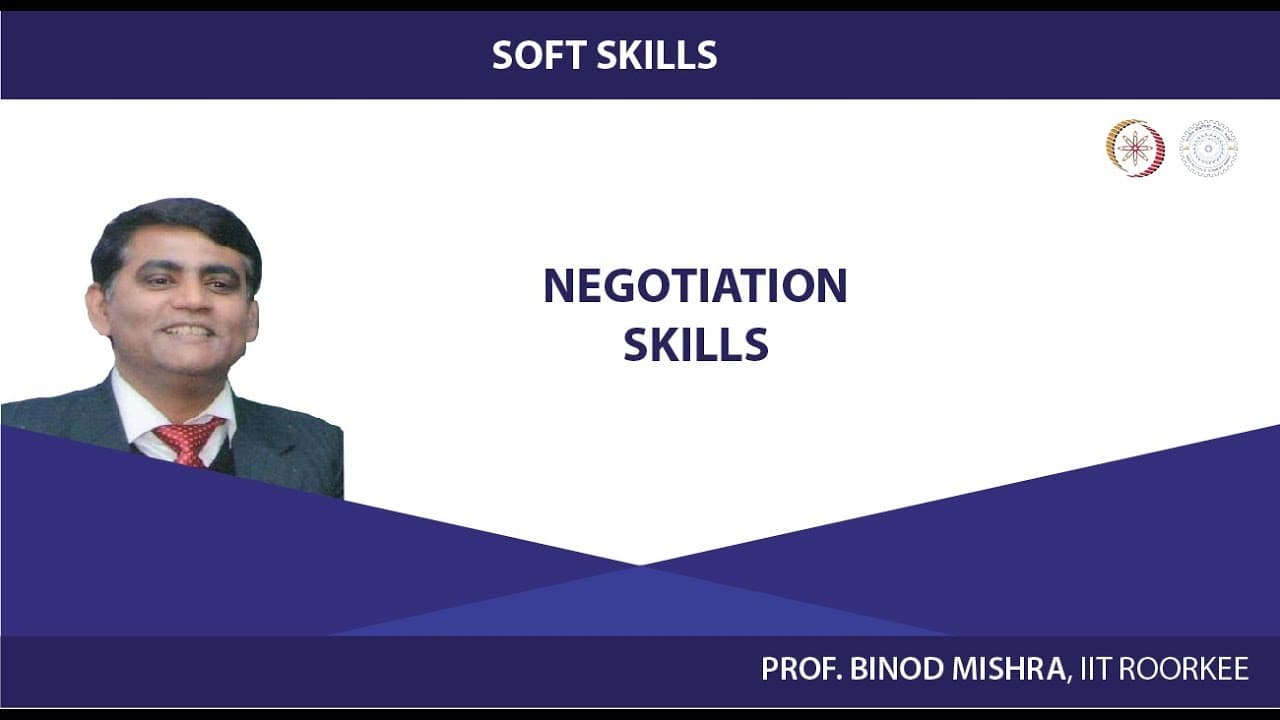
Negotiation Skills
TL;DR
Negotiation skills are essential for achieving mutually beneficial agreements.
Transcript
Read and summarize the transcript of this video on Glasp Reader (beta).
Key Insights
- Negotiation is a vital skill in both personal and professional life, enabling individuals to reach mutually beneficial agreements.
- Successful negotiation involves understanding both parties' needs, aiming for a win-win outcome where neither party feels disadvantaged.
- Effective negotiation requires preparation, including gathering relevant information and understanding the strengths and weaknesses of both parties.
- The process involves argument and persuasion, transforming conflicting positions into common agreements through discussion and compromise.
- Formal negotiations are pre-announced with a set agenda, while informal negotiations can be spontaneous and based on existing relationships.
- Factors like location, timing, personal relationships, and fear can significantly influence the negotiation process and its outcome.
- Key qualities of a successful negotiator include confidence, appearance, honesty, competence, and flexibility, ensuring a fair and effective negotiation.
- The ultimate goal of negotiation is to reach an agreement that benefits both parties, avoiding the worst alternative to a negotiated agreement (WATNA).
Install to Summarize YouTube Videos and Get Transcripts
Explore YouTube Video Summarizer or Get YouTube Transcript Extractor
Questions & Answers
Q: Why are negotiation skills important in both personal and professional life?
Negotiation skills are essential because they enable individuals to achieve mutually beneficial outcomes in various situations. Whether buying a car or negotiating a business deal, these skills help balance the interests of all parties involved, ensuring that agreements are fair and satisfactory, thus fostering better relationships and successful interactions.
Q: What are the key elements of a successful negotiation?
Successful negotiation involves preparation, understanding both parties' needs, and aiming for a win-win outcome. It requires effective communication, including argument and persuasion, to transform conflicting positions into a common agreement. Flexibility, confidence, and honesty are crucial, as is the ability to read beyond words and understand the negotiation dynamics.
Q: How do formal and informal negotiations differ?
Formal negotiations are pre-announced with a set agenda, date, and time, involving well-prepared parties and often an observer or mediator. In contrast, informal negotiations are more spontaneous, based on existing relationships, and may occur without prior preparation. They rely heavily on personal rapport and can be more challenging due to the lack of structure.
Q: What factors can influence the negotiation process?
Several factors can influence negotiations, including the location, timing, and personal relationships between the parties. The fear factor, or anxiety about the other party's position or authority, can also impact the process. Ensuring a neutral, comfortable environment and addressing these factors can lead to more successful negotiations.
Q: What qualities should a negotiator possess?
A successful negotiator should be confident, honest, and flexible, with a good appearance and outlook. They should be competent in communication, able to anticipate questions and counterarguments, and prepared with a plan B. Being positive and maintaining a conducive atmosphere for discussion are also important for effective negotiation.
Q: How can one prepare for a negotiation?
Preparation involves thorough research and understanding of the issues and parties involved. Gathering relevant facts and figures, anticipating questions and counterarguments, and being aware of upper and lower negotiation limits are crucial. This preparation builds confidence and ensures that the negotiator is well-equipped to handle the negotiation effectively.
Q: What is the role of persuasion in negotiation?
Persuasion is a key element in negotiation, used to convince the other party of the benefits of an agreement. It involves presenting arguments in a compelling manner, using language that is convincing and respectful. Effective persuasion helps transform conflicting positions into a common agreement, leading to a successful negotiation outcome.
Q: What is WATNA, and why is it important in negotiation?
WATNA stands for the Worst Alternative to a Negotiated Agreement. It represents the worst outcome if negotiations fail. Understanding WATNA is important because it helps negotiators avoid undesirable agreements and ensures that they strive for outcomes that are beneficial for both parties, rather than settling for unfavorable terms out of fear or pressure.
Summary & Key Takeaways
-
Negotiation skills are crucial in various aspects of life, allowing individuals to achieve favorable outcomes through discussion and compromise. Understanding both parties' needs and aiming for a win-win situation is essential for successful negotiation.
-
Preparation is key in negotiation, involving thorough research and understanding of the issues at hand. Effective negotiators use persuasive communication and maintain a positive attitude to reach mutually beneficial agreements.
-
Both formal and informal negotiations have their own dynamics, influenced by factors such as location, timing, personal relationships, and fear. Successful negotiators possess qualities like confidence, honesty, and flexibility, ensuring fair and effective negotiations.
Read in Other Languages (beta)
Share This Summary 📚
Summarize YouTube Videos and Get Video Transcripts with 1-Click
Try YouTube Summary with ChatGPT & Claude or YouTube Transcript Generator
Explore More Summaries from Soft Skills 📚


Summarize YouTube Videos and Get Video Transcripts with 1-Click
Try YouTube Summary with ChatGPT & Claude or YouTube Transcript Generator