Natural hazards | Earth and society | Middle school Earth and space science | Khan Academy
TL;DR
Natural hazards, such as earthquakes, volcanic eruptions, and severe weather events, can pose risks to humans and societies. Scientists are working to predict and understand these hazards to help communities prepare for and mitigate their impact.
Transcript
- [Instructor] Before I go to a new place, I try to do some thorough research about it. What do I want to do there? What's the weather forecast? What's the chance that it might erupt? I learned this hard way recently. While preparing for a trip to Mount Rainier National Park, I somehow missed that the mountain itself is actually a volcano. Though i... Read More
Key Insights
- 😣 Natural hazards, including earthquakes, volcanic eruptions, and severe weather events, can pose significant risks to humans and society.
- 😒 Scientists use advanced technologies and data analysis to predict weather conditions and determine if storms may become natural hazards.
- ☀️ While weather events can be predicted more effectively, earthquakes and volcanic eruptions are less predictable, making preparedness crucial.
- 👨🔬 Seismic activity is a focus of scientific research to better understand and predict earthquakes and mitigate their impact.
- 🏛️ Building resilient communities and infrastructure is essential in reducing the risks posed by natural hazards.
- 🧑🔬 Scientists are constantly learning and studying natural hazards to improve preparedness and safety measures.
- 🦺 Planning and preparedness, even in areas less prone to natural hazards, can help individuals and communities stay safe during unexpected events.
Install to Summarize YouTube Videos and Get Transcripts
Explore YouTube Video Summarizer or Get YouTube Transcript Extractor
Questions & Answers
Q: How do scientists predict weather conditions and determine if a storm may become a natural hazard?
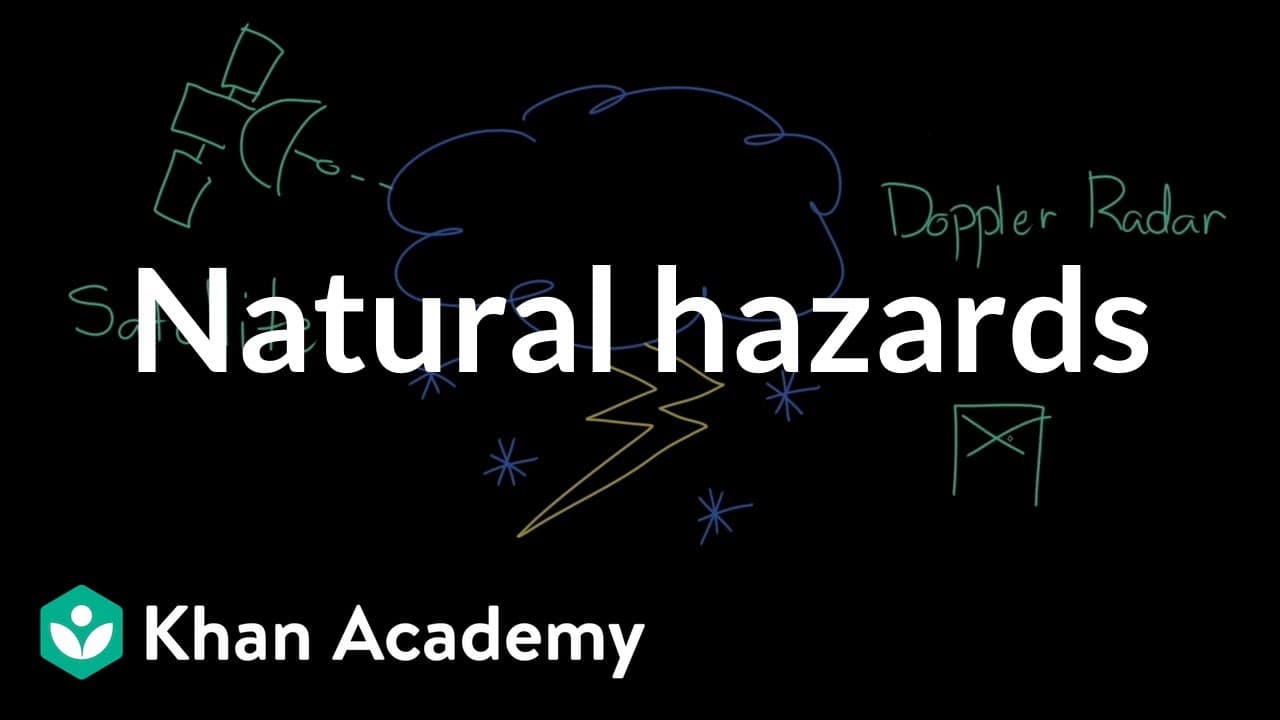
Meteorologists use technologies such as satellites and electromagnetic wave fields measured through Doppler radar to gather data on cloud patterns, rainfall, and wind strength. This data is analyzed and fed into computer models to predict if the storm has the potential to become a natural hazard.
Q: What are some examples of natural hazards?
Natural hazards include earthquakes, volcanic eruptions, tsunamis, hurricanes, cyclones, tornados, and blizzards. These events can cause significant damage to infrastructure and pose risks to human lives.
Q: How do earthquakes and volcanic eruptions occur?
Earthquakes occur when tectonic plates, which are large moving pieces of the Earth's outer crust, grind or slip against each other, releasing seismic waves. Volcanic eruptions happen when magma swells up to the surface, leading to the release of gases, ash, and sometimes, rivers of molten lava.
Q: How are communities informed and prepared for earthquakes?
Scientists use tools like seismographs to detect and measure the strength of earthquakes. Data from past earthquakes helps identify patterns and signs indicating a potential earthquake. This information is used to provide early warnings and design structures that withstand the effects of future earthquakes.
Summary & Key Takeaways
-
Natural hazards, including earthquakes, volcanic eruptions, and severe weather events, can be dangerous for communities and infrastructure.
-
Scientists use advanced technologies, like satellites and radar, to predict weather conditions and determine if a storm may become a natural hazard.
-
Earthquakes can cause significant damage to buildings and infrastructure, and scientists are studying seismic activity to better understand and predict them.
Read in Other Languages (beta)
Share This Summary 📚
Summarize YouTube Videos and Get Video Transcripts with 1-Click
Try YouTube Summary with ChatGPT & Claude or YouTube Transcript Generator
Explore More Summaries from Khan Academy 📚



Summarize YouTube Videos and Get Video Transcripts with 1-Click
Try YouTube Summary with ChatGPT & Claude or YouTube Transcript Generator