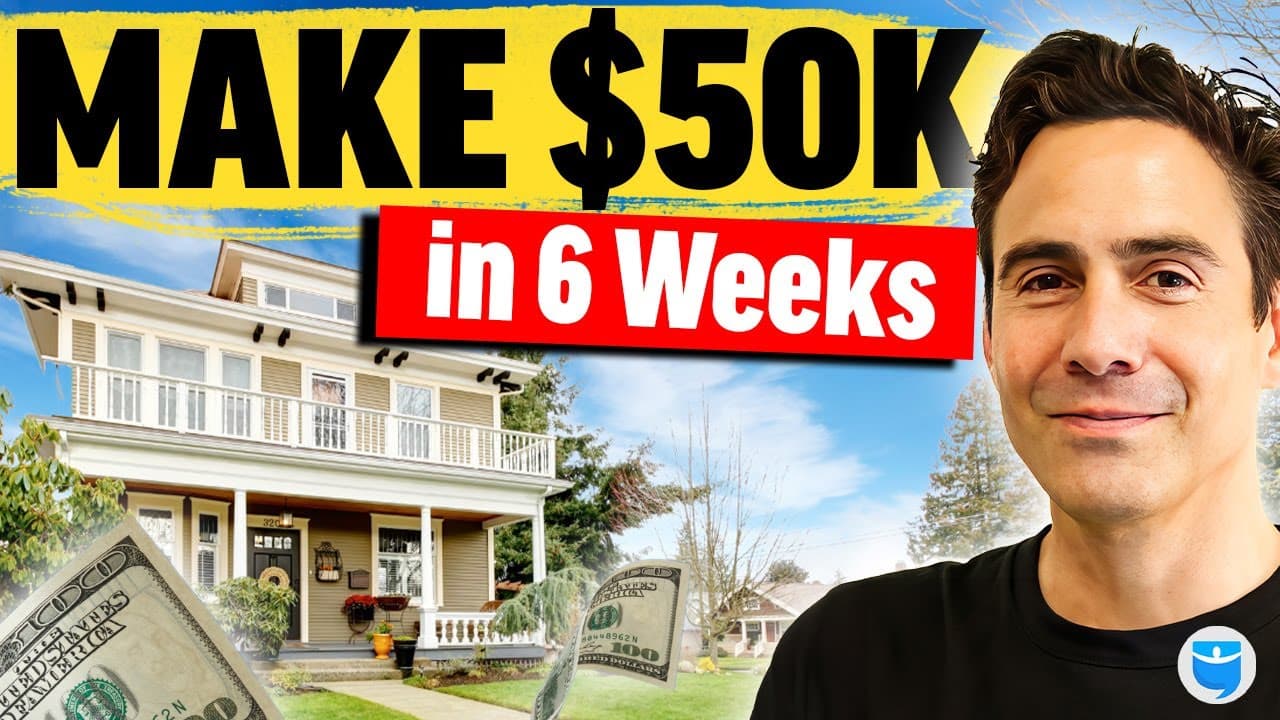
Making $50K in 6 Weeks with Quick, Repeatable House Flips
TL;DR
Mike Cappello flips houses in D.C., making $50K in six weeks.
Transcript
welcome to the Bigger Pockets real estate podcast episode 860 today we're doing something a bit unique my good friend David and I are actually going to be splitting up and bringing you two separate interviews each episode is going to feature a boots on the ground investor and real estate agent who are doing deals in today's market that's right doin... Read More
Key Insights
- Mike Cappello successfully flips houses in the D.C. area, a challenging yet profitable market, by leveraging strategic buying and selling tactics.
- The D.C. real estate market remains competitive, with properties selling quickly despite high mortgage rates, making it ideal for strategic flips.
- Mike employs creative financing methods like sub-twos to navigate high-interest rates, maintaining profitability in a volatile market.
- Rob Chavez, Mike's real estate agent, emphasizes the importance of a strong network and strategic pricing to create demand for flipped properties.
- First-time homebuyers in D.C. are a key market segment, often purchasing flipped properties at competitive prices.
- Mike's 'buy box' strategy focuses on affordable townhouses with potential for quick, cosmetic renovations, minimizing risk and maximizing profit.
- Despite the risks, flipping remains a viable strategy in D.C. due to the fast-moving market and strong demand for entry-level homes.
- Rob advises investors to be realistic about ARV and renovation costs, emphasizing the importance of quality contractors to ensure profitability.
Install to Summarize YouTube Videos and Get Transcripts
Explore YouTube Video Summarizer or Get YouTube Transcript Extractor
Questions & Answers
Q: Why is the D.C. real estate market competitive?
The D.C. real estate market is competitive due to its dense population and high demand for housing, particularly among first-time homebuyers. Despite high mortgage rates, properties are selling quickly, often with multiple offers, making it a prime location for strategic house flipping.
Q: How does Mike Cappello manage to make a profit in a high-interest market?
Mike uses creative financing strategies, such as sub-twos, which allow him to take over existing mortgages with lower interest rates. This approach helps him maintain profitability despite the current high-interest rates, enabling him to continue flipping houses successfully in the D.C. market.
Q: What is the 'buy box' strategy mentioned in the podcast?
The 'buy box' strategy involves setting specific criteria for purchasing properties, such as price range, location, and renovation potential. Mike focuses on affordable townhouses in Northern Virginia that require cosmetic updates, allowing for quick renovations and minimizing risk while maximizing profit.
Q: What role does Rob Chavez play in Mike's flipping strategy?
Rob Chavez, Mike's real estate agent, plays a crucial role in identifying potential deals and providing market insights. He helps create demand for flipped properties through strategic pricing and marketing, ensuring that the properties sell quickly and profitably in the competitive D.C. market.
Q: Why is flipping houses considered risky in today's market?
Flipping houses is risky due to fluctuating market conditions, high mortgage rates, and the potential for underestimating renovation costs or overestimating after-repair values (ARV). Investors must navigate these challenges carefully to ensure profitability, particularly in a competitive market like D.C.
Q: How do first-time homebuyers impact the D.C. flipping market?
First-time homebuyers are a significant market segment in D.C., often purchasing entry-level homes at competitive prices. Their demand for affordable housing drives the market, making it ideal for strategic flips that cater to their needs and expectations.
Q: What are the key factors to consider when flipping houses in D.C.?
Key factors include understanding the local market dynamics, having a realistic assessment of ARV and renovation costs, and working with reliable contractors. Investors should also focus on strategic pricing and marketing to create demand and ensure quick sales in the competitive D.C. market.
Q: Is flipping houses a good long-term wealth-building strategy?
While flipping houses can generate quick profits, it is not typically considered a long-term wealth-building strategy. Holding properties for rental income is generally seen as a more sustainable approach to building wealth, although flipping can provide the necessary capital to invest in long-term assets.
Summary & Key Takeaways
-
Mike Cappello is successfully flipping houses in the competitive D.C. market, making significant profits despite high mortgage rates. His strategy involves quick, cosmetic renovations and leveraging creative financing methods to navigate the challenging market conditions.
-
The D.C. real estate market remains highly competitive, with properties selling quickly. Mike and his agent, Rob Chavez, utilize a strategic 'buy box' and strong networking to find profitable deals and create demand through effective pricing and marketing.
-
Flipping houses in D.C. is viable due to the fast-moving market and demand from first-time homebuyers. Investors are advised to have realistic expectations about costs and to work with reliable contractors to ensure successful and profitable flips.
Read in Other Languages (beta)
Share This Summary 📚
Summarize YouTube Videos and Get Video Transcripts with 1-Click
Try YouTube Summary with ChatGPT & Claude or YouTube Transcript Generator
Explore More Summaries from BiggerPockets 📚





Summarize YouTube Videos and Get Video Transcripts with 1-Click
Try YouTube Summary with ChatGPT & Claude or YouTube Transcript Generator