What Are the Best Books for Learning Python Programming?
TL;DR
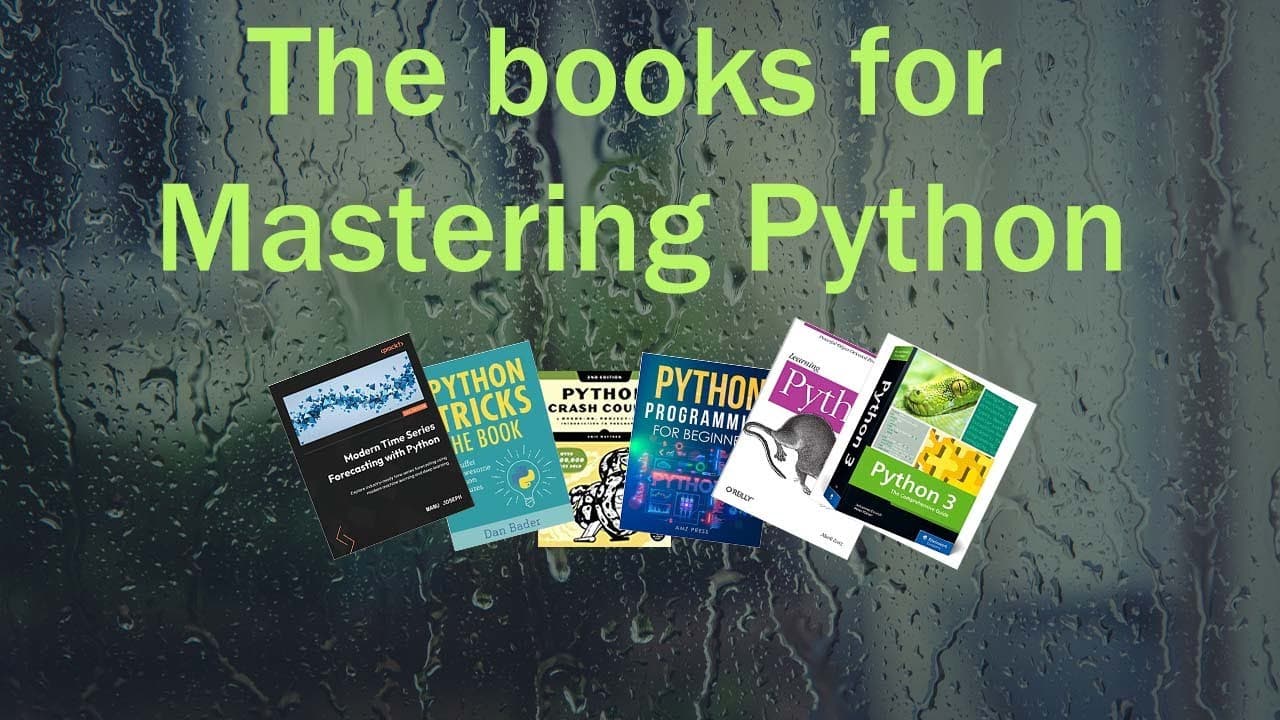
The best books for learning Python include 'Python Programming for Beginners' for novices, 'Python Crash Course' for hands-on learners, and 'Learning Python' for in-depth knowledge. These resources cater to various skill levels and emphasize practical exercises, making Python accessible and effective for both beginners and experienced developers.
Transcript
foreign python is a programming language that has existed for over 20 years the history of python started in the late 1980s when its founder Guido van Rossum started working on it the inspiration for Python Programming came from the ABC programming language whose first version was introduced in 1987. Guido van Rossum was one of the main implementer... Read More
Key Insights
- ❓ Python has evolved over 20 years since its inception, showcasing its robustness and adaptability as a programming language.
- 👤 Guido van Rossum's vision to create an accessible programming language is evident in Python’s clear syntax and user-friendly design.
- 👤 A variety of resources, including books and online courses, cater to different levels of Python learners, from beginners to advanced users.
- 🤗 Interactive projects and hands-on exercises in Python learning materials help reinforce theoretical concepts through practical application.
- ❓ Understanding Python’s data structures is crucial for efficient programming, as highlighted in resources focused on algorithms.
- 🏑 Modern books on Python address specific fields such as machine learning and data analysis, catering to industry-relevant skills.
- 🧑💻 The Python community supports continual growth and development of the language, maintaining its relevance in the tech industry.
Install to Summarize YouTube Videos and Get Transcripts
Explore YouTube Video Summarizer or Get YouTube Transcript Extractor
Questions & Answers
Q: What inspired Guido van Rossum to create Python?
Guido van Rossum was inspired by the ABC programming language while working on it. He sought to develop a language that was easy to read and use, leading to Python's creation in 1989. He aimed for it to be short, unique, and slightly mysterious, which is reflected in its name, inspired by the BBC comedy series Monty Python's Flying Circus.
Q: Why is Python considered beginner-friendly?
Python is considered beginner-friendly primarily due to its simple and readable syntax, which allows new programmers to understand concepts without feeling overwhelmed. Furthermore, numerous learning resources, such as beginner books and tutorials, break down complex ideas into manageable steps, making it easier for novices to grasp the fundamentals and start coding efficiently.
Q: What is the significance of the book "Python Crash Course"?
"Python Crash Course" is significant because it is designed for beginners and uses an engaging, interactive approach to teach Python. It covers fundamental programming concepts and includes practical projects that enable learners to apply their knowledge in a hands-on manner. This makes it easier for those without any programming background to get started quickly and effectively.
Q: What are the main topics covered in Mark Lutz's "Learning Python"?
Mark Lutz's "Learning Python" covers various core Python concepts, including data structures, object-oriented programming, and best practices for code efficiency. This hands-on resource is particularly beneficial for both new programmers and experienced developers, as it provides a comprehensive exploration of the language's features, ideal for gaining a deeper understanding of Python's capabilities.
Q: How does "Modern Time Series Forecasting with Python" differ from other Python books?
"Modern Time Series Forecasting with Python" differs from other Python books by focusing specifically on advanced statistical methods and machine learning techniques for time series forecasting. It covers essential topics like data visualization and introduces modern approaches like deep learning and global forecasting models, providing a thorough guide for data scientists and analysts looking to excel in predictive analytics.
Q: What is unique about the approach taken in "Python Tricks" by Dan Bader?
"Python Tricks" by Dan Bader uniquely emphasizes practical skills and idiomatic Python programming, helping readers to write clean and efficient code. The book aims to deepen the reader's understanding of Python's intricacies through practical examples, rather than just listing programming snippets, making it useful for those familiar with Python who wish to enhance their coding style.
Summary & Key Takeaways
-
Python was created by Guido van Rossum in the late 1980s and has seen continuous development since its first release in 1991, becoming widely popular for its simplicity and versatility.
-
Several recommended books cater to different learning levels, including "Python Programming for Beginners," "Python Crash Course," and "Learning Python," each offering unique approaches to mastering the language.
-
The programming language is appreciated for its clear syntax and strong community support, making it accessible for both new learners and experienced developers seeking to deepen their knowledge.
Read in Other Languages (beta)
Share This Summary 📚
Summarize YouTube Videos and Get Video Transcripts with 1-Click
Try YouTube Summary with ChatGPT & Claude or YouTube Transcript Generator
Explore More Summaries from script spark 📚
Summarize YouTube Videos and Get Video Transcripts with 1-Click
Try YouTube Summary with ChatGPT & Claude or YouTube Transcript Generator