How Do Plants Use Auxins to Respond to Light and Gravity?
TL;DR
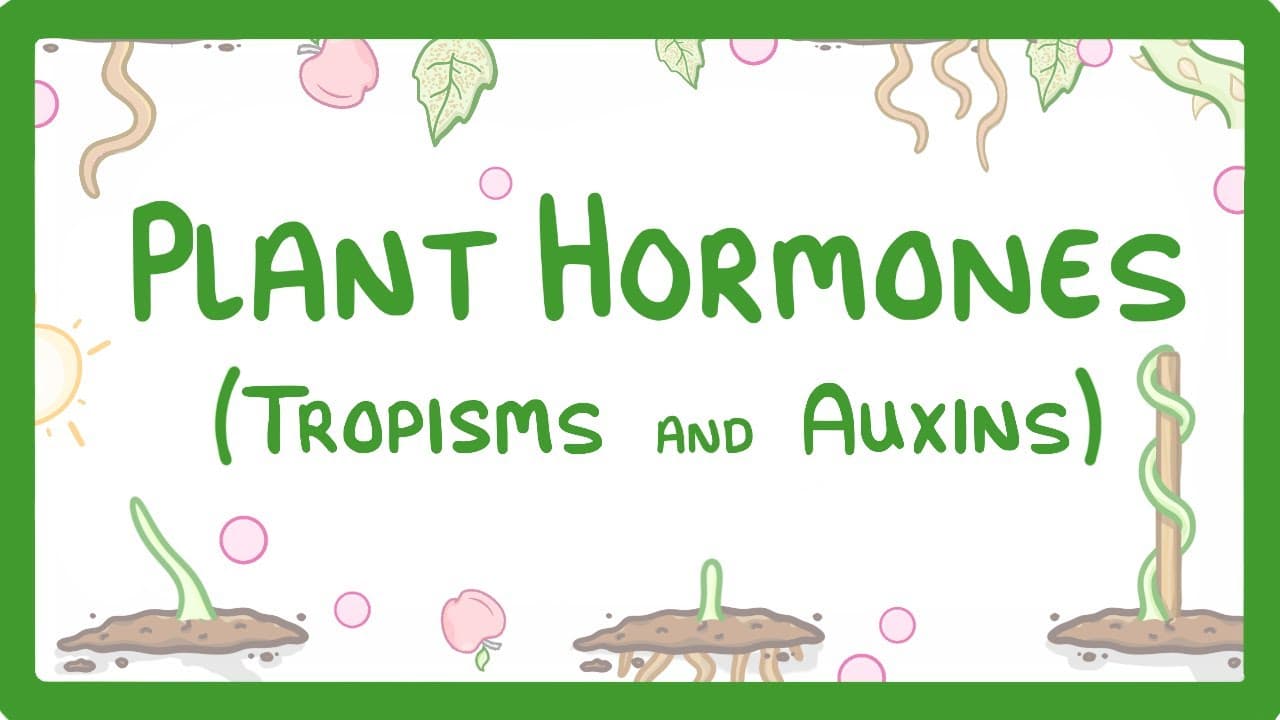
Plants respond to light and gravity using hormones called auxins, which regulate growth. Auxins accumulate on the shaded side of shoots, causing them to bend towards light (phototropism), while in roots, they inhibit growth, causing roots to grow downwards towards gravity (geotropism).
Transcript
in today's video we're going to take a look at how plants can respond to their environment and in particular we'll look at the role of auxins now just like animals plants have to be able to respond to stimuli in their environment in order to survive they just do it much more slowly than animals do for example they can sense light and grow their sho... Read More
Key Insights
- 😒 Plants respond to their environment through the use of hormones, specifically auxins.
- 🫚 Auxins control growth in shoots and roots, stimulating growth in shoots and inhibiting growth in roots.
- 🙂 Phototropism is the response to light, causing shoots to grow towards the light, while geotropism is the response to gravity, causing roots to grow downwards.
- 🫚 Auxins accumulate on the shaded side of shoots and roots, promoting growth in those cells and resulting in curvatures.
- 😟 Plants rely on hormones for their responses to stimuli, as they do not have a nervous system like animals.
- 🙃 The accumulation of auxins on different sides of shoots and roots determines the direction of growth.
- 👻 Phototropic responses in shoots and geotropic responses in roots allow plants to optimize their positioning for maximum photosynthesis and nutrient absorption.
Install to Summarize YouTube Videos and Get Transcripts
Explore YouTube Video Summarizer or Get YouTube Transcript Extractor
Questions & Answers
Q: How do plants respond to light?
Plants respond to light through phototropism, meaning they grow towards the light. This is due to auxins accumulating on the shaded side of the shoot and stimulating growth in those cells.
Q: What is the role of auxins in roots?
Auxins inhibit growth in roots, causing them to grow away from the light and towards the ground. They accumulate on the lower shaded side of the root, causing faster growth on the upper side and resulting in downward curvature.
Q: How do auxins control growth in shoots?
Auxins stimulate growth in shoots, causing them to grow towards the light. They accumulate on the shaded side of the shoot, promoting faster growth in those cells and curving the shoot towards the light source.
Q: Do plants have a nervous system like animals?
No, plants do not have a nervous system like animals. They rely on hormones, such as auxins, to respond to stimuli in their environment.
Key Insights:
- Plants respond to their environment through the use of hormones, specifically auxins.
- Auxins control growth in shoots and roots, stimulating growth in shoots and inhibiting growth in roots.
- Phototropism is the response to light, causing shoots to grow towards the light, while geotropism is the response to gravity, causing roots to grow downwards.
- Auxins accumulate on the shaded side of shoots and roots, promoting growth in those cells and resulting in curvatures.
- Plants rely on hormones for their responses to stimuli, as they do not have a nervous system like animals.
- The accumulation of auxins on different sides of shoots and roots determines the direction of growth.
- Phototropic responses in shoots and geotropic responses in roots allow plants to optimize their positioning for maximum photosynthesis and nutrient absorption.
- Understanding plant hormone responses can provide insights into plant growth and development.
Summary & Key Takeaways
-
Plants respond to stimuli in their environment, such as light and gravity, to maximize photosynthesis and find water and minerals.
-
Hormones called auxins control growth in shoots and roots, stimulating growth in shoots and inhibiting growth in roots.
-
Phototropism is the response to light, causing shoots to grow towards the light, while geotropism is the response to gravity, causing roots to grow downwards.
Read in Other Languages (beta)
Share This Summary 📚
Summarize YouTube Videos and Get Video Transcripts with 1-Click
Try YouTube Summary with ChatGPT & Claude or YouTube Transcript Generator
Explore More Summaries from Cognito 📚





Summarize YouTube Videos and Get Video Transcripts with 1-Click
Try YouTube Summary with ChatGPT & Claude or YouTube Transcript Generator