What Is the Thermoforming Process for Shaping Plastics?
TL;DR
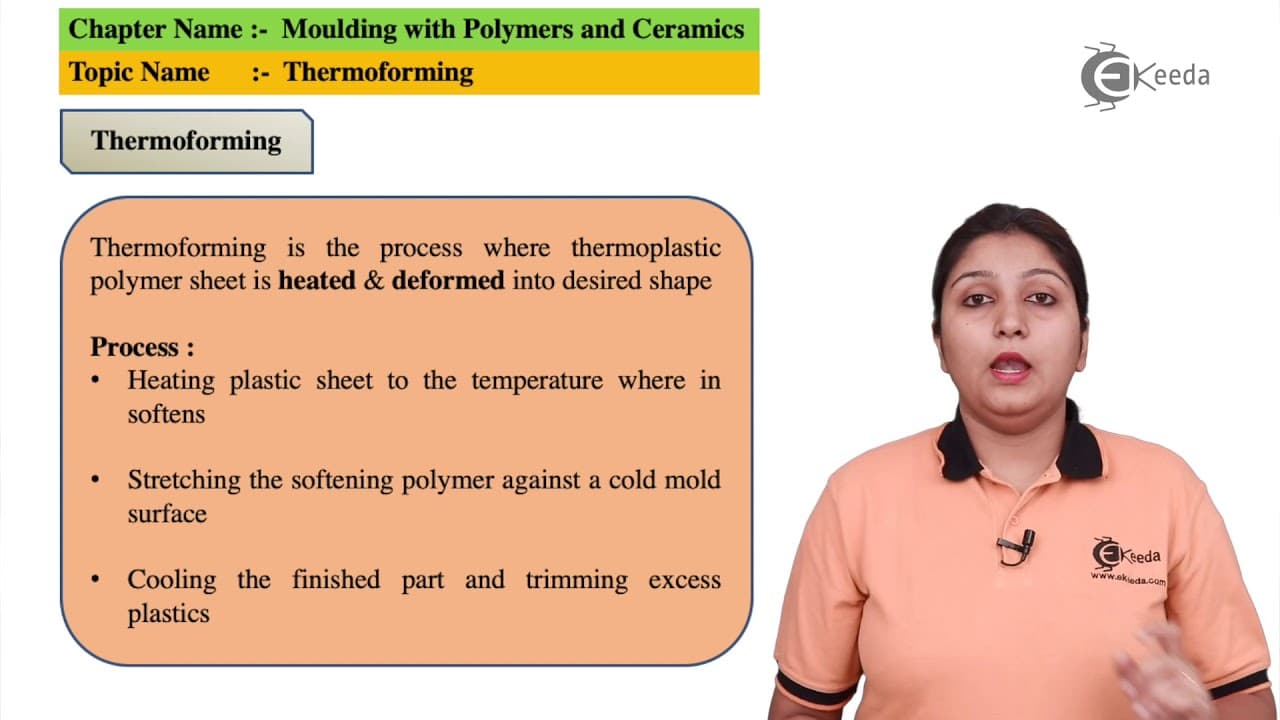
Thermoforming is a process for shaping plastics that involves applying heat and pressure to deform a sheet and then cooling it to solidify in the desired shape. Key methods include vacuum forming, pressure forming, and mechanical forming. While thermoforming requires less stress and allows for final product shaping, it is not suitable for thermosetting plastics and necessitates precise trimming.
Transcript
click the Bell icon to get latest videos from equator hello friends today we are gonna see an important process of plastic making which is a thermoforming process even pressure forming vacuum forming and also mechanical forming are the parts of thermoforming process and how thermo forming takes place we are gonna see in this video so I'll talk abou... Read More
Key Insights
- 😎 Thermoforming involves pressure, stretching, and cooling to shape plastic products effectively.
- 🎭 Types of thermoforming techniques include vacuum forming, pressure forming, and mechanical forming.
- 😄 Advantages of thermoforming include lower stress requirements and ease of achieving final product shapes.
- 🪡 Disadvantages of thermoforming include limitations with thermosetting plastics and the need for precise trimming for quality products.
- 😋 Thermoforming is widely used in industries like food, automotive, and aerospace for creating various plastic products.
- 🗯️ Understanding the thermoforming process can help in choosing the right technique for specific plastic shaping needs.
- 🥺 Proper handling of thermoforming processes can lead to efficient production and high-quality finished products.
Install to Summarize YouTube Videos and Get Transcripts
Explore YouTube Video Summarizer or Get YouTube Transcript Extractor
Questions & Answers
Q: What are the essential steps in the thermoforming process?
The essential steps in thermoforming are pressure application, stretching, and cooling of the plastic material to shape it according to the desired form.
Q: How do different types of thermoforming techniques differ from each other?
Vacuum forming relies on air supply and vacuum conditions, pressure forming involves compression processes, and mechanical forming uses various mechanical methods to shape the plastic material.
Q: What are the advantages of the thermoforming process?
Advantages of thermoforming include lower stress requirements during shaping and the ability to achieve final product shapes easily. It is commonly used in various industries like food, automotive, and aerospace.
Q: What is a major disadvantage of thermoforming?
A significant drawback of thermoforming is the inability to work with thermosetting plastics, requiring precise trimming for final product quality.
Summary & Key Takeaways
-
Thermoforming includes steps like pressure application, stretching, and cooling.
-
Types of thermoforming are vacuum forming, pressure forming, and mechanical forming.
-
Advantages include less stress required, but exact trimming is crucial for thermosetting plastics.
Read in Other Languages (beta)
Share This Summary 📚
Summarize YouTube Videos and Get Video Transcripts with 1-Click
Try YouTube Summary with ChatGPT & Claude or YouTube Transcript Generator
Explore More Summaries from Ekeeda 📚






Summarize YouTube Videos and Get Video Transcripts with 1-Click
Try YouTube Summary with ChatGPT & Claude or YouTube Transcript Generator