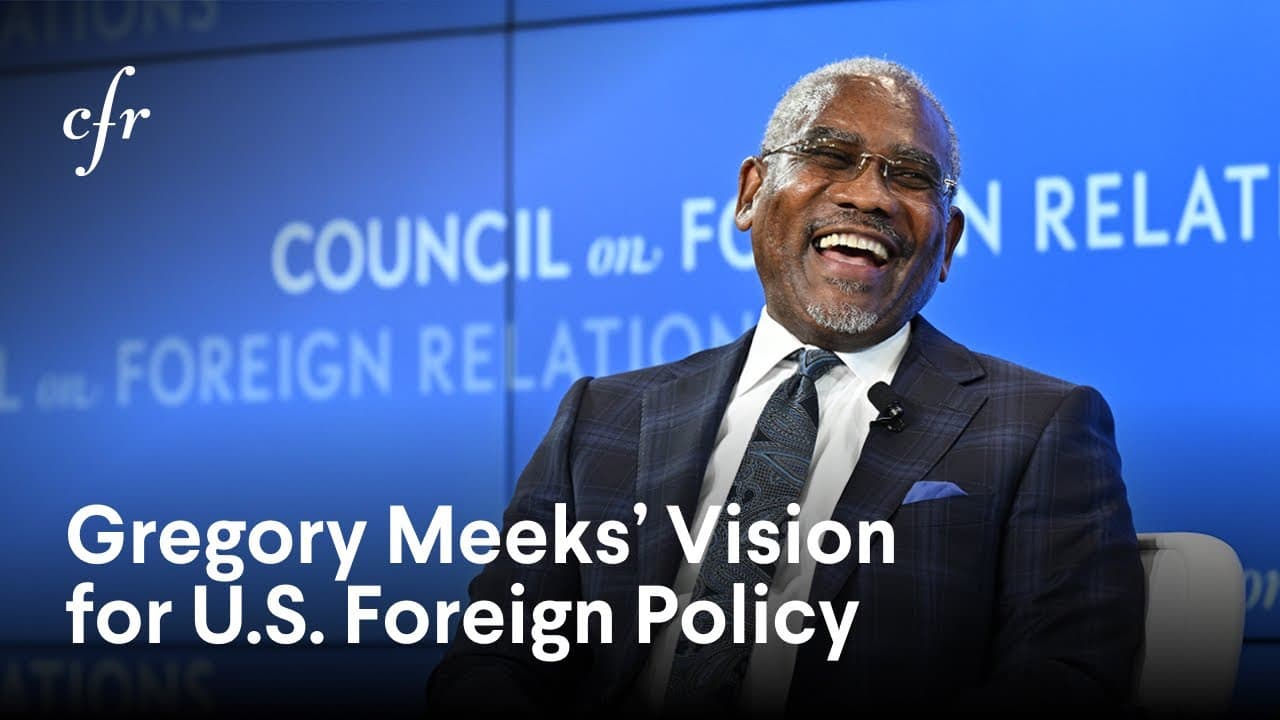
A Conversation with Congressman Gregory Meeks
TL;DR
Congressman Meeks discusses U.S. foreign policy, emphasizing bipartisanship and global engagement.
Transcript
FROMAN: Well, good evening, everybody. You know, who the real hardcore CFR members are who are here in late July. (Laughter.) So it’s great to see you all. And it’s a real pleasure to be able to represent—to invite here Gregory Meeks with us, our representative from the Fifth District of New York, which includes JFK Airport. So you’ve all spe... Read More
Key Insights
- Congressman Gregory Meeks highlights the importance of bipartisanship in U.S. foreign policy, noting current challenges in achieving consensus.
- Meeks emphasizes the need for continued U.S. support for Ukraine, stressing the significance of providing military aid to counter Russian aggression.
- The discussion touches on the Middle East, with Meeks advocating for diplomacy to prevent Iran from acquiring nuclear weapons.
- Concerns about China's potential actions towards Taiwan are raised, with Meeks underscoring the importance of U.S. alliances in Asia.
- Meeks advocates for a balanced approach to economic security, emphasizing the need for export controls and industrial policy without compromising national security.
- The conversation explores the role of tariffs and industrial policy in U.S. manufacturing, with Meeks expressing skepticism about tariffs as a primary tool.
- Meeks stresses the importance of multilateral engagement and explains to constituents the benefits of international cooperation for domestic well-being.
- The future of U.S. development policy is debated, with Meeks criticizing the dismantling of USAID and advocating for innovative approaches to foreign aid.
Install to Summarize YouTube Videos and Get Transcripts
Explore YouTube Video Summarizer or Get YouTube Transcript Extractor
Questions & Answers
Q: What is Congressman Meeks' view on bipartisanship in foreign policy?
Congressman Meeks believes that bipartisanship is crucial for effective U.S. foreign policy. He notes that while there are areas of agreement, achieving consensus has become more challenging. Meeks emphasizes the importance of working collaboratively across party lines to maintain a united front on international issues, which he believes is vital for the country's global standing and influence.
Q: What is the U.S. stance on providing aid to Ukraine, according to Meeks?
Congressman Meeks advocates for continued U.S. support for Ukraine, emphasizing the importance of providing military aid to counter Russian aggression. He highlights the resilience of the Ukrainian people and their willingness to fight if given the necessary resources. Meeks expresses hope that Congress will approve additional aid packages and stresses the significance of U.S. leadership in supporting Ukraine and its allies.
Q: How does Meeks view the potential for a U.S.-Iran agreement on nuclear weapons?
Meeks believes that diplomacy is essential in preventing Iran from acquiring nuclear weapons. He emphasizes the importance of dialogue and multilateral cooperation to address the issue. Meeks supports the idea of a negotiated agreement that includes verification mechanisms, such as those previously established under the JCPOA, to ensure Iran's compliance and prevent the development of nuclear weapons.
Q: What concerns does Meeks have about China's actions towards Taiwan?
Meeks is concerned about the potential for China to take aggressive actions towards Taiwan, including the possibility of invasion. He stresses the importance of U.S. alliances in Asia and the need for a strong, coordinated response to deter Chinese aggression. Meeks believes that China's actions towards Taiwan are closely linked to the broader geopolitical landscape and require careful monitoring and strategic planning.
Q: What is Meeks' perspective on U.S. economic security and trade policy?
Meeks advocates for a balanced approach to economic security, emphasizing the need for export controls and industrial policy that protect national interests without stifling competition. He is skeptical of using tariffs as a primary tool for economic growth and believes that public policy should encourage domestic manufacturing while maintaining international cooperation. Meeks highlights the importance of safeguarding national security in trade agreements.
Q: How does Meeks explain the importance of international engagement to constituents?
Meeks explains to his constituents that international engagement is crucial for domestic well-being. He highlights the interconnectedness of global issues, such as environmental concerns and trade, and the benefits of diplomatic efforts over military interventions. Meeks emphasizes that foreign aid constitutes a small portion of the national budget but provides significant returns in terms of global stability and security, which ultimately benefit the American people.
Q: What are Meeks' views on the dismantling of USAID and U.S. development policy?
Meeks criticizes the dismantling of USAID and expresses concern about the impact on U.S. development policy. He believes that while there is room for improvement and innovation in foreign aid, the complete dismantling of USAID is detrimental. Meeks advocates for maintaining and enhancing U.S. development efforts, emphasizing the importance of soft power and diplomatic engagement in fostering global stability and building alliances.
Q: What role does Meeks see for the U.S. in Africa?
Meeks emphasizes the strategic importance of Africa, highlighting its young and rapidly growing population and the continent's wealth of natural resources. He advocates for increased U.S. engagement with African nations through trade and investment, rather than solely aid. Meeks believes that reauthorizing AGOA and fostering partnerships with African countries are crucial for strengthening U.S.-Africa relations and advancing mutual interests.
Summary & Key Takeaways
-
Congressman Gregory Meeks discusses the current state of U.S. foreign policy, emphasizing the need for bipartisanship and collaboration across party lines. He highlights the challenges faced in achieving consensus and the importance of maintaining a united front in international affairs.
-
Meeks addresses several key international issues, including the U.S. response to the conflict in Ukraine, the importance of preventing Iran from acquiring nuclear weapons, and the strategic significance of Taiwan in the face of Chinese aggression. He advocates for diplomacy and multilateral engagement.
-
The discussion also covers economic security, with Meeks emphasizing the need for a balanced approach to export controls and industrial policy. He critiques the use of tariffs as a primary tool for economic growth and underscores the importance of international cooperation for domestic prosperity.
Read in Other Languages (beta)
Share This Summary 📚
Summarize YouTube Videos and Get Video Transcripts with 1-Click
Try YouTube Summary with ChatGPT & Claude or YouTube Transcript Generator
Explore More Summaries from Council on Foreign Relations 📚


Summarize YouTube Videos and Get Video Transcripts with 1-Click
Try YouTube Summary with ChatGPT & Claude or YouTube Transcript Generator